Research against death on the waiting list
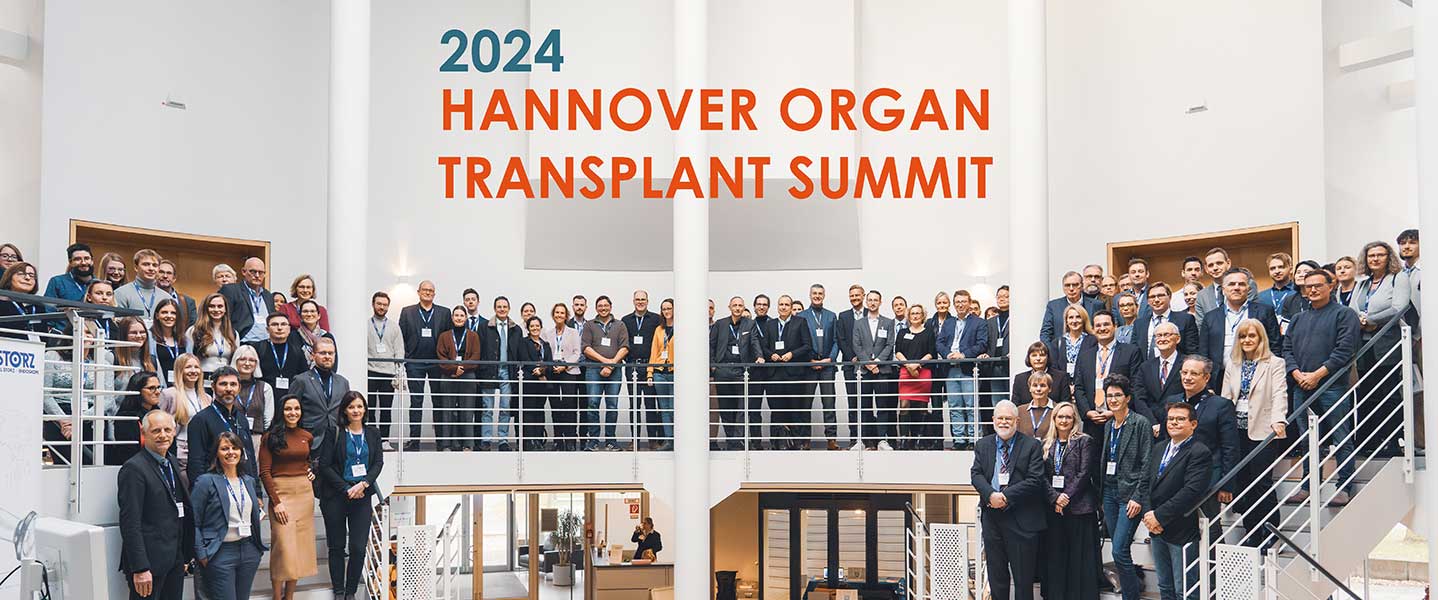
At the international Hannover Organ Transplant Summit on November 21/22, 2014, there was a discussion on how donor organs can be improved and what alternatives could be available in the future.
Donor organs are in short supply, especially in Germany. The demand cannot be met by far; patients die while waiting for an organ. For this reason, intensive efforts are being made to make better use of available organs and to improve their quality, e.g. through organ perfusion. Intensive research is also being carried out to further develop alternatives such as the transplantation of animal organs (xenotransplantation) or cultivated miniature organs (organoids) and prepare them for testing in clinical trials.
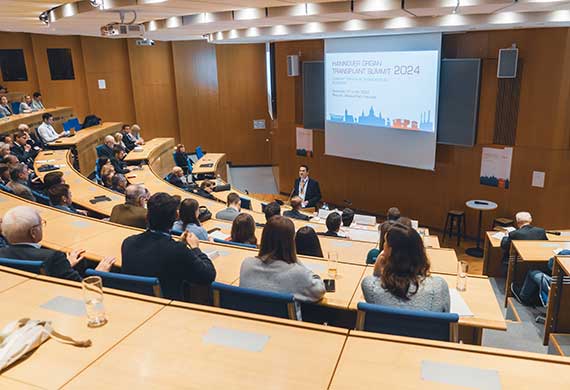
These were the topics of the international Hannover Organ Transplant Summit, which took place on November 21/22, 2014 in the Hannover Medical Park. The event was organized by the Transplant Centre of Hannover Medical School (MHH). The Transplant Summit 2024 is a unique platform that brings together research and practice and gives new impetus to transplant medicine.
The congress was also the conclusion of funding from the Lower Saxony Ministry of Science and Culture (MWK), which particularly benefited young scientists in transplant medicine. The research projects were presented as posters at the Transplant Summit.
"In view of the acute organ shortage, we urgently need new approaches," said Falko Mohrs, Lower Saxony's Minister for Science and Culture. "This requires that results from basic research are translated into clinical application." International congresses such as the Transplant Summit in Hanover are important platforms for international exchange.
"We have succeeded in bringing experts on the burning issues of transplant medicine from the leading research institutions in Europe and the USA to Hannover," said Prof. Dr. Moritz Schmelzle, Director of the Clinical Department of General, Visceral and Transplant Medicine at Hannover Medical School (MHH) and Head of the MHH Transplant Centre.
The Patient Advisory Board of the MHH Transplant Centre at MHH also supported the Transplant Summit. "We hope that the results of the conference, from the laboratories and data centers will soon benefit those affected," emphasized Patrick Kaul, spokesperson of the Patient Advisory Board.
These groundbreaking topics were discussed in several sessions at the Transplant Summit:
Not all organs that are donated can currently be transplanted. Due to their poor quality and the great time pressure, some of the donor organs removed are not used for transplantation. Speakers from Warsaw, Rotterdam and Hanover presented their experiences with organ perfusion techniques, which are already standard in other European countries but are not yet routinely used in Germany. Liver, heart, lungs and kidneys are continuously flushed, preserved and treated after removal. In this way, "marginal" organs of questionable quality can be saved and transplanted; the transplantation of perfused organs can be carried out later, better planned and more safely due to longer preservation times.
An alternative to organ donation after death is the living donation of kidneys and liver sections. People who receive a living kidney donation benefit from better long-term prognoses, a higher quality of life and a faster transplant. Thanks to modern procedures, the risks for the donor are very low; in addition, there is the psychological fulfillment of an altruistic act. Individual coordination and optimal care can further improve the results. Living donations are soon to be facilitated and promoted by law in Germany. This could help to alleviate the organ shortage. The medical and scientific aspects of living donation were discussed at the Hannover Transplant Summit.
Some of the transplanted organs are lost because the necessary medication to prevent organ rejection is not taken. The TX Summit therefore also addressed the psychosocial aspects of transplant recipients, whose adherence and depression to the therapy is crucial for the success of the transplant.
Can donor organs from deceased cancer patients be used? Is organ transplantation possible for people suffering from cancer? One of the topics at the Transplant Summit was innovative treatment strategies that strengthen the weakened immune system after a transplant and counteract cancer. Not only can the quality of life and survival of those affected be improved, but organs that were previously not used for transplantation can also be used.
Among other things, a fast-to-produce, clinically effective and well-tolerated personalized immunotherapy was presented that can strengthen the immune defense of immunocompromised transplant recipients against a specific herpes virus (EBV). The virus is associated with the development of blood cancer.
A highlight of the Transplant Summit was the keynote lecture by Prof. Dr. Andreas Tullius, Harvard University, USA. He is researching how older donor organs can be "rejuvenated" so that they function for longer and how differences in metabolism, age or gender affect organ function. His vision: people are provided with an organ that is tailored to their individual needs and functions for a lifetime. How close are we to this goal?
A new organ is needed after a rejection. The growing need for retransplants further exacerbates the organ shortage. This is another reason why it is important to better understand the causes of the acceptance and rejection of transplanted organs. Advanced approaches are being used to adapt organ preservation therapy to the individual needs of those affected - if possible without the use of immunosuppressants.
Biomarker patterns, e.g. of cytokines in the blood of children after liver transplantation, provide indications as to whether the organ will be accepted by the body. Regular biopsies allow immunosuppression to be adapted more precisely to individual needs. Novel therapies such as CAR-T cells, specially developed regulating immune cells, can specifically suppress the immune system of the transplant recipient and thus prevent rejection reactions and protect the organ.
Artificial tissue and organs from the laboratory instead of donor organs - is this realistic? New methods of regenerative medicine are being developed in research laboratories in the USA, Canada and Hanover, which were presented and discussed at the TX-Summit. Initial successes have been achieved, for example, with donor lungs whose surface molecules have been genetically modified so that they are not recognized as foreign and rejected by the body. These include non-coding RNAs such as miR-21 and miR-132, which have regulatory functions in the body, and messenger substances such as the growth factor MYGDF, which contributes to the healing of heart tissue.
The transplantation of animal organs (xenotransplantation) is an old concept; however, it is only in the last ten years that major hurdles have been overcome with the help of genetic engineering, including the prevention of the transmission of animal viruses to humans. The most advanced is the xenotransplantation of pig organs, especially hearts. Recent clinical trials in the USA on patients with severe heart disease mark a milestone. They survived for several weeks but died from a viral infection transmitted by the pig (pCMV) or from complications associated with rejection.
Further genetic adaptations of the donor organs and improved strategies for immunosuppression are now required. At the Transplant Summit, experts from Munich, Hanover and the USA provided insights into the current progress and challenges as well as the ethical issues associated with xenotransplantation. It is still unclear whether and when xenotransplantation can be clinically tested in Europe.
Animal organs could also be used as temporary replacements. At the Transplant Summit, a team from Hanover presented a procedure in which animal livers temporarily take over the extinguished liver function with the help of organ perfusion. In this way, acute organ failure can be bridged until a suitable human donor organ is available.