First use of machine perfusion in liver transplantation at the MHH
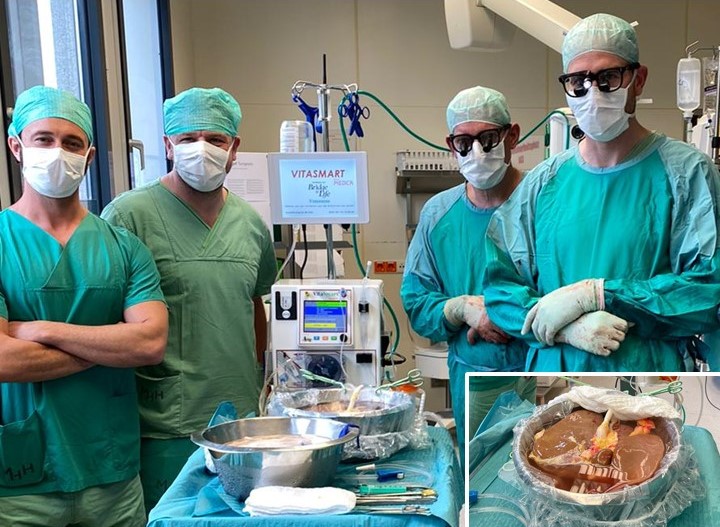
For the first time, the transplant team at the Clinical Department of General, Visceral and Transplant Surgery at Hannover Medical School (MHH) has pre-treated a donor liver with an extracorporeal perfusion device and optimized it for the subsequent transplantation.
The advantage: at the cellular level, the energy stores can be boosted, which are gradually depleted during the cold storage of the liver outside the body, the so-called cold ischemia period. "This has a short-term effect on the success of the operation, but also has a long-term effect on organ preservation," explains transplant surgeon Prof. Dr. Florian Vondran. The subsequent transplantation was successful. "The use of this procedure is necessary as more and more organs with "extended donor criteria" are being offered due to the shortage of organs. Their use is made possible by treatment under organ perfusion," explains Dr. Nicolas Richter, also a transplant surgeon. "This innovative technology for optimizing transplants is already regarded as the next major milestone in transplant medicine."
In extracorporeal machine perfusion, the organ is flushed with a special preservative solution in a device equipped with pumps and sensors before it is implanted in the patient. The organ is also supplied with oxygen via the solution.
Prof. Dr. Florian Vondran and Dr. Nicolas Richter's team initially used the hypothermic oxygenated perfusion ("HOPE") procedure, in which the liver is flushed with the oxygen-rich preservation solution at four to ten degrees Celsius for several hours before implantation.
The use of a protocol for normothermic perfusion of potential donor livers is also planned for the near future. This involves flushing the organ at body temperature using a nutrient-rich, blood-like perfusion solution. In addition to the actual optimization of the organ, this procedure also allows a functional check before transplantation. This procedure shortens the cold ischemia time. This improves the quality of the organ and the success of the transplant.