A heart for Pierre
Refugee man from Rwanda is successfully transplanted
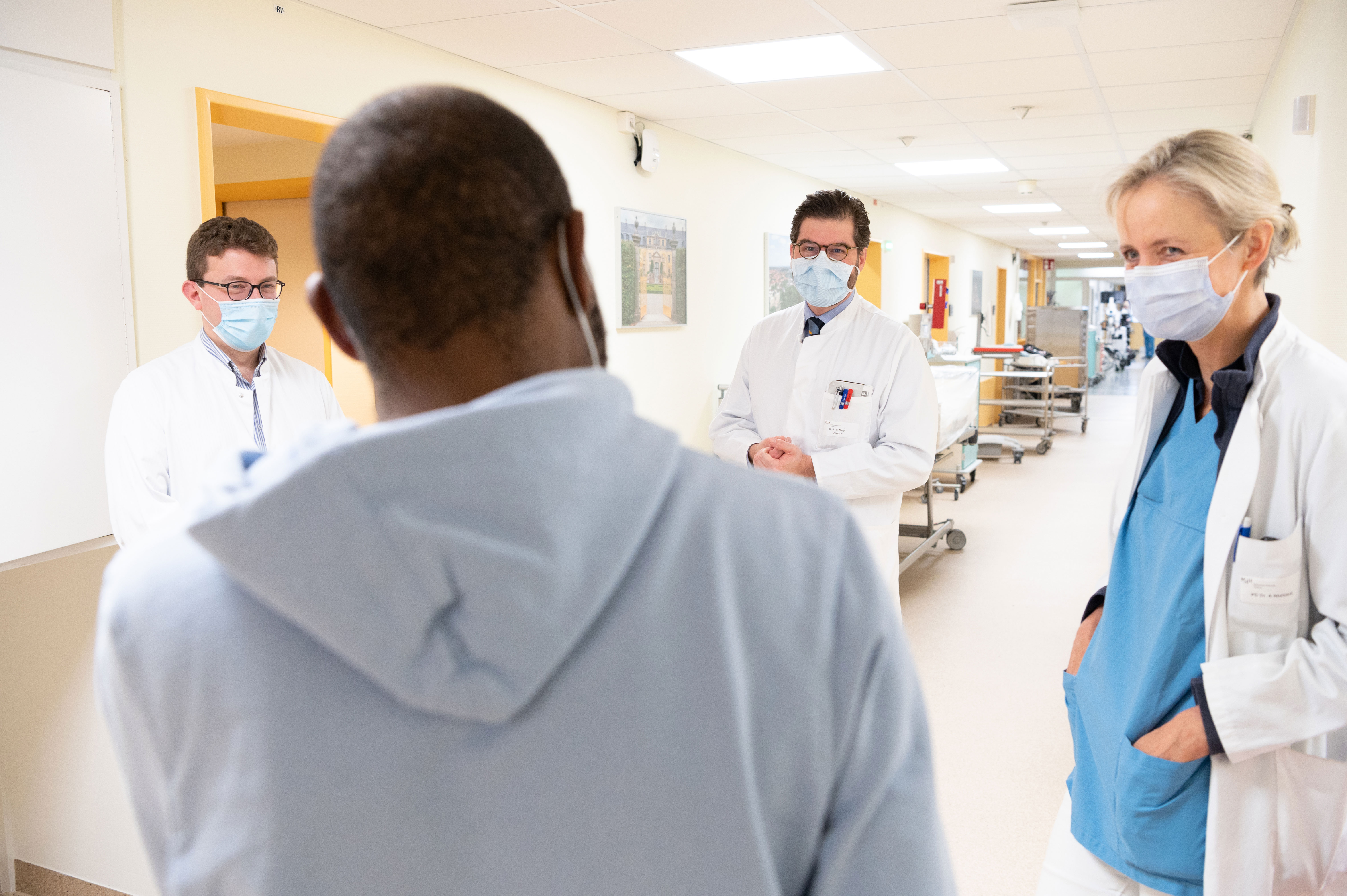
Three quarters of a year after his heart transplant, Pierre comes out of the echocardiography room in the heart transplant and artificial heart outpatient clinic. He is visibly relieved. An ultrasound scan of his transplanted heart has just been carried out. It looks healthy. Later, Dr. Heidi Niehaus, head of the outpatient clinic at the MHH Clinical Department of Cardiothoracic, Transplantation and Vascular Surgery, will confirm this in a consultation. The heart shows no symptoms of rejection and the blood values look good. He is due to come back in two months for another check-up. A case like many heart transplant patients - and yet this is a very special one.
Pierre was born in Rwanda. After his undergraduate studies, he studied zoology in Sweden and returned to his home country after completing his Master's degree. Due to his ethnic origin and his political views, things became increasingly critical for him; he was discriminated against.
In 2020, Pierre, who had been healthy until then, suffers a heart attack at the age of 32 after being vaccinated. He survives and is prescribed medication. Nevertheless, his condition deteriorates considerably; as a sign of the resulting heart failure, he is plagued by shortness of breath and water in his body. Pierre travels to Europe as an asylum seeker, landing in Germany in the hope of protection and medical care.
In a hospital in Bad Fallingbostel, it is discovered that a large clot has formed in his ventricle. Due to the severity of the condition, the MHH cardiology department is contacted. On a Friday in early January, Pierre is admitted to the heart failure unit. "In such young people, a spontaneous tear in the inner wall of the blood vessel is a common cause of a heart attack," explains Dr. L. Christian Napp, Managing Senior Physician of the Clinical Department of Cardiology and Angiology. "The resulting clot is a rather rare but typical complication of a heart attack. In the worst case, it can lead to a stroke."
The cardiologists try to dissolve the blood clot with medication and to relieve and support the weak heart with medication. His condition does not improve over the weekend. As there is no prospect of recovery of the heart function, Dr. Napp talks to Prof. Dr. Axel Haverich, Director of the Clinical Department for Cardiac, Thoracic, Transplantation and Vascular Surgery, and his team about the treatment options: The only remaining option to save Pierre's life is probably a transplant.
Initially, Pierre's critical condition seems to prevent further measures. When he was admitted to the MHH, he already had pneumonia with suppuration of the pleura as a complication of the long course of the disease. Dr. Patrick Zardo from the Haverich Clinical Department performed a minimally invasive procedure to remove pus and adhesions from the pleura and lung. Pierre survives this procedure despite his severe heart failure and the infection is brought under control.
At this point, the physicians are already intensively researching and examining the patient's medical history, talking to treating physicians in Rwanda and Sweden, having the patient file sent to them and presenting the case to the Transplant Centre's interdisciplinary, organ-specific transplant conference. The members decide to add Pierre, who has high urgency status, to the waiting list for a donor heart. He has a favorable blood group - and will be transplanted at the end of February. "We are delighted that Pierre is alive and well today," says PD Dr. Fabio Ius, who performed the transplant. "He owes this to his own self-care and to all those treating him, who did their best to give this young man a future."
Pierre now lives near Hanover in his own apartment, is able to cope physically and is also trying to find his feet professionally in his new home. "I would have died without the help. I am very grateful to all the physicians, nurses, the German social and asylum system and, above all, the organ donor and his family," Pierre emphasizes.