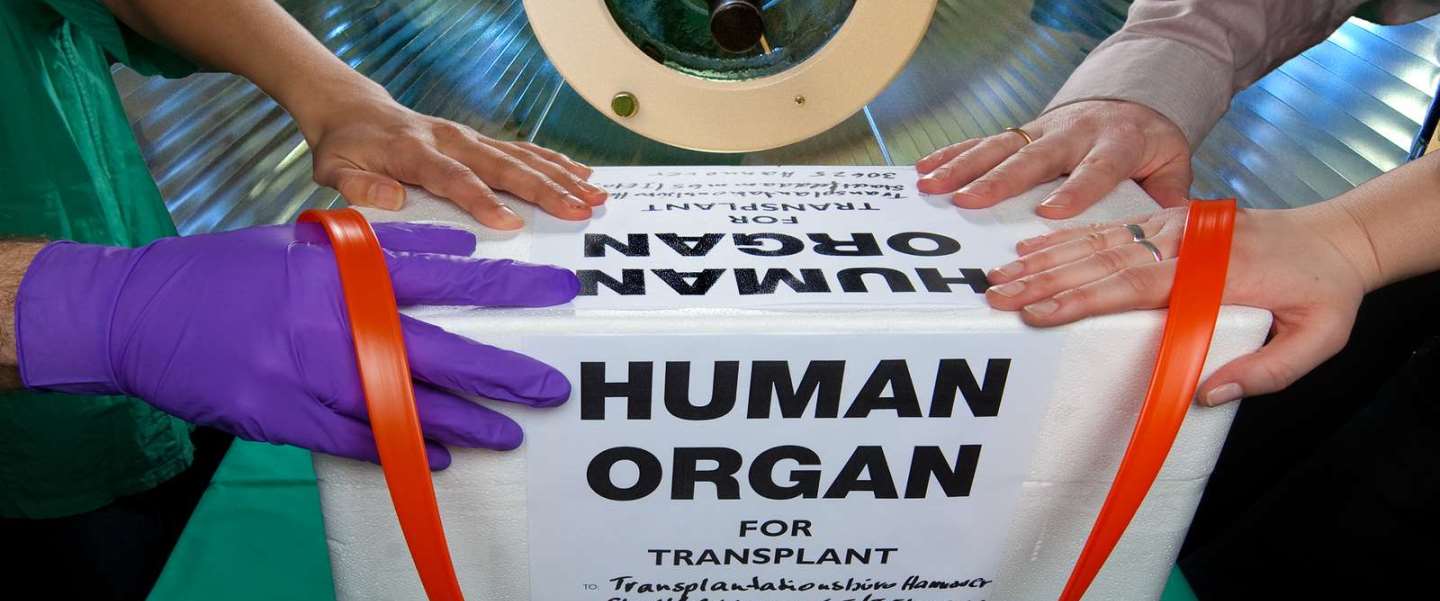
Hannover Medical School is not only a world-renowned Transplant Centre,
... but also one of over 100 so-called collection hospitals in Lower Saxony, i.e. hospitals where organs and tissue can be donated. On Organ Donation Day (click here for the official homepage) on June 6, we shed light on the delicate work of the transplantation officers at the MHH and in a video, a liver transplant patient reports on the anxious wait for the vital organ, uncertainties during the corona pandemic and life after the transplant.
Organ donors wanted: "We can't afford any failures"
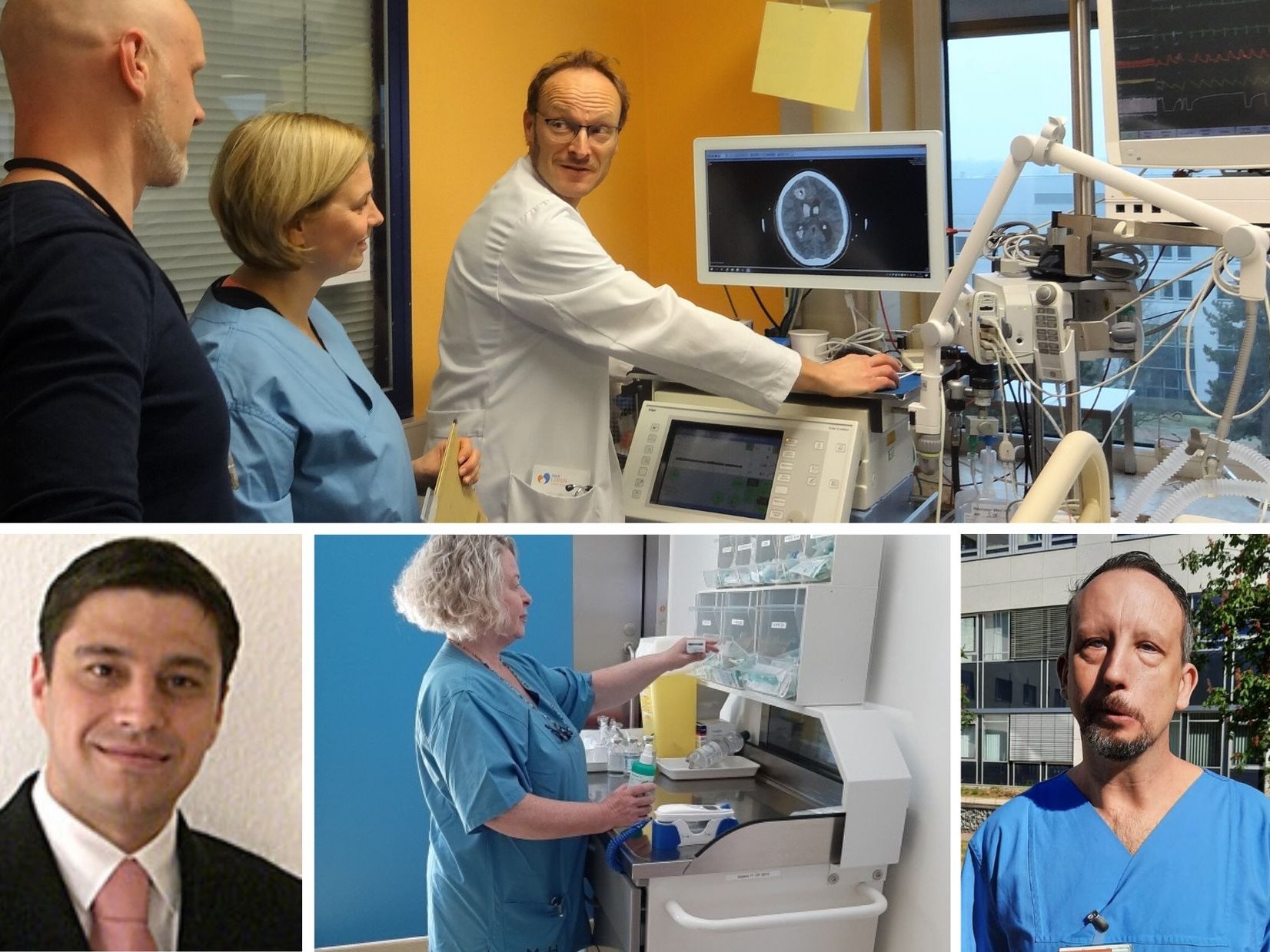
The MHH has five transplantation officers (MHH internal: organ donation advisors) - five people who take care of the difficult task of finding potential organ donors. A task that demands a lot from them and has many exciting facets, as four of them (Roswitha Terpe, Dr. Frank Logemann, Martin Gernart, Sven McVeigh) explain in an interview with the MHH web editorial team.
Question: Your profession here at the MHH is called organ donation consultant. Officially, however, the law says transplantation officer. Why this different name?
Answer Martin Gernart: In our view, the term "transplantation officer" does not correctly reflect our work. Our area of responsibility ends with the start of organ removal in the operating theater.
Question: What exactly do you do as an organ donation consultant?
Answer Frank Logemann: As the word suggests, we advise on the subject of organ donation. We are advisors and not agents who have to procure organs! In addition to advising relatives, we see our main task as advising the staff who work with these patients. To find out who we can advise, we have to do a screening beforehand. In other words, we have to look in the intensive care units to see which patients are showing signs of severe brain damage and could therefore be potential donors. We do this every day - electronically, by telephone or directly on site. However, 99 percent of those we initially identify are false positives, i.e. patients with minor neurological disorders that do not result in irreversible loss of brain function.
Question: 99 percent is a very high rate!
Answer Frank Logemann: Yes, but we handle it very sensitively so that no potential organ donor is lost. In view of the great need for organs and the fact that we only had five organ donors here at the MHH in the last year, we simply cannot afford to lose any donors. We must not lose any organ donation requests - that's why we check so carefully.
- Keyword "irreversible loss of brain function": The irreversible loss of all brain functions (brain death) is a prerequisite for organ donation. It denotes the death of a person. The brain no longer performs its control function. The cardiovascular system can only be artificially maintained with the help of intensive medical measures. In this way, the organs of the deceased person continue to be supplied with oxygen. Their functionality is maintained and they can be transplanted into patients. (see Federal Center for Health Education (BZgA))
Question: What criteria are you looking for exactly?
Answer Frank Logemann: First of all, all patients with severe brain damage are eligible for observation. If there is then a suspicion that the loss of brain function may have already occurred, brain function diagnostics must be carried out. This is prescribed by law. There is only one exception: if the relatives say that the patient would not have wanted this.
Question: In terms of previous illnesses and physical condition, who is a suitable organ donor?
Answer Frank Logemann: Almost everyone. People with active tumors are usually not eligible, as are HIV-infected people. Other contraindications are open tuberculosis and prions (editor's note: highly infectious pathogens). Even old age is not an exclusion criterion per se.
"We don't want to pressure anyone into saying yes to organ donation"
Question: How exactly do you advise relatives?
Answer Frank Logemann: It is usually completely unexpected for relatives to see a loved one who was still full of life and had goals, had booked a vacation with the family, suddenly just lying there motionless, with no prospects. In this stressful situation, they are confronted with the question of whether he or she would have agreed to organ donation. In this situation, we are there to support, advise and pick people up. We know the stress and the needs of relatives. They don't want to be overwhelmed, they want to be supported. We want to find out the donor's wishes with them, openly, without pressure - so that conflicts of conscience can be avoided later on. We don't want to pressure anyone into saying yes to organ donation because there are too few donors.
Question: How and when do you come into contact with relatives?
Answer Frank Logemann: I compare the situation for patients in the intensive care unit to a jungle. You don't know what dangers are lurking there and when and how you will get out again. The relatives and the intensive care team of nurses and physicians on the ward are your companions through this jungle. The latter are the scouts who know their way around the jungle very well. The relatives make contact with the scouts and generally have confidence in them. If it is then established that there is unfortunately no way out of the jungle - if someone new suddenly enters this jungle in the form of us organ donation advisors, then our work is sometimes very difficult. We would prefer to be there at the very beginning. But of course that doesn't make sense if you can still assume that everything will go well for the patient. The best scouts are actually the staff on the ward. If help is needed here, we offer to talk to the relatives, we offer ourselves as scouts for the future, so to speak.
Question: What happens if a patient has never expressed an opinion on organ donation, how is the decision made?
Answer Frank Logemann: Then the next of kin have to decide - and they decide as they see fit. However, this doesn't happen that often - in 2019, for example, in only 19 percent of cases in Germany where a patient was diagnosed with a definite loss of brain function. In these 19 percent of cases, slightly more than half of the relatives usually decide in favor of organ donation. In the other 81 percent of cases, there is either a written or verbal statement from the patient or at least it can be inferred from previous behavior whether an organ donation would have been desired.
Question: What guarantees does a person willing to donate have that they will not be released as a donor prematurely?
Answer Frank Logemann: This is often discussed in public, but it doesn't actually affect our work at all, because we don't hear such concerns from relatives. Nevertheless, it can be said that the German Medical Association's guideline for determining irreversible loss of brain function is the most meticulous in the world. It is very complicated, not everyone is allowed to carry out brain function diagnostics, there is a cross-check, everything is transparent. The DSO(German Organ Transplantation Foundation) also takes another look at the protocols and checks everything. I am not aware of any case in which the loss of brain function was certified according to this guideline and it did not apply.
"We need to sensitize Nursing staff and physicians to the topic"
Question: How do you become an organ donation consultant?
Answer Roswitha Terpe: I started this task in May after being approached beforehand. In any case, a certain amount of experience is required. I myself have been working in intensive care for 40 years and have worked with both transplant recipients and organ donors and know both sides. Over the years, I have experienced how crucial it is to sensitize the teams of nurses and physicians on the wards to the topic of organ donation. That's why the training we provide is so important. After all, organ donation is always a special situation for the staff on the wards, such as dealing with the relatives who accompany them and to whom they have to explain a lot - beyond the discussions with us organ donation advisors. There is also a lot of uncertainty among staff when it comes to the question of whether a person is a potential organ donor, as they are not confronted with this so often. One of the reasons why I became an organ donation advisor as a Nursing staff member is that I want to bring the topic more into nursing training, as we still have a lot of potential that we need to exploit.
Question: But are you still working in your original profession?
Answer Roswitha Terpe: Yes, we are released from work for this. When I come to work in the morning, I don't know what job awaits me - it depends on the situation. But that's normal for me, because my field of work in Nursing has never been predictable. When in doubt, things have to be postponed, that's doable.
Organ donation as an alternative in the event of circulatory death
Question: Compared to other countries, the number of organ donors in Germany is very low - despite high demand. What do you think needs to be done to improve the situation?
Answer Frank Logemann : We are already well positioned in our efforts to obtain donor organs with our transplantation officers and organ donation advisors. The problem is rather the low willingness to donate. We can certainly do a lot more to educate the public. However, it is also crucial that we often don't get as far as carrying out brain function diagnostics on patients because relatives want the devices to be switched off prematurely. So we often don't even have the chance to improve the number of donor organs. The situation today is very different from 20 years ago. Many people today have a living will or clearly state that they do not want to live as a nursing case - that is also very understandable, justified and a good thing. However, we often experience in intensive care units that right at the beginning of a brain disease - although there is still justified hope of survival - many relatives say: "He/she would not have wanted to continue living with this - please turn off the machines immediately".
Answer Roswitha Terpe: I see this in the context of the trend in society that we all want to be fit and healthy into old age. But if that is no longer possible, then we don't want to live with restrictions, so we don't want to live at all.
Question: Could the objection solution that was debated in the Bundestag at the beginning of the year and then rejected have been helpful?
Answer Roswitha Terpe: I think that would have met with little acceptance in Germany. Many would have seen it as paternalism and it would have provoked resistance.
- Keyword "opt-out solution": In March 2019, MPs from the CDU/CSU, SPD and Die Linke led by Federal Health Minister Jens Spahn and Karl Lauterbach presented a draft bill on the double opt-out solution. It stipulates that every citizen aged 16 and over is considered an organ and tissue donor unless they have objected during their lifetime. If there is no objection, the relatives are asked whether they are aware of a written objection or a will of the potential donor that conflicts with the organ or tissue removal. The draft was rejected in January 2020.
Answer Frank Logemann: I agree with that. I think it would be better if we did what has already been implemented in many other countries such as Spain, England, Austria and Italy: Organ donation in the case of circulatory death. Many relatives take a step backwards when they are asked about organ donation and see the "sleeping" patient. It is not easy for many people to believe that death has really occurred. It's different with a circulatory death, where death is much more obvious, the person is pale and not breathing. This makes death more tangible. If it has been agreed in advance that in this case - if the circulatory system has stopped - the organs may be donated, this would certainly be easier for the relatives to accept.
Video
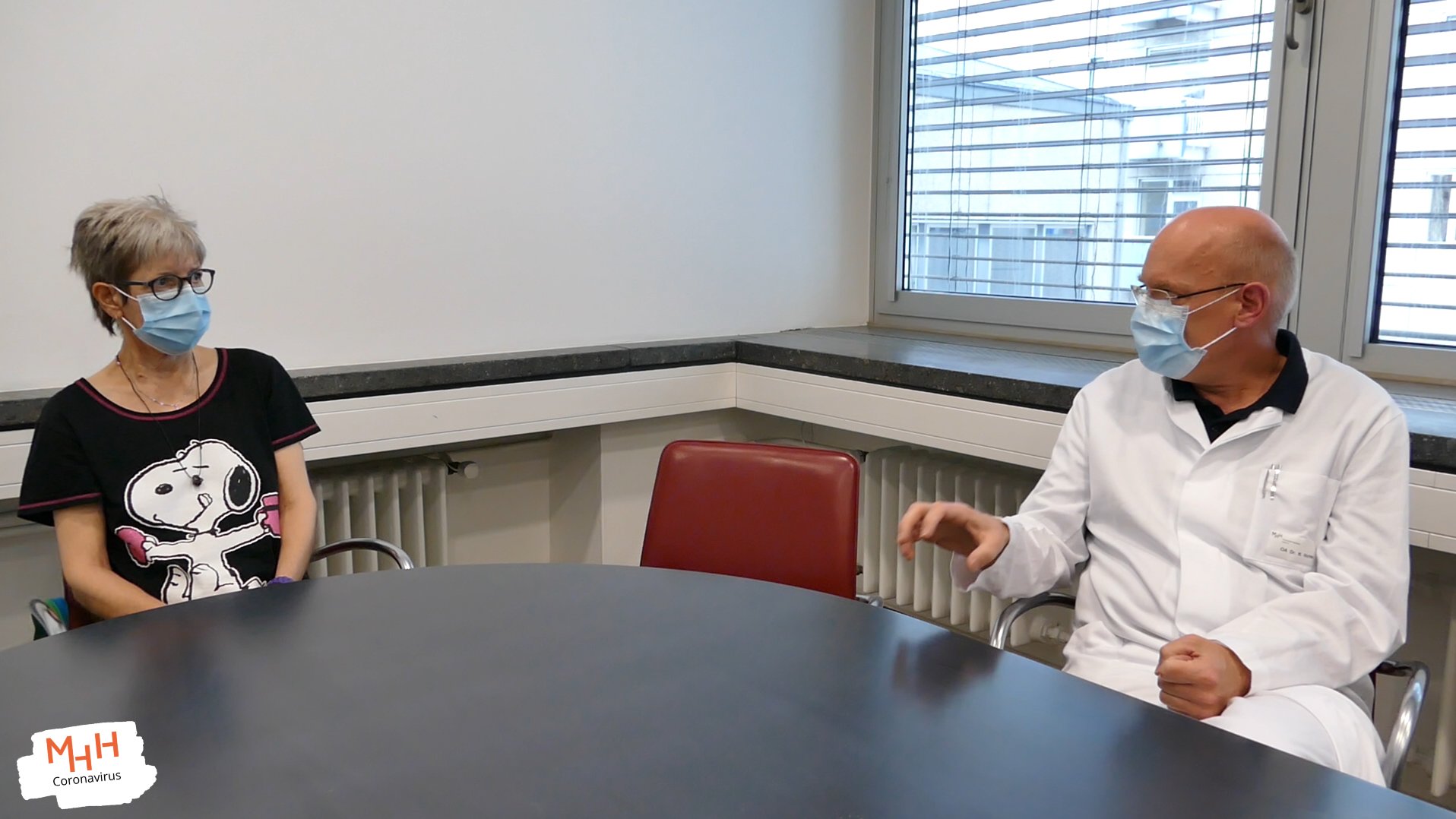
Corona was in the background, for me it was a matter of life or death
Marion L. was transplanted in the middle of the Corona period. Prof. Dr. Wedemeyer and Dr. Richter explain what has changed due to corona and why patients should not be afraid.