Promoting young talent in clinical research
The KlinStrucMed doctoral college at the MHH offers particularly motivated and committed medical students a unique opportunity in Germany: after their third year of study, they can concentrate for a year on writing their doctoral thesis on a topic from clinical research and not only receive comprehensive supervision during this time, but also a monthly scholarship of 800 euros. To date, the program, which was initiated in 2015, has been largely funded by the Else Kröner-Fresenius Foundation (EKFS). Funding from the EKFS is coming to an end after a total of six successful years. The next cohort of 10 scholarship holders is now financially secure, but the program is still dependent on donations and other funding to continue .
Another 10,000 euros for KlinStrucMed
January 27, 2022
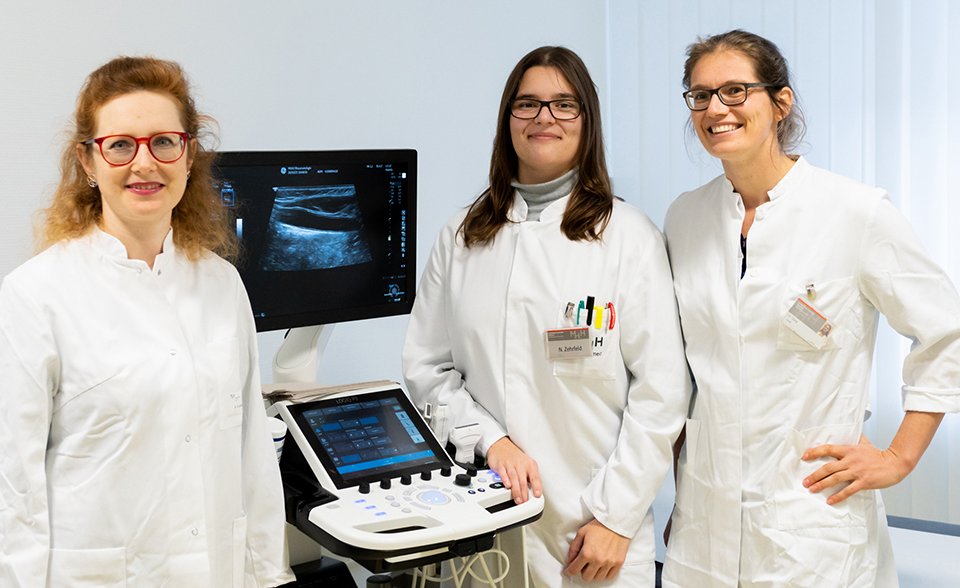
In summer 2021, the MHH plus funding foundation provided another 10,000 euros for the KlinStrucMed program. This will fund the scholarship for doctoral student Nadine Zehrfeld. At the Clinical Department of Rheumatology and Immunology, she has been investigating for several months whether patients with Sjögren's syndrome have an increased cardiovascular risk, i.e. a higher risk of suffering a heart attack or stroke, for example. Three months after the start of the doctoral program, we meet an all-round enthusiastic fellow who now routinely receives, interviews and examines patients. We have put together a FAQ about her doctoral project to explain how these examinations are carried out and what results Ms. Zehrfeld is hoping to achieve.
"I have to admit that a topic in rheumatology wasn't my first choice on paper, because I've actually wanted to be a surgeon for as long as I can remember," Nadine Zehrfeld admits right at the start of the interview. "But I was immediately impressed by the commitment and enthusiasm of the two project managers. In addition, the direct benefit for patients was important to me, because I don't just want to do research for research's sake." The two project leaders are Dr. med. Diana Ernst from the Clinical Department of Rheumatology and Immunology and Dr. med. Kristina Sonnenschein from the Clinical Department of Cardiology and Angiology. "They really provide excellent care on an equal footing. We communicate regularly and I always get help when I need it. But apart from that, I can work completely independently, which is a great feeling," says Nadine Zehrfeld.
The KlinStrucMed scholarship holder has not yet completely given up on a future as a surgeon, but the course is no longer quite as clear as it was before the scholarship. Whatever she decides, we wish Ms. Zehrfeld all the best!

MHH plus funding foundation supports KlinStrucMed with 50,000 euros
June 2, 2021
To ensure that young scientists can continue to be supported in clinical research in the future, the MHH plus funding foundation is contributing to the program's financial resources. "We are very grateful for the financial support from the foundation," says Dr. Anna Stepczynska-Bachmann, Program Manager of the KlinStrucMed program. The funds come from the activities of the cancer medicine funding priority and will be used for three research projects with an oncological focus. The three scholarship holders who will complete their doctorates in these projects are Anja Tiede, Emily Narten and Laura Christin Kusche.
Anja Tiede (23), who will be researching the treatment of liver cirrhosis from summer 2021, has long had a passion for internal medicine. Now being able to do her doctorate in this field and under optimal conditions is a real hit for her. The decisive factors for her application to the KlinStrucMed program were the close contact with patients and the close support she received when entering clinical research. When she talks about her doctoral topic, it quickly becomes clear that she is already on fire. You can find out which questions are driving her in detail in the overview of doctoral projects below.
Emily Narten (21) also has her sights set on a career as an internist. However, this could change, because unlike Anja Tiede, she has chosen a question from the field of neurology for her doctoral thesis. "After we were offered a place at the college, we went through the matching phase, in which the lecturers presented the topics that we could work on with them. Even though there were many exciting and impressive projects, my choice was quickly made. After the first interview, I decided on the project in neurology because everything was a great fit for both sides - including on a personal level."
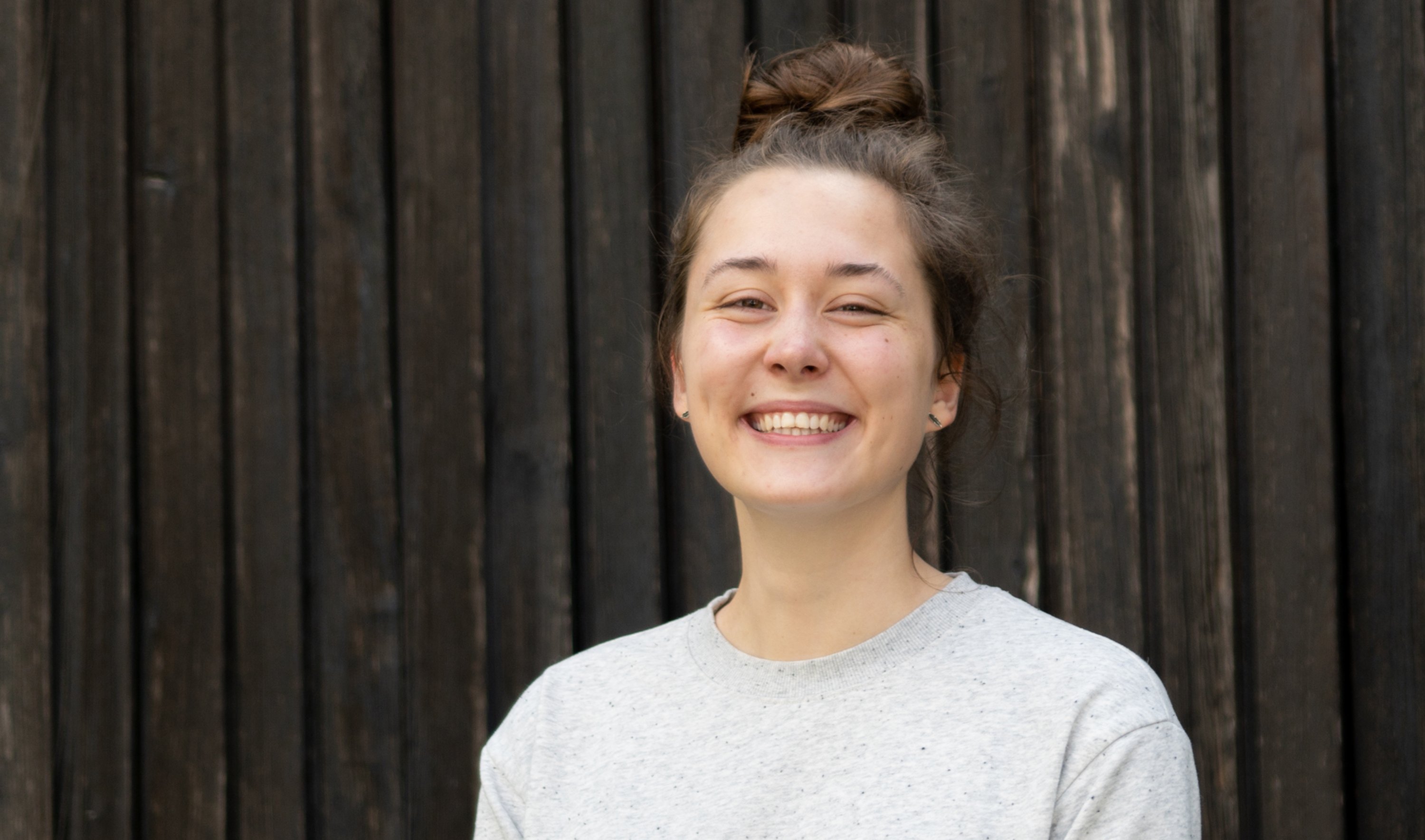
The third woman in the group is Laura Christin Kusche (22): during her fellowship year, she will be working on a problem in the field of onco-immunology. "After the first three very theory-heavy years of study, I'm looking forward to getting into practical research with lots of patient contact. The timing is really ideal," says Kusche. Doing a doctorate at the same time as her exams or during her first few years of work was not really an alternative for her. "There's often not enough time and in the end you certainly can't do everything the way you'd actually like to. When I do my doctorate, I want to really get stuck into the subject. And the fact that I can do this now, especially with the financial backing of a scholarship, is really great!"
Regardless of what field these three young women will ultimately specialize in: They are already certain that they will take away a lot of valuable experience from the next twelve months. We wish them every success!
The doctoral projects at a glance
Ms. Tiede, the title of your doctoral thesis is "Influence of portal hypertensive pressure reduction using non-selective beta-blockers and/or TIPS on the extent of systemic inflammation and carcinogenesis in patients with liver cirrhosis". What is behind this?
So-called systemic inflammation, i.e. inflammation throughout the body, can trigger various complications in patients with liver cirrhosis. My task is to find out whether certain drugs (beta-blockers) and/or surgical methods (TIPS), which are actually used for a different purpose in liver cirrhosis, also have a positive effect on this inflammation throughout the body.
How does such systemic inflammation occur?
In cirrhosis, the tissue of the liver, which is actually well supplied with blood, becomes increasingly scarred. As the blood has fewer and fewer escape routes, this often leads to increased blood pressure in the abdominal cavity. This high blood pressure can lead to the intestinal barrier no longer functioning properly and intestinal bacteria entering the bloodstream. This is one of the causes of systemic inflammation.
And why is it so important to get this inflammation under control?
Because this systemic inflammation actually always leads to a more severe course of the disease and (to put it very simply) ultimately greatly increases the risk of liver cancer.
You said that the drugs you are particularly interested in are already being used in treatment, but actually with a different aim. Which drugs are you focusing on exactly?
It's about beta-blockers, which are actually only intended to lower high blood pressure in the abdomen and reduce the risk of bleeding. Accordingly, they are currently only used in therapy when there is a specific risk of bleeding (e.g. due to so-called variceal bleeding). In some studies, however, there are indications that they also reduce systemic inflammation - independently of the blood pressure in the abdominal cavity. This is now to be investigated in detail.
And what about the so-called TIPS method?
The TIPS method is also used to reduce high blood pressure in the abdominal cavity. In a minimally invasive examination, similar to a cardiac catheterization, a shunt is placed to divert some of the blood from the intestine around the scarred liver.
What does it mean for the treatment of liver cirrhosis if the suspicions are confirmed?
If our research now proves that beta-blockers and / or the TIPS method generally improve inflammation, both could be used as standard therapy at an earlier stage and thus mitigate the progression of liver cirrhosis.
Could this even cure liver cirrhosis?
Unfortunately, liver cirrhosis cannot be cured with this method. But the hope is that the quality of life of those affected will improve, complications will be prevented and they will at least be spared a hepatocellular carcinoma.
Anja Tiede is being supervised in her research work by PD Dr. Benjamin Maasoumy and Prof. Dr. Markus Cornberg, Clinical Department of Gastroenterology, Hepatology and Endocrinology at the MHH. The full title of her dissertation is "Influence of portal hypertensive pressure reduction using non-selective beta-blockers and/or TIPS on the extent of systemic inflammation and carcinogenesis in patients with liver cirrhosis".
Ms. Narten, you will be looking at the autoimmune neurological side effects of so-called immune checkpoint inhibitor therapies. What are these therapies all about?
The principle of immune checkpoint inhibitor therapy is based on the fact that the body's own immune cells are activated and ultimately attack the tumor cells. This type of therapy has significantly improved the prognosis of many cancers, such as malignant melanoma.
That actually sounds good. But what's the catch?
The mechanism of action means that autoimmune side effects often occur during therapy, i.e. the immune cells do not or not only turn against the tumor cells, but also against healthy cells. In principle, this can affect all organs, but in my doctoral thesis I am focusing on neurological side effects. These have a special status, as they are often recognized too late, but can also cause particularly serious complications.
What kind of side effects can these be?
They can range from muscle tremors, gait disorders and muscle or nerve inflammation to severe encephalitis, i.e. inflammation of the brain. However, I will only find out exactly what the neurological side effects look like as part of my doctoral thesis when I talk to the affected patients and examine them.
And what exactly do you want to find out about these neurological side effects?
My first task is to document how frequently the autoimmune neurological side effects actually occur with immune checkpoint inhibitor therapy. The next step is to characterize these side effects as precisely as possible using various clinical examination methods and questionnaires. The ultimate aim is to use this preliminary work to identify so-called biomarkers that can be used to better assess the individual risk. To put it simply: if I know that the autoimmune neurological side effects are associated with certain blood values, e.g. an increase in certain proteins in the blood, it naturally makes sense to keep an eye on these factors during therapy in order to detect side effects at an early stage.
... and to treat them.
And to treat, yes, exactly. Improving treatment methods is basically the focus of all the projects that are being worked on as part of the KlinStrucMed program.
Emily Narten is being supervised in her research work by Prof. Dr. Thomas Skripuletz, Clinical Department of Neurology at the MHH. The full title of her dissertation is: "Monitoring of patients with oncological diseases under therapy with immune checkpoint inhibitors with regard to autoimmune neurological side effects".
Ms. Kusche, you will now spend a year studying the immune profiles of innate lymphoid cells (ILCs) in patients suffering from hepatocellular carcinoma and therefore receiving so-called immune checkpoint inhibitor therapy. What are Innate Lymphoid Cells (ILCs) and the associated immune profiles?
Innate lymphoid cells (ILCs) are lymphocytes, i.e. certain cells whose task is to defend the human body against infectious agents. When you create an immune profile of these cells, this simply means that you examine the blood and see which and how many of these lymphocytes are present in the blood.
And what role does immune checkpoint inhibitor therapy play?
As Ms Narten has already explained, the aim of this therapy is to get the immune cells to attack the tumor cells. And immune checkpoints are receptors on the immune cells that determine the outcome of the immune response. However, these receptors are often tricked by tumour cells so that the immune system does not recognize the tumour cells and, of course, does not fight them. So-called immune checkpoint inhibitors are used to block the tricked receptors so that the fight against the tumor cells can continue.
And what does this have to do with the ILC cells?
Unfortunately, therapy often leads to autoimmune reactions, which are of course undesirable. It would therefore be helpful to know as early as possible whether a patient is really responding to the therapy. And this is where the ILC cells come into play.
You want to be able to tell from the ILC cells whether the therapy is working?
That is the hope, yes. But the first step is to prove whether and how these cells are actually involved in the immune response during immune checkpoint inhibitor therapy. If everything goes well, yes, then at the end of our study we would be able to use a blood test or an immune profile to identify at an early stage whether the therapy has any chance of success or not.
Laura Christin Kusche is being supervised in her research work by Prof. Dr. Hans Heinrich Wedemeyer and Dr. Bernd Heinrich, Clinical Department of Gastroenterology, Hepatology and Endocrinology at the MHH. The full title of her dissertation is: "Association of clinical characteristics with the peripheral immune profile of innate lymphoid cells (and adaptive CD8+ T cells) in patients with hepatocellular carcinoma before and after treatment with the new standard therapy atezolizumab and bevacizumab.".
Ms. Zehrfeld, you are working on the question of whether patients with Sjögren's syndrome have an increased risk of arteriosclerosis. Can you start by explaining what atherosclerosis is and which risk factors generally favor this disease?
In atherosclerosis, fats are deposited in the walls of blood vessels and lead to hardening and narrowing. If such a narrowing increases over years or a plaque rupture occurs, an acute vascular occlusion such as a heart attack, stroke or intestinal blockage can occur. Classic risk factors for this disease include smoking, obesity and high blood pressure and are closely linked to lifestyle habits. However, genetic factors or chronic inflammatory processes in the body can also promote atherosclerosis. And that brings us to the subject of Sjögren's syndrome.
What exactly is Sjögren's syndrome?
Sjögren's syndrome is an autoimmune disease that mainly affects women and typically leads to chronic inflammation of the lacrimal and salivary glands. Most people affected complain of dry eyes or a dry mouth. In addition, many patients have inflammation in the joints, less frequently in internal organs, the nervous system and also blood vessels.
And you are now investigating patients with Sjögren's syndrome with a view to atherosclerosis? How many test subjects does your study include?
With my dissertation, I would like to significantly expand the data available on this topic. At least 150 Sjögren's patients and a control group of at least 75 subjects without Sjögren's syndrome are to be included in the study.
And how exactly does the individual examination work?
I use an ultrasound device to measure the thickness of the vessel walls in each participant in order to assess how advanced any atherosclerosis is. I also measure the blood pressure in both upper arms and both lower legs to determine the so-called ankle-brachial index. This provides information about any circulatory disorders in the vascular system remote from the trunk of the body. In some cases, I also carry out a pulse wave analysis to assess how stiff the vessel walls already are. I also take blood samples to determine blood lipids and other relevant known parameters. In addition, we will also be looking for new biomarkers, so-called non-coding ribonucleic acids, to find new prognostic markers. In addition to the device-based and laboratory chemical examinations, I ask a lot of questions about the patient's medical history, medication, hereditary predispositions and lifestyle habits that may favor atherosclerosis.
What results do you expect and how do patients benefit from them?
We expect that patients with Sjögren's syndrome have an approximately 30% higher risk of atherosclerotic vascular changes than the control group. The findings of the study should result in optimized control care for patients with Sjögren's syndrome. Comprehensive education to reduce the classic cardiovascular risk factors coupled with close monitoring of the vascular status and, if necessary, an adaptation of the drug treatment approaches would be conceivable. The aim is to further reduce the development or progression of atherosclerotic processes in this patient group.
Nadine Zehrfeld is being supervised in her research work by Dr. med. Diana Ernst, Clinical Department of Rheumatology and Immunology, and Dr. med. Kristina Sonnenschein, Clinical Department of Cardiology and Angiology. The full title of her dissertation is: "Evaluation of arteriosclerotic vascular changes and end-stage diseases as well as cardiovascular risk factors and new biomarkers in patients with primary Sjögren's syndrome".