Hospital operations remain stable thanks to emergency measures and the fire department: A failure in the central cooling system pushed the MHH’s building services to their limits.
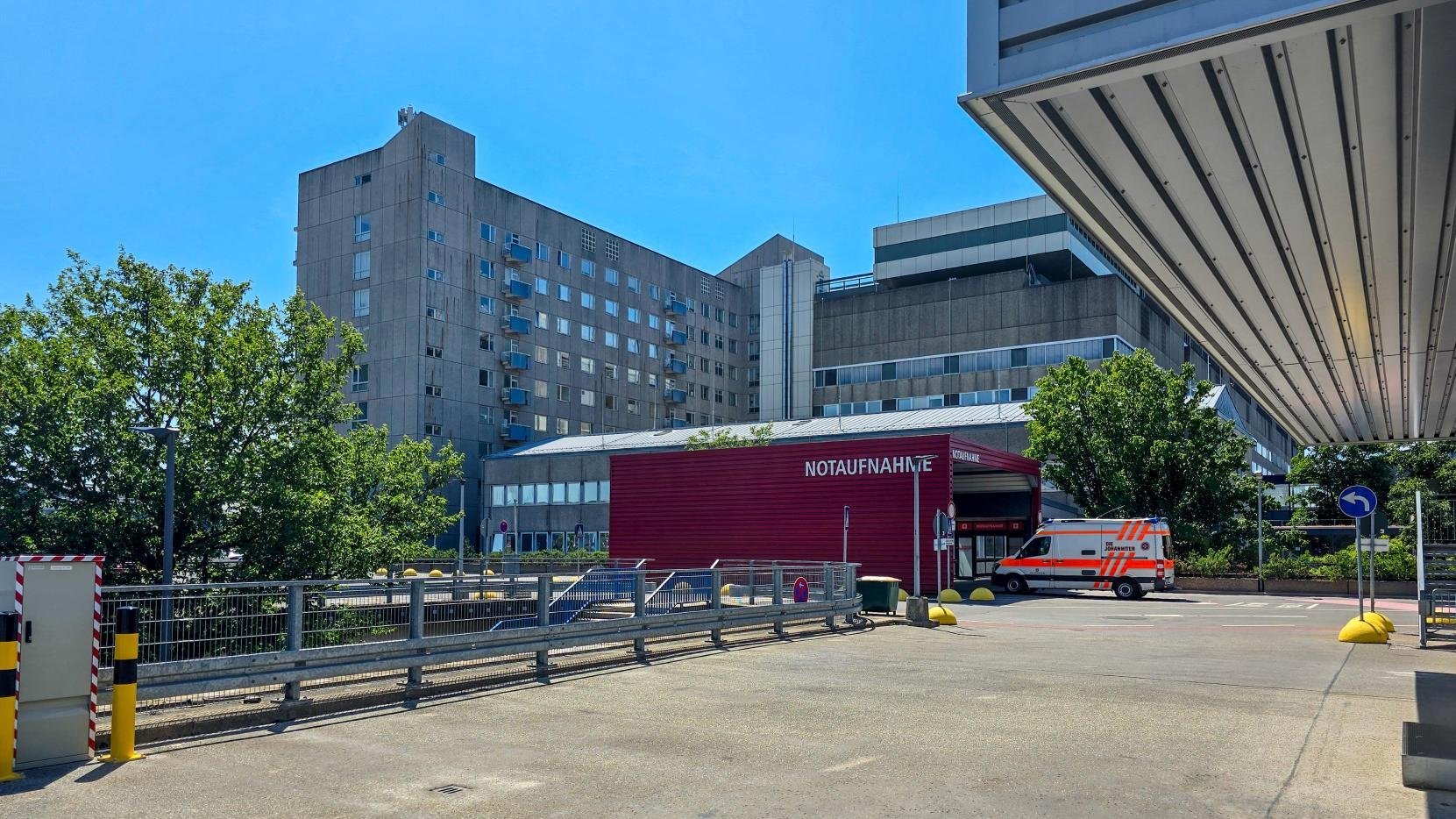
The MHH emergency room did not see an increase in patient volume — patient care was not compromised at any time. Copyright: Inka Burow/MHH
The Hannover Medical School (MHH) has prepared for the extreme heat. When the German Weather Service issued a Level 2 warning, the corresponding measures in the MHH heat protection plan were activated. Nevertheless, a failure of the so-called “large-scale cooling system” occurred on Saturday evening. As a result, the data center’s emergency cooling system became overloaded.
The hospital’s emergency response team alerted the Hannover Fire Department to assist with cooling the building’s technical systems. The MHH was temporarily taken off the emergency care network. Nevertheless, all emergencies that could only be treated at the MHH were attended to. Patient care at the MHH was not compromised at any time.
Patient volume in the emergency room at usual levels
So far, no significant increase in heat-related cases has been recorded in the emergency department. Patient volume remains at the level typical for the summer months. There continues to be a significant increase in pre-hospital emergencies: there are more ambulance calls due to dehydration and other heat-related illnesses, both in private homes and in care facilities.
What the MHH heat protection plan says
The MHH is always prepared for potential challenges posed by high temperatures. The MHH Heat Protection Plan is based on the recommendations of the Federal Ministry of Health’s model heat protection plan. It is part of the Hospital Alarm and Response Planning (KAEP)—that is, the MHH’s emergency plan—and is subject to ongoing updates.
The MHH Heat Protection Plan includes measures to be prepared in advance for the summer, measures to be implemented during the summer months, and additional measures tailored to the specific warning levels.
These measures include, among others:
- organizational and medical training for employees, online information, and training as part of the EVA training program (specifically in the summer; EVA stands for “ErstVersorgungsAusstattung,” or “First Aid Equipment”)
- information flyers for staff and patients, a collection of links
- adjusted staffing plans
- adjusted medication storage
- adjusted beverage supply
- Additional patient education
- Adapted medical monitoring of particularly high-risk patients
- General adjustments to treatment practices and staffing plans
► Heat waves: Tips for protecting older adults
Text: Administrative Unit for Communications