MHH is officially recognized as a neurovascular centre. Patients receive interdisciplinary care there.
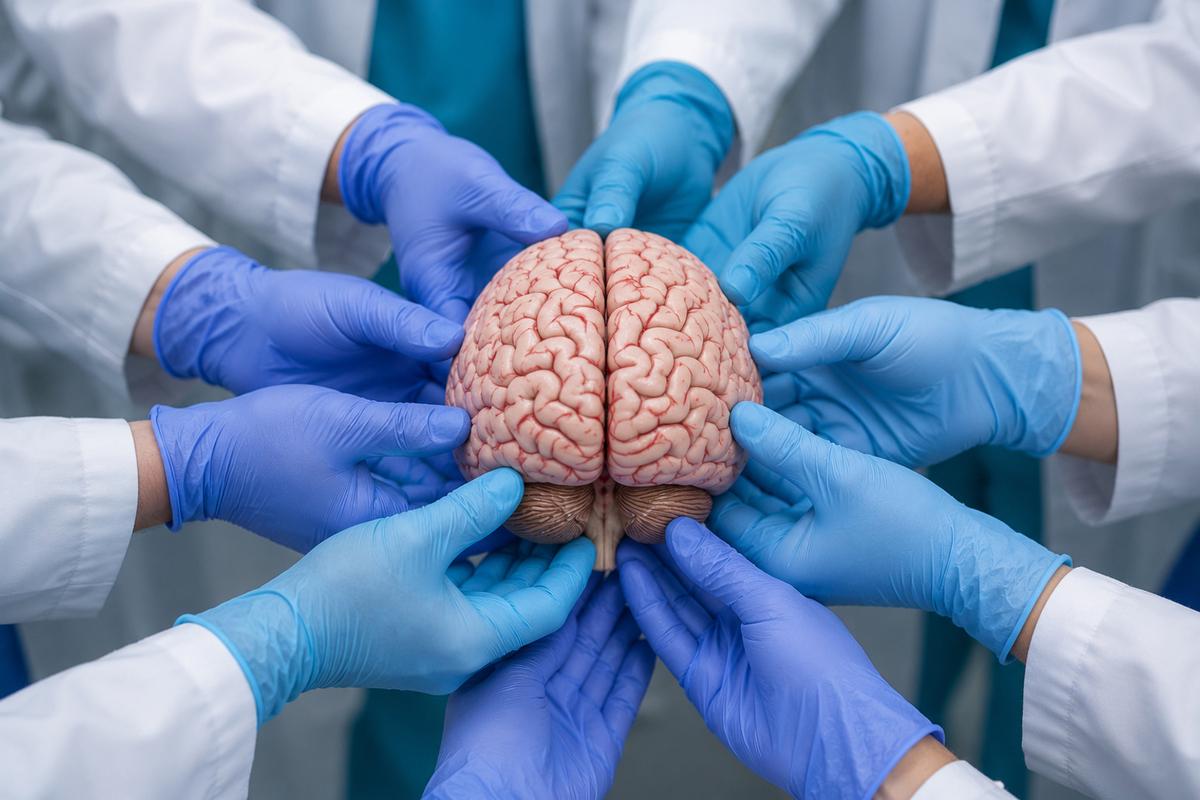
At the Neurovascular Centre, experts from various disciplines work together to treat cerebrovascular diseases. Copyright: Karin Kaiser/MHH/AI-generated
In cases of strokes and other cerebrovascular diseases, rapid and coordinated treatment is crucial. The Hannover Medical School (MHH) has established and highly specialized structures for this purpose. The state of Lower Saxony has officially recognized the MHH as a Neurovascular Centre. This confirms that the MHH meets the high, nationwide quality standards set by the Joint Federal Committee (G-BA) for the care of complex cerebrovascular diseases.
More than 1,000 cases per year
“Recognition as a Neurovascular Centre reflects our high standard of care and the strong interdisciplinary collaboration with other Clinical Departments within the MHH, as well as with external partner hospitals,” explains Prof. Dr. Aiden Haghikia, Director of the Department of Neurology at the MHH. Dr. Ramona Schuppner, Head of the Stroke Unit at the Clinical Department of Neurology, adds: “At the MHH, we treat more than 1,000 patients annually with acute and complex cerebrovascular diseases. Thanks to clearly structured processes, well-coordinated teams, and close interdisciplinary collaboration, we ensure prompt and targeted care.”
High-level interdisciplinary care
The MHH Neurovascular Centre brings together expertise from neurology, neuroradiology, neurosurgery, vascular surgery, and critical care medicine. Together, these Departments treat the entire spectrum of neurovascular diseases - from ischemic stroke and cerebral hemorrhage to rare vascular malformations. They have access to state-of-the-art diagnostic tools and interventional procedures.
Close collaboration in the region
The centre maintains close communication with partner institutions in the region to jointly evaluate complex cases and coordinate treatment strategies. “This close collaboration promotes the transfer of knowledge and helps ensure that patients receive treatment that meets the highest quality standards at every stage of care,” explains Professor Haghikia.
Text: Tina Götting