Fewer immunosuppressants after transplantation: MHH team receives 2.4 million euros to research personalized cell therapy.
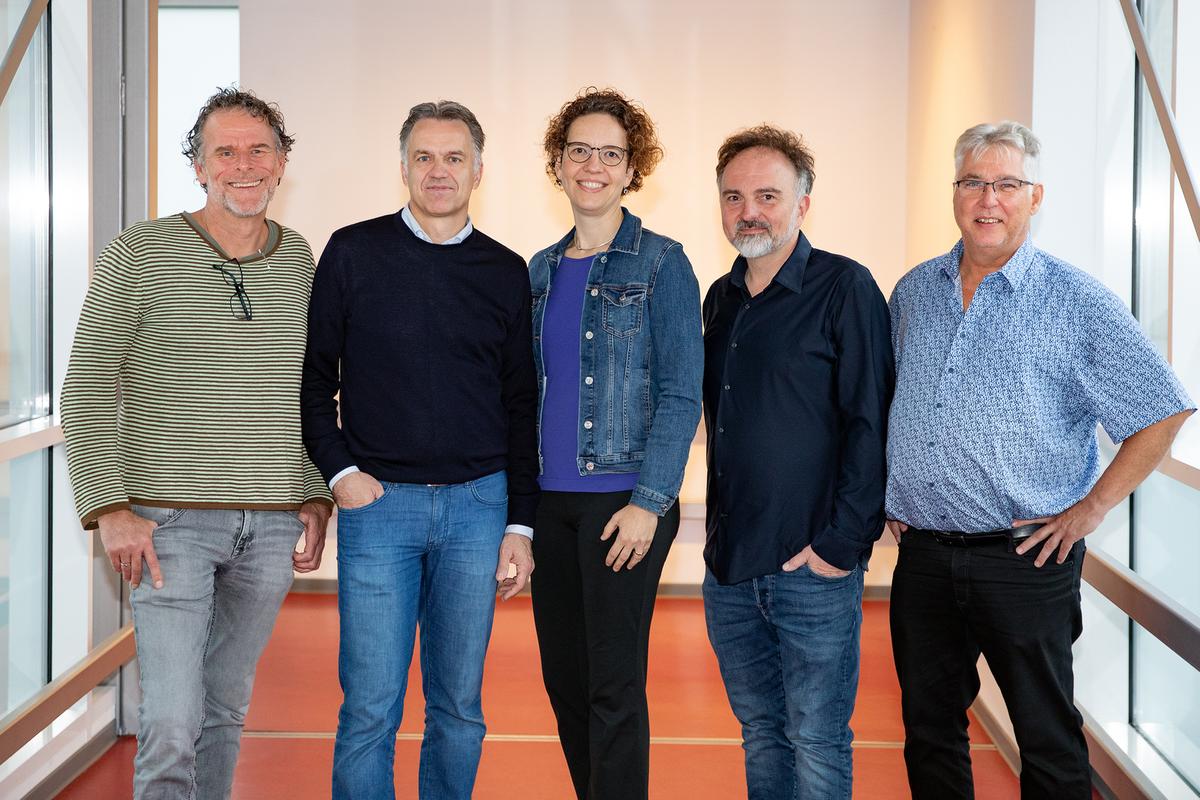
The applicant team for the “AgEndo” project (from left): PD Dr. Nicolaus Schwerk, Prof. Dr. Martin Böhne, PD Dr. Sybille Landwehr-Kenzel, PD Dr. Fatih Noyan, PD Dr. Alexander Horke (from left). Copyright: Karin Kaiser/MHH
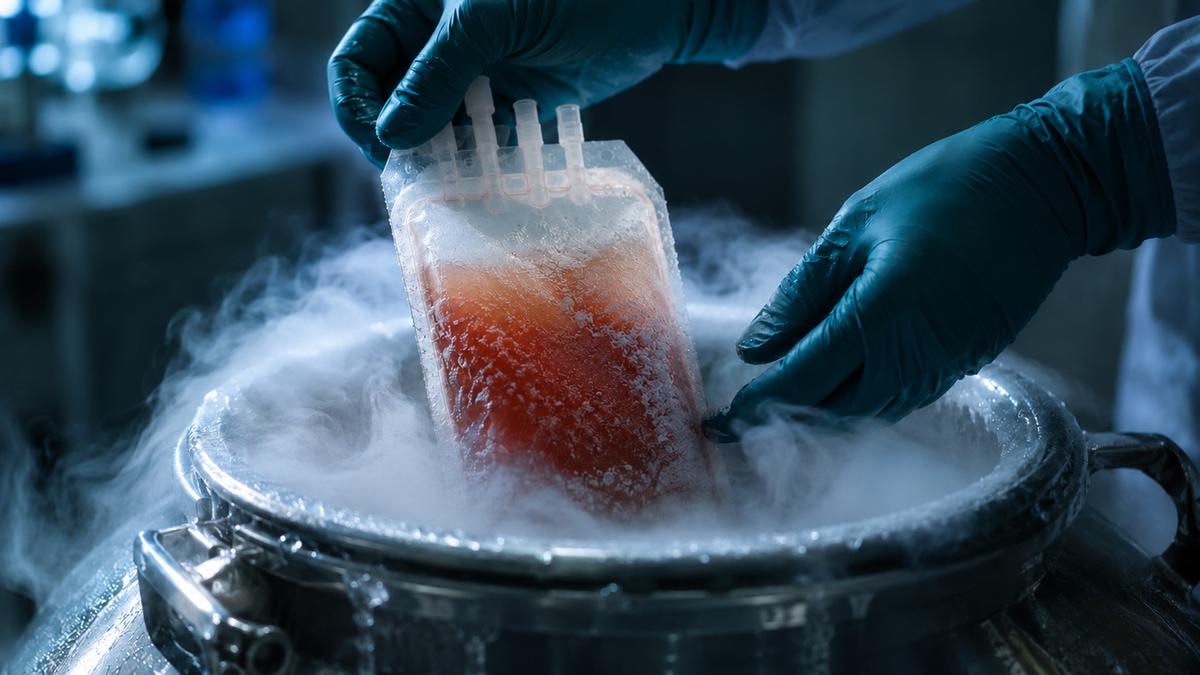
Storage in liquid nitrogen: Cell therapies such as regulatory T cells are often frozen at minus 196 degrees after production. This allows them to remain viable until they are used. Image source: AI-generated by F. Noyan
A heart or lung transplant can save lives. However, to prevent the donor organ from being rejected, patients must take immunosuppressive medications for the rest of their lives. These immunosuppressants are effective but do not reliably protect against chronic organ rejection and can cause significant side effects.
To enable children in particular to experience reduced immunosuppression and longer organ function following a heart or lung transplant, a research team at Hannover Medical School (MHH) is developing a tailored cell therapy as part of the “AgEndo” project.
Instead of broadly suppressing the immune system, the body’s own immune cells - known as regulatory T cells (Tregs) - are intended to specifically protect the transplanted organ, thereby reducing the need for immunosuppressive therapy and ensuring longer organ function. This is expected to improve the lives of the affected children and their families. The state of Lower Saxony and the Volkswagen Foundation are funding the project with approximately 2.4 million euros over three years.
Localized immunosuppression
Tregs are part of our immune system’s natural control mechanisms. As counterparts to effector T cells, they terminate immune responses after infections have been overcome. They also play a key role in preventing autoimmune diseases - that is, when the immune system turns against the body’s own tissue.
Tregs are produced in the thymus, which is located above the heart. In many pediatric heart surgeries, a small portion of the thymus must be removed to gain access to the heart. From this tissue sample, the researchers isolate the Tregs, which they then select, multiply, and prepare in the laboratory so that they specifically recognize the donor organ. Since they originate from the organ recipient’s own body, they are particularly well tolerated.
“We induce these tailor-made Tregs to colonize the transplanted organ. Thus, with our AgEndo project, we are pursuing an approach that uses the body’s own cells to protect the organ from immune reactions directed against the transplant, rather than suppressing the immune system across the board,” explains associate professor (PD) Dr. Fatih Noyan of theMHH Clinical Department of Gastroenterology, Hepatology, Infectious Diseases and Endocrinology and a researcher at the German Center for Lung Research (DZL) in Hanover, BREATH. He initiated the project together with PD Dr. Alexander Horke of theMHH Clinical Department of Cardiac, Thoracic, Transplant, and Vascular Surgery. In addition to PD Dr. Noyan and PD Dr. Horke, the applicant team includes PD Dr. Sybille Landwehr-Kenzel, PD Dr. Nikolaus Schwerk, and Prof. Dr. Martin Böhne.
A better quality of life for children and their families
“Donor-specific regulatory T cells have the potential to fundamentally transform transplant medicine. They promise a reduced need for immunotherapy and longer organ survival. For the affected children and their families, this means fewer side effects, fewer hospital stays, and a more carefree daily life,” says PD Dr. Horke, explaining the vision behind AgEndo.
The results are intended to lay the groundwork for clinical trials using the developed Tregs. In the long term, the approach could also be applied to other organ transplants, autoimmune diseases, and graft-versus-host disease - an immunological reaction in which donor T cells attack the recipient following a bone marrow or stem cell transplant.
The MHH is Germany’s largest Transplant Centre. Each year, 300 to 400 organs are transplanted at the MHH. Organ recipients include people of all ages - from infants to seniors. However, there are far more people on the waiting list for a donor organ than there are organs available. In Germany alone, approximately 8,200 people are currently waiting for donor organs - particularly kidneys, hearts, livers, and lungs.
Text: Bettina Bandel