Additional operating room capacity and more staff will ensure care for breast cancer patients.
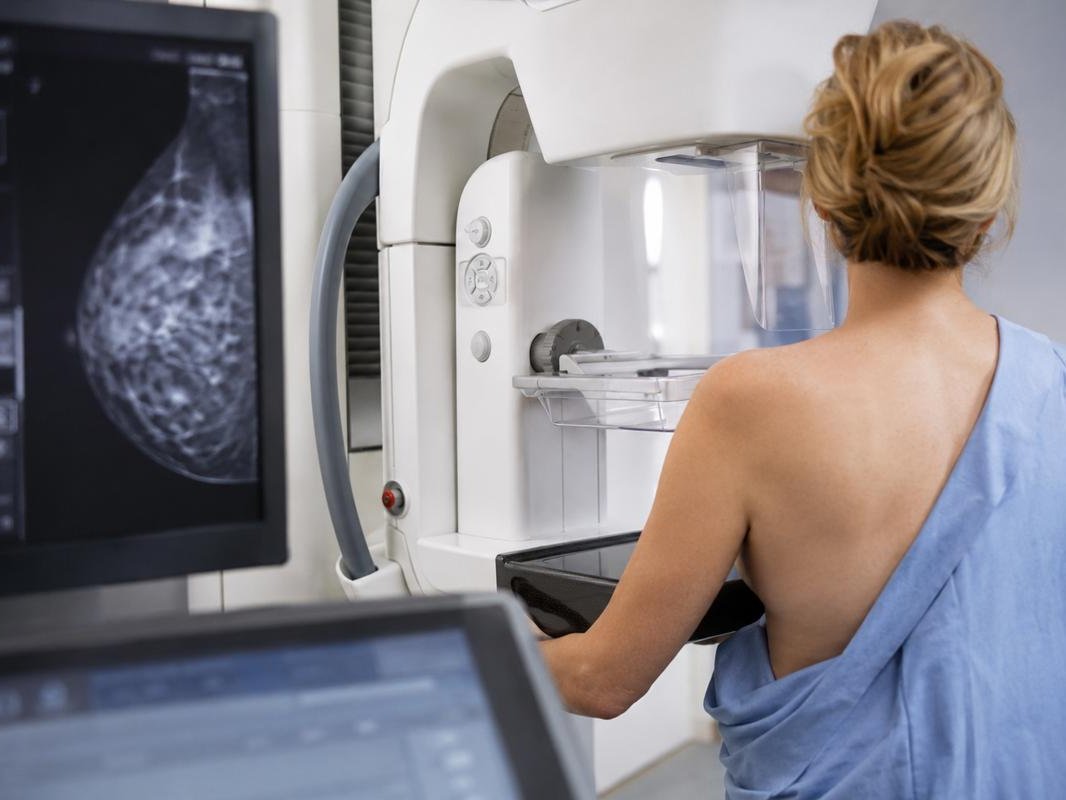
Mammography: Many cases of breast cancer are detected through this examination. Copyright: Karin Kaiser/MHH/KI generated
As a certified breast center, Hannover Medical School has been offering quality-assured, state-of-the-art university-level medical care under one roof for many years. In light of a growing number of female patients, the breast center is now further expanding its capacity. This move also responds to the restructuring of the breast center at KRH Klinikum Siloah and its relocation to the Gehrden site. “As a university hospital providing comprehensive care, the MHH has a special mission to provide care and can meet additional demand through its flexible range of treatment options,” emphasizes Prof. Dr. Frank Lammert, who is responsible for patient care on the MHH Presidium.
Breast cancer diagnoses are on the rise
The number of breast cancer diagnoses—and thus the need for surgical and medical treatments—has risen steadily in recent years. According to the Robert Koch Institute, approximately 75,000 Ms in Germany are newly diagnosed with breast cancer each year. This increase is attributable, on the one hand, to the rising life expectancy of the population and, on the other hand, to improved early detection and the expansion of the mammography screening program.
Capacity for more surgeries is available
With the relocation of the KRH Klinikum Siloah Breast Center to Gehrden, the number of certified breast centers in the Hanover metropolitan area will drop from four to three by the end of this year. “We are well prepared for the resulting increase in demand for treatment in Hanover,” assures Prof. Dr. Peter Hillemanns, Director of the Clinical Department of Gynaecology and Obstetrics. The MHH Women’s Clinic has been recording a 25 percent annual increase in breast cancer surgeries since 2022. As a result, approximately 400 such surgeries were already performed in 2024. “This was achieved by increasing the number of monthly surgery days and through the significant commitment of staff from the departments of gynecology and radiology,” explains Dr. Elna Kühnle, senior physician at the Breast Center. In addition, there is close collaboration with the Clinical Department of Plastic Surgery, ensuring that the full spectrum of surgical care is covered. Existing capacities can be flexibly expanded in the future—through additional staff and extended operating hours.
Everything under one roof
At MHH, each patient’s findings are discussed in the interdisciplinary breast cancer conference both before and after surgery. Specialists from gynecology, radiology, pathology, human genetics, nuclear medicine, radiation oncology, and psycho-oncology work together to determine a treatment strategy that is guided by clinical guidelines and tailored to the individual patient. “Treatment options have become significantly more diverse and complex. This makes it all the more important to bring together all relevant findings and the expertise of the participating disciplines in the tumor conference and to derive the best possible treatment for each individual patient,” says Prof. Dr. Tjoung-Won Park-Simon, Deputy Director of the Clinical Department of Gynaecology and Obstetrics and Head of the interdisciplinary breast cancer conference. It is precisely this close interdisciplinary collaboration that enables patients to receive seamless care without having to seek additional care elsewhere. As a university medical center, the MHH is also the only Clinical Department in the region to have a so-called FBREK Centre. This is a specialized centre for hereditary breast and ovarian cancer. There, patients receive interdisciplinary counseling and genetic testing and, if necessary, can participate in an intensive early detection program.
Text: Tina Götting