MHH biochemist is researching alternatives to antibiotics and has received two million euros from the European Union.
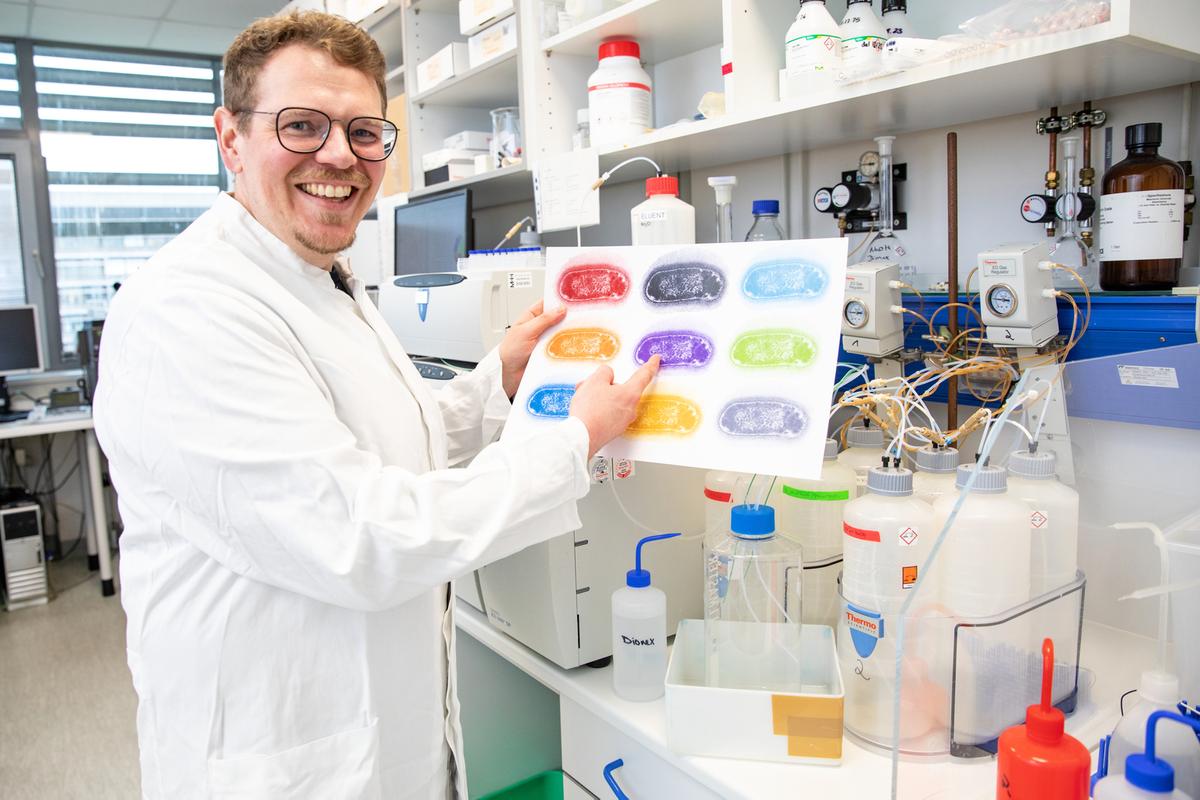
Exploring the diversity of bacterial sugar coats: Biochemist Dr. Timm Fiebig. Copyright: Karin Kaiser/MHH
If our immune system cannot control a bacterial infection, antibiotics help. However, more and more bacteria are becoming resistant to treatment. The number of deaths resulting from this reached more than 1.1 million worldwide in 2021. By 2050, an estimated eight to ten million people worldwide are expected to die each year due to antibiotic resistance. The World Health Organization (WHO) lists intestinal bacteria of the genera Enterococcus and Escherichia coli, among others, as critical pathogens. A research team led by Dr. Timm Fiebig, head of the “Microbial Glycobiochemistry and Vaccine Development” research group at the Institute of Clinical Biochemistry at Hannover Medical School (MHH), is studying these bacteria, focusing specifically on so-called capsule polymers. These consist of various combinations of many sugars and surround the bacteria as a protective shell. This makes them invisible to the immune system while simultaneously forming a barrier against certain antibiotics.
In his BESPOKE project, Dr. Fiebig aims to decipher the diverse polymer structures. He hopes to discover previously unknown approaches for new glycoconjugate vaccines that contain the sugar polymers of the various capsule variants and train the immune system to recognize these antigens. The European Research Council (ERC) is funding the project with a five-year Consolidator Grant of approximately two million euros. Grants awarded by the ERC are highly regarded within the scientific community. With the Consolidator Grant, the ERC supports scientists who have already demonstrated excellence in their research.
Many polymer variants
While some strains of Enterococcus and Escherichia coli (E. coli) are beneficial, pathogenic variants cause severe diarrhea, abdominal pain, urinary tract infections, and blood poisoning. If they enter other parts of the body via the bloodstream, they can cause serious infections there—such as meningitis. “In our project, we want to shed some light on bacterial surfaces and investigate the different polymer structures that exist,” explains Dr. Fiebig. And there could be a great many of them. To date, 33 E. coli surface structures are known, but new studies suggest that around 100 different structures must exist. In addition to the diversity, structure, and identity of the cell surface polymers, the researchers also want to investigate how these polymers determine the biological niche in which a bacterial strain colonizes, or the type of infection it causes. Furthermore, they aim to identify which polymers indicate whether a strain belongs to beneficial or harmful bacteria.
Search for Involved Enzymes
What sounds so straightforward requires a great deal of scientific detective work. First, the researchers must identify which genes in the bacterial genome might influence the biosynthesis of the various capsule polymers. “That’s not so easy, because DNA contains the information for proteins, but not for sugar compounds,” says Dr. Fiebig. The team must therefore determine which enzymes encoded in the DNA play a role in the formation of the sugar polymers. “But there are various possibilities here as well, because a specific ‘type of enzyme’ can be responsible for the biosynthesis of several different sugar polymers,” the biochemist points out. To make the search a bit easier, the research team is therefore focusing primarily on the genetic material of bacteria isolated from patients. The extensive sample material comes from theMHH Institute of Medical Microbiology and Hospital Hygiene as well as the TWINCORE Center for Experimental and Clinical Infection Research, which collect bacterial genomes in a special database accessible to Dr. Fiebig and his team. In this way, they aim to elucidate the structural diversity of the sugar compounds to which the human immune system is exposed in various types of infections.
Producing Vaccines Without Bacteria
The long-term goal of the BESPOKE project is to create a sort of profile for the polymers. “We could then produce a vaccine from suitable candidates,” explains Dr. Fiebig. And this can be done, so to speak, without pathogens. “Elucidating the biosynthetic pathway enables the elegant production of vaccine antigens from widely available and inexpensive precursors in a standard laboratory, without having to grow dangerous bacteria in bioreactors,” says Dr. Fiebig. This enzyme factory can be recreated in a test tube under safe conditions. On a laboratory scale, Dr. Fiebig and his research group have already succeeded in doing this with a vaccine candidate against the bacterium Haemophilus influenzae type b (Hib), which causes infections of the upper and lower respiratory tracts, but also triggers more serious diseases such as middle ear infection, meningitis, or sepsis. “In the coming years, we aim to develop a versatile ‘toolbox’ for the synthesis of glycoconjugate vaccines against bacterial infections that will help combat antibiotic resistance and enable a rapid response to bacterial infections.”
Text: Kirsten Pötzke