Mushroom season started late this year. But caution is advised when foraging - not every mushroom is edible. At MHH, physicians are currently treating victims of life-threatening mushroom poisoning once again.
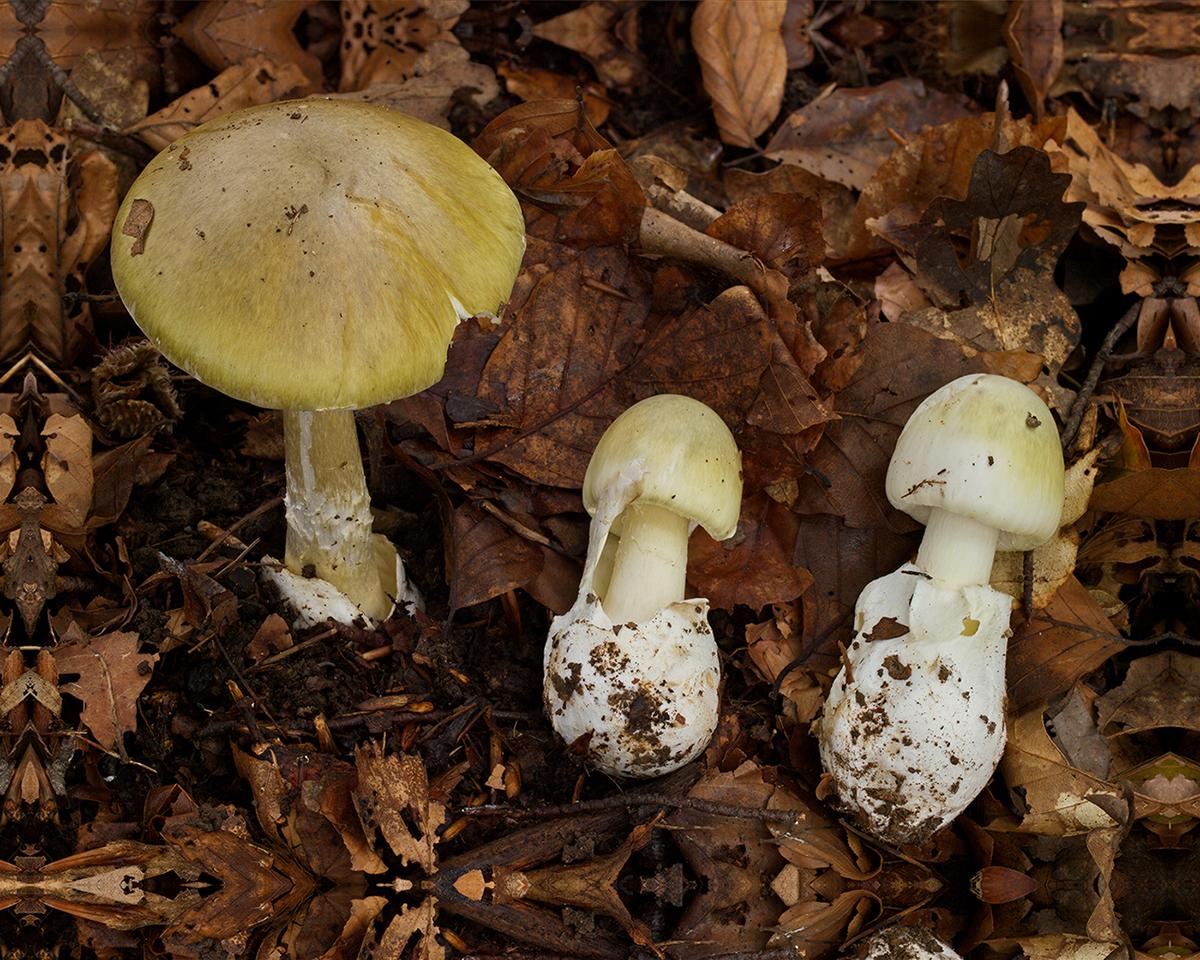
Consumption is life-threatening: green death cap mushrooms in various stages of growth. Copyright: Andreas Kunze/German Society for Mycology e.V.
The Hannover Medical School (MHH) reports an increase in severe cases of poisoning. So far this fall, four patients have suffered from mushroom poisoning. Two survived thanks to an antidote; one successfully received a liver transplant. The fourth patient died. The main cause of the poisonings is the death cap mushroom. Many of those affected come from countries such as Russia, Ukraine, the Middle East, and Afghanistan. “In the patients’ home countries, the death cap is less common. Here in Germany, due to a lack of knowledge, the danger of mushroom picking is often not taken seriously enough,” explains Prof. Dr. Richard Taubert, Head of the Division of Transplant Hepatology at the MHH Clinical Department of Gastroenterology, Hepatology, Infectious Diseases and Endocrinology. Anyone who cannot reliably identify mushrooms risks poisoning and liver failure. Even mushroom apps or identification guides do not offer reliable protection against misidentification.
Death cap mushrooms destroy the liver
The death cap is one of the most poisonous mushrooms in Germany and is responsible for 90 percent of all fatal mushroom poisonings. It is extremely dangerous because its toxin does not take effect until several hours after ingestion, by which time it has already been absorbed throughout the body. Initial symptoms include nausea, vomiting, and diarrhea—similar to a gastrointestinal infection. After one to two days, liver damage sets in, which may be accompanied by blood clotting disorders and kidney dysfunction. “In the worst-case scenario, the liver ceases to function, meaning that only a liver transplant can save the patient’s life,” says Professor Taubert.
Consult a mushroom expert
Due to the serious danger involved, mushroom pickers should have any mushrooms they find identified by a mushroom expert before consuming them. The Poison Control Center North also advises attending training courses offered by the German Society for Mycology before going mushroom hunting. Such training helps improve species identification skills. People should not rely on apps designed to help identify mushrooms.
Call an emergency doctor if you suspect poisoning
If mushroom poisoning is suspected, an emergency doctor should be called immediately. To aid in diagnosis, any remaining mushrooms and vomit should be saved. Treatment with the antidote should begin as soon as poisoning by a death cap mushroom is suspected. The poisoning is then confirmed or ruled out by detecting the toxin in the urine.
The Poison Control Center North also provides rapid assistance in cases of poisoning at (0551) 19240. The line is staffed around the clock.
Text: Administrative Unit for Communications