Professor Meike Stiesch is the new Dean of Research at the MHH.
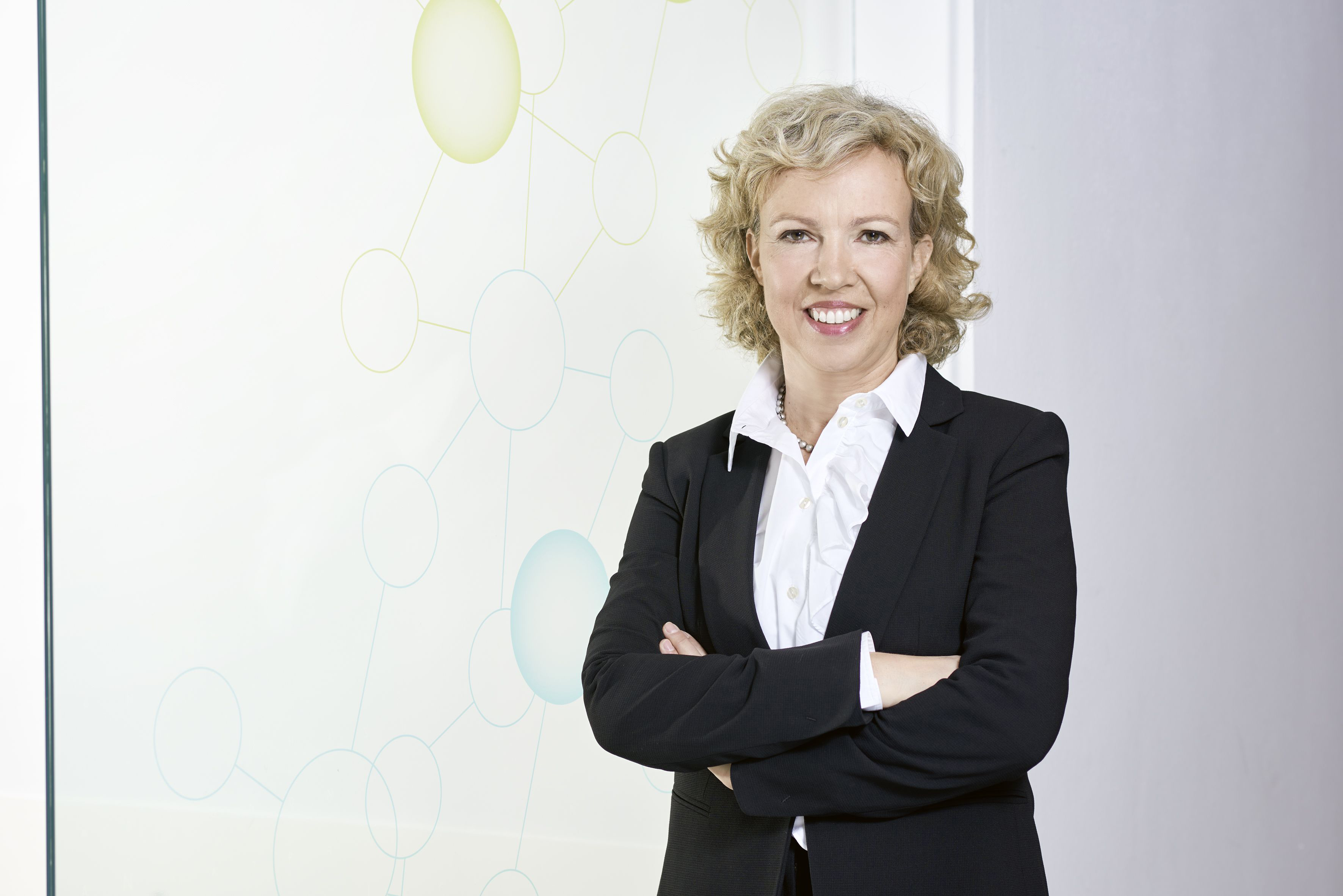
New Dean of Research at the MHH: Prof. Dr. Dr. Meike Stiesch. Copyright: Hans&Jung, Hanover
The MHH is one of the most research-intensive medical facilities or institutions in Germany. The position of Dean of Research at the university, as coordinator between the basic sciences and clinical research, is correspondingly important. Prof. Dr. Dr. Meike Stiesch has been in this position for several weeks now. The Director of the MHH Clinical Department of Dental Prosthetics and Biomedical Materials succeeds Prof. Dr. Frank Bengel, Director of the Clinical Department of Nuclear Medicine, who has held this position since 2020. The exchange with her predecessor made her start easier. "Professor Bengel was an excellent leader of the research committee and handed over the baton to me in an orderly fashion," she emphasizes. Professor Stiesch will initially hold her new position for two years, advising the President and the Senate on research issues. She will not only contribute her extensive experience as a successful scientist in implant and infection research. She will also benefit from her many years of work on the Research Commission, which prepares resolutions and recommendations for research work at the MHH, as the new head of this committee. The dentist was able to contribute her expertise right at the beginning of her term of office: as co-author of the University of Excellence application. "This is an exciting time for the MHH and I am delighted to be able to play an active role in shaping the future of the university."
Interdisciplinary networking
As Dean of Research, Professor Stiesch is responsible for funding, calls for proposals and structured research at MHH. "I want to open up new funding opportunities, drive forward new developments and network researchers even better," she says. She is focusing on four topics in particular: Innovation, translation - the rapid and efficient translation of preclinical research into clinical development -, interdisciplinarity, i.e. interdisciplinary work, and the promotion of research by young scientists. These focal points are also reflected in her research projects. In the interdisciplinary Collaborative Research Center (CRC) Transregio TRR 298 SIIRI, for example, which she heads, researchers from medicine, engineering, natural and social sciences are working together on the task of developing intelligent implants for various areas of application in order to make them safer and less susceptible to infection. "Innovations are always created at the interfaces between different disciplines," the scientist notes.
The German Research Foundation (DFG) rewarded this collaboration at the end of 2025 with follow-up funding of twelve million euros for a further three and a half years. Her DFG research group on customized dental and jaw implants has also been successful in extending its funding. With the establishment of an integrated graduate program for implant research in the SFB SIIRI and her own projects within graduate programs such as the graduate school "RNApp", the dentist is also specifically committed to young researchers and investigates the interaction of microorganisms in the oral flora and develops innovative strategies to reduce biofilms on implants and improve the ingrowth of implants into the bone. "Together with the Office of the Dean of Academic Career Development, I would like to further expand the existing support programs at the MHH and thus promote the advancement and interdisciplinary networking of scientists at all career stages."
Attracting bright minds and high-ranking funding programs
The Dean of Research also has a strong track record in committee work and is well connected with numerous facilities or institutions - in the DFG as a member of the Senate Commission for Fundamental Issues in Clinical Research or as Deputy Chairwoman of the Lower Saxony Centre for Biomedical Engineering, Implant Research and Development (NIFE). She has also been a member of the Medical Committee of the German Council of Science and Humanities since 2026. She is also involved in the "Biomaterials in Medical Technology" guidelines committee of the Association of German Engineers and is a member of the German Academy of Science and Engineering and the German National Academy of Sciences Leopoldina. "I would like to use the networks in the scientific system to make the MHH more visible to the outside world as a recognized research institution and thus attract more bright minds to our university and acquire new, high-ranking funding programs and research alliances," explains the Dean of Research.
The Dean of Research also wants to set new priorities in the area of digitalization. "This opens up new possibilities, is crucial in medical technology and robotics and for predicting the course of diseases and therapies," says Professor Stiesch. Digitalization also helps with the seamless tracking of patients, for example to detect diseases early or prevent them from progressing or flaring up again. "It also plays a decisive role in the processing of large amounts of research data for the discovery of biomarkers in personalized medicine," says the dentist. A lot of outstanding work has already been done in all areas at the MHH. "But there is still a lot to do."
Box: The tasks of the Dean of Research
The Dean of Research shapes the research landscape at MHH in collaboration with the President. She heads the Research Commission, which meets once a month, and advises the Senate on research matters. The Dean of Research is available to advise on new appointments, initiatives for special research areas, career issues, doctorates and habilitations. She cooperates with the MHH Ombudsperson (Prof. Dr. Dr. Karin Weißenborn since October 2025) to ensure compliance with good scientific practice, whose guidelines are intended to prevent misconduct in research. In addition, there are representative tasks at award ceremonies, such as doctoral celebrations, honors and inaugural lectures.
Text: Kirsten Pötzke