Research report 2018
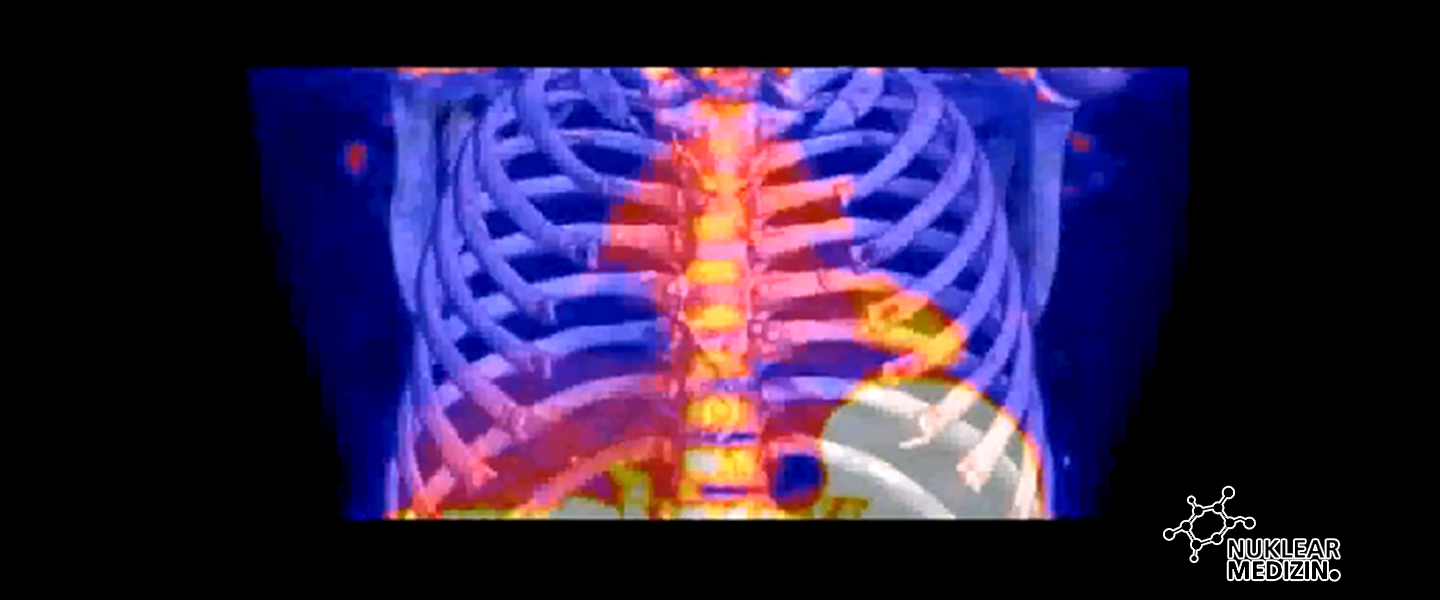
The animation or cover image shows hybrid imaging of the heart with positron emission tomography (PET) / X-ray computed tomography (CT) in a patient 5 days after an acute myocardial infarction. The colored PET images capture the inflammatory reaction in the damaged infarct area of the heart muscle. This is achieved with the radioactively labeled detection substance "Gallium-68 Pentixafor", which binds specifically to the receptor for the chemokine CXCR4 on inflammatory cells. In addition to the accumulation in the heart muscle, the bone marrow and spleen, which are the natural storage site for inflammatory cells, are also recognizable. The CT images taken at the same time facilitate spatial classification. MHH researchers were able to show that the inflammatory reaction after a heart attack, which can be captured in the image in this way, is important for the healing process. Treatment methods are being developed to influence the inflammation in such a way that healing is improved. PET/CT imaging should help to identify patients who will particularly benefit from such treatments.
The images were provided by the Clinical Department of Nuclear Medicine (Director: Prof. Dr. Dr. Frank Bengel). The work was carried out in close cooperation with the Clinical Department of Cardiology and Angiology at the MHH and the company Scintomics GmbH.
Until the Research Information System (FIS) is introduced, no research reports are possible due to technical challenges. However, we would like to take the opportunity here to explicitly present a representative project.
Copyright: Bengel, Clinical Department of Nuclear Medicine, MHH
Publisher:
President of the MHH
Prof. Dr. med. Michael P. Manns
Dean of Research of the MHH
Prof. Dr. Dr. phil. Denise Hilfiker-Kleiner, PhD
Processing and contact person:
Office of the Dean of Research at Hannover Medical School
Petra Linke
Phone: 0511/ 532- 6023
Fax: 0511/ 532- 6024
E-mail: linke.petra@mh-hannover.de
Design:
Digital Media, Hannover Medical School
Phone: 05 11/ 532- 2963
Online implementation:
Office of the Dean of Research, Hannover Medical School
Tobias Buchacker
and
Petra Linke
Phone: 0511/ 532- 6023