Research report 2013
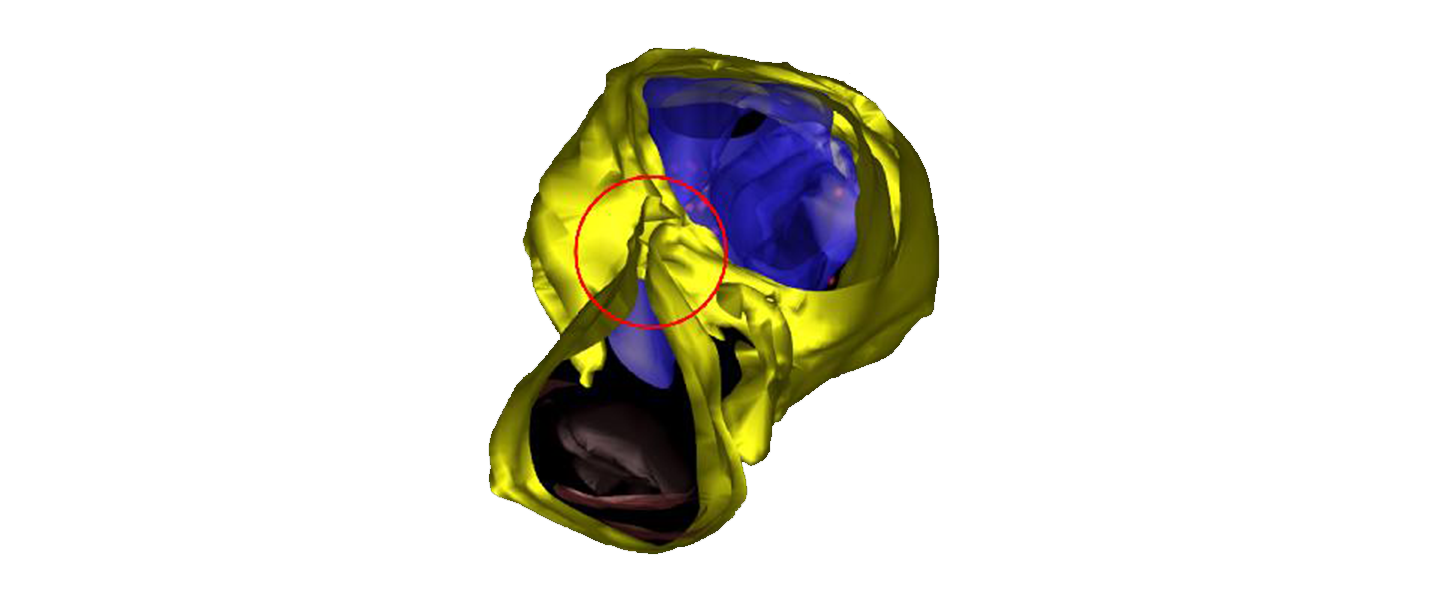
The cover image of the 2013 research report shows a three-dimensional reconstruction based on an electron tomographic data set depicting a section of the interior of a type II alveolar epithelial cell of the lung.
The inner surface of the lung is over 100 m2 in size and distributed over around 500 million alveoli. The type II cells are regarded as "defenders" of the alveoli, as they generate cell replenishment and produce a surface-active substance (surface active agent = surfactant) and release it onto the alveolar surface.
Surfactant has biophysical and immunomodulatory properties that ensure that the alveoli are kept open, dry and clean. Inside the type II alveolar epithelial cells, surfactant is stored in specific secretory vesicles called lamellar bodies. Shown here is the connection of a lamellar body with an autophagosome in which the cell's own material is degraded. The detection of such a connection helps to clarify the cellular processes involved in the development of pulmonary fibrosis. It is only a few nanometers wide and can only be visualized in this form using electron tomography. The specimen is tilted in the electron beam, creating a series of projection images that enable a three-dimensional reconstruction and segmentation of relevant structures.
The resulting model can then be rotated and viewed from any direction.
- Yellow: enveloping membrane of lamellar body and autophagosome.
- Blue: content of the autophagosome.
- Brown: content of the lamellar body.
The image was provided by Prof. Dr. Matthias Ochs, Director of the Institute of Functional and Applied Anatomy and Co-Head of the Central Research Facility Electron Microscopy.
Research report 2013
Research Report 2013
Publisher:
President of the MHH
Prof. Dr. med. Christopher H. Baum
Dean of Research of the MHH
Prof. Dr. Dr. phil. Denise Hilfiker-Kleiner, PhD
Processing and contact person:
Office of the Dean of Research at Hannover Medical School
Petra Linke
Phone: 0511/ 532- 6023
Fax: 0511/ 532- 6024
E-mail: linke.petra@mh-hannover.de
Design and typesetting:
Digital Media, Hannover Medical School
Joachim Barke
Phone: 0511/ 532- 2963
Production:
Digital Media, Hannover Medical School
Telephone: 05 11/ 532- 2963
Wewould like to thank the staff of the library of the Hannover Medical School, Usage Department: Ms. Ingeborg Heering, for her support with the bibliographical information.
Wewould like to thank the staff of the Center for Information Management (ZIMt) under the direction of Mr. Dirk May for their support in the implementation of the ICT-supported data collection and the preparation of the printing process.
Alldata(including the links contained) in the research report are based on the information provided by the respective Facilities or Institutions. The entry is made without guarantee.
Themasculine form of all gender-specific descriptions applies accordingly to the feminine form.
Cover picture:
The cover image shows a three-dimensional reconstruction based on an electron tomographic dataset depicting a section of the interior of a type II alveolar epithelial cell of the lung. The inner surface of the lung is over 100 m2 in size and distributed over around 500 million alveoli. The type II cells are considered "defenders" of the alveoli, as they generate cell replenishment and produce a surface-active substance (surface active agent = surfactant) and release it onto the alveolar surface. Surfactant has biophysical and immunomodulatory properties that ensure that the alveoli are kept open, dry and clean. Inside the type II alveolar epithelial cells, surfactant is stored in specific secretory vesicles called lamellar bodies. Shown here is the connection of a lamellar body with an autophagosome in which the cell's own material is degraded. The detection of such a connection helps to clarify the cellular processes involved in the development of lung fibrosis. It is only a few nanometers wide and can only be imaged in this form using electron tomography. The specimen is tilted in the electron beam, creating a series of projection images that enable a three-dimensional reconstruction and segmentation of relevant structures. The resulting model can then be rotated and viewed from any direction. Yellow: enveloping membrane of lamellar body and autophagosome. Blue: content of the autophagosome. Brown: content of the lamellar body. The image was provided by Prof. Dr. Matthias Ochs, Director of the Institute of Functional and Applied Anatomy and Co-Head of the Central Research Facility Electron Microscopy.