All-round care for kidney transplant patients: 1,000 patients take part in innovative project
Positive interim results of the "NTX 360°" aftercare program of Hannover Medical School, Hann. Münden Hospital and Erlangen University Hospital
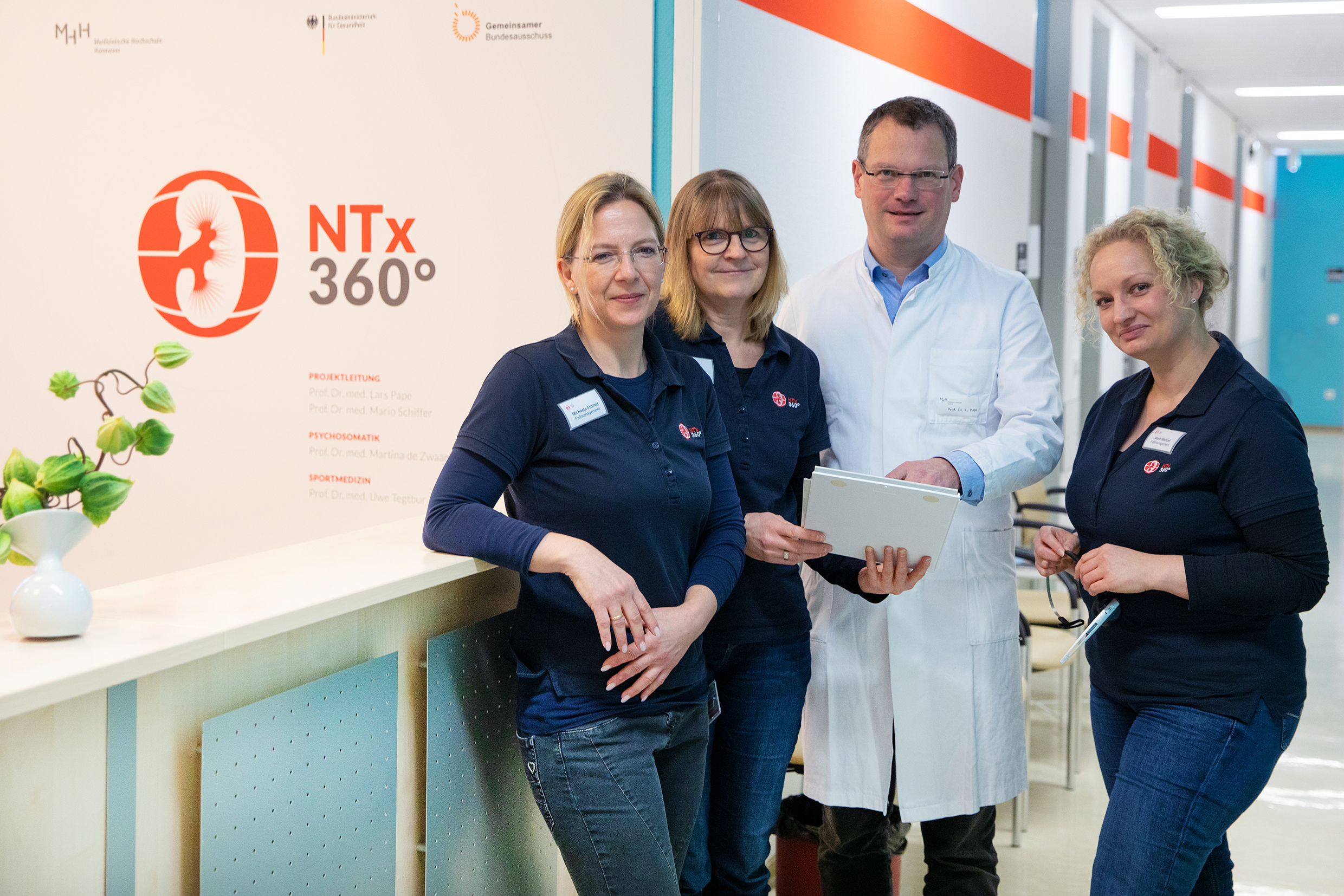
For people whose kidneys are permanently failing, a kidney transplant is the best form of therapy. If a donor organ can finally be transferred after an often long wait, an important step has been taken for those affected. However, for the transplant to be successful in the long term, comprehensive aftercare must be provided. This is where the "NTx360°" innovation project comes in. It aims to preserve the transplanted organ for as long as possible, improve quality of life and optimize medical care. The aim is to avoid hospital stays and make aftercare more economical. The aftercare program at Hannover Medical School (MHH) began in 2017 as a so-called new form of care. After three years, the project managers can look back on a positive development and are pleased with the high level of approval among patients. More than 1,000 patients - children and adults - are now taking part in the scientifically supported project.
Digitalized all-round care for kidney transplant patients
Around eight percent of kidney transplant patients lose their new organ in the first three years after the transplant. In the following years, transplant failure continues to increase steadily. "Even minor deviations in medication intake significantly increase the risk of rejection," explains Prof. Dr. Lars Pape from the MHH Clinical Department of Paediatric Kidney, Liver and Metabolic Diseases. "A further risk to health is posed by secondary diseases that frequently occur in transplant recipients, including cardiovascular diseases," adds Prof. Dr. Mario Schiffer, Director of the Medical Clinical Department 4 - Nephrology and Hypertensiology at Erlangen University Hospital. Professor Pape and Professor Schiffer started the innovation fund project "NTx360°" together in Hanover in cooperation with the Nephrological Center Hann. After moving to the University Hospital Erlangen, Professor Schiffer also established the project there. With "NTx360°", the nephrologists established a new type of care network that offers patients digitalized all-round care with individually tailored therapy.
Transplant Centre and general practitioners work closely together
As the optimal care of transplant patients is very complex, everyone involved in the project is working closely together: In addition to the transplant centers, these include, for example, the nephrologists in private practice in Lower Saxony, who care for the patients close to their homes, as well as the MHH Institute of Sports Medicine and the Sports Cardiology Department of the Medical Clinical Department 2 - Cardiology and Angiology of the University Hospital Erlangen, who develop personal training therapy for all participants to improve their physical fitness. The MHH Clinical Department of Psychosomatics and Psychotherapy and the Psychosomatic and Psychotherapeutic Department of the University Hospital Erlangen are also involved, accompanying patients after transplantation and offering psychosocial support if required. Other important participants are the Association of Statutory Health Insurance Physicians of Lower Saxony (KVN) and the health insurance funds of Lower Saxony, above all the AOK Lower Saxony, which alone insures around 250 participating patients. In addition to the AOKs in various regions, the TK, DAK, Barmer EK and most of the BKKs are also on board.
At the heart of the program is a telemedicine network
At the heart of the program is a telemedicine network with shared electronic patient files, to which all participating physicians in the transplant centers and local practices have access. The patients themselves also have access to their data. "Telemedicine leads to better Communications and coordination of care. Patients no longer have to travel to the transplant centers as often," says Professor Pape. Professor Schiffer sees a further advantage in tele-visits. "Risks to the patient's health can be identified earlier and appropriate therapeutic countermeasures can be taken." Despite the complexity of the project, transplant patients always have a fixed contact person: The so-called case managers coordinate the entire aftercare, arrange appointments with physicians and therapists, answer questions about prescriptions and taking medication and always have an open ear for the concerns of those affected.
1,000 participants included in the project
The two project managers are delighted that "NTx360°" has been so well received by kidney transplant patients. Around 90 percent of the patients contacted have decided to take part. Most of the more than 1,000 participants were transplanted at the MHH. Ralf A. from Bielefeld is one of them. The 64-year-old received a new organ in 2015. After two years of dialysis, he received a kidney through a living donation from his wife. "I like the project because it involves the whole person and several disciplines are involved in the aftercare," explains Ralf A. For example, the recommendations from the experts at the Institute of Sports Medicine have helped him a lot.
"To keep fit, I do my individual cardio training on equipment," he reports. The services offered by the MHH sports physicians are well received overall. So far, there have been around 900 assessments and more than 1,300 personal training consultations. Psychosomatic care is also in demand: the Clinical Department has recorded around 2,170 assessments and re-assessments and 360 appointments for psychosocial support. "The psychosomatic services are also used by families with children who have undergone kidney transplants. All family members benefit from this," explains Professor Pape.
Innovation fund supports NTx 360° with six million euros
The interdisciplinary and cross-sector project "NTx360°" is being funded with around six million euros from the Innovation Fund of the Federal Joint Committee (G-BA) for the period 2017 to 2021. It is the first care program in which children and adults are cared for together. The entire project will be independently evaluated by the IGES Institute in Berlin and assessed after the project is completed. "All parts that demonstrably improve the health of patients are to be incorporated into standard care nationwide," says Professor Schiffer.
The MHH is the largest Transplant Centre in Germany. Up to 170 donor kidneys are transplanted there every year. Around 70 kidneys are transplanted each year at the Erlangen-Nuremberg Transplant Centre. More about the project at: www.ntx360grad.de.
Forfurther information, please contact Prof. Dr. Lars Pape, Clinical Department of Paediatric Kidney, Liver and Metabolic Diseases at the MHH, telephone (0511) 532-3283, pape.lars@mh-hannover.de and Prof. Dr. Mario Schiffer, Medical Clinic 4 - Nephrology and Hypertensiology at the University Hospital Erlangen, telephone (09131) 85-39002, med4@uk-erlangen.de.