The turn before the turn
Christian, kidney transplant since 1989 at the age of 13
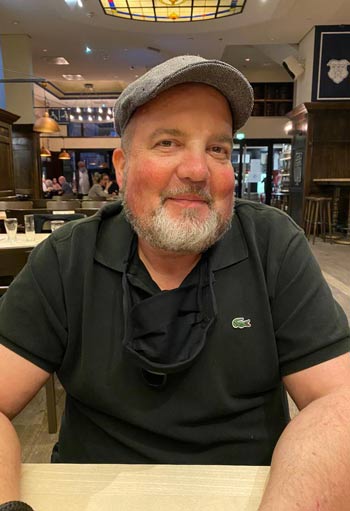
Hi.
My name is Christian Bohle and I would like to tell you my story today.
I was born 45 years ago on December 23, 1975 in Nienburg an der Weser. For anyone wondering where that is: pretty much exactly halfway between Hanover and Bremen. I still live there today in a place called Wietzen. I live alone, but have been in a steady partnership with my girlfriend Silke since 2013.
"My childhood was actually everything you want it to be."
My childhood (apart from a few childhood illnesses) was actually everything you want it to be. I played a lot with my friends, rode my bike and did whatever else you do as a "little boy". Of course, I also did what adults call "stupid things".
Then, in October 1980, I got a vascular disease called "Purpura Schönlein Henoch". I can only remember consciously that I had small red spots all over my body as a result. I can't remember whether I had any pain or any other symptoms. In May 1981, a kidney puncture was performed at the MHH Children's Hospital.
In the meantime, I was an inpatient there from time to time and I had to go there (I think every six months) for an outpatient check-up. That was in the pediatric clinic on the first floor. I was always looked after by Mrs. Wrobel and Mrs. Wollweber and also by different physicians. I still remember Prof. Dr. Ehrich, Dr. Döhring, Dr. Winkler and Dr. Offner.
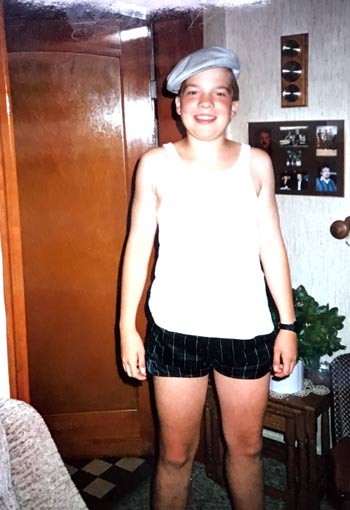
"On October 5, 1988, I was put on the waiting list for a new kidney."
My kidney function was probably quite stable until 1987, but from then on it got worse. I was punctured again and prescribed cyclosporine. It was fairly new on the market at the time and I think a small bottle of it cost 500 DM. Cyclosporine was not yet available as a capsule, so you had to inject it into your mouth mixed with apple juice or cocoa and swallow it. However, the therapy didn't help me. From July 26, 1988, I was treated in the transplant outpatient clinic (which was on the balcony next to Stat. 65). On October 5, 1988, I was put on the waiting list for a new kidney.
But then it came as it had to: I became a dialysis patient. On November 1, 1988, I was fitted with a catheter for peritoneal dialysis (CAPD). The plan was for the bag to be changed overnight via the cycler, but unfortunately this didn't work out as I sleepwalked in hospital during the first few nights and tore the catheter out.
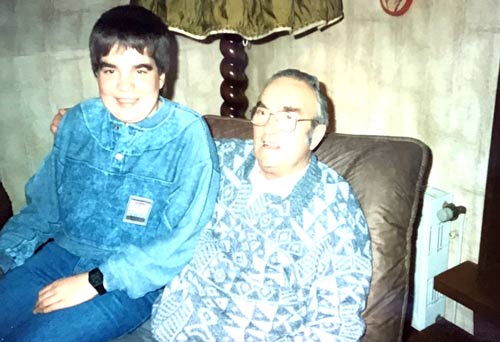
"A room at home was prepared especially for me."
So it meant: CAPD during the day with 4 bag changes. A room at home was prepared especially for me. PVC floor, raised bed, bag stand, warming plate, scales, etc. When I was discharged from hospital, my "personal carer" Andreas Bleck from Stat. 65 came to our home and "took everything off". He also helped us with the first bag change. And from then on I was a dialysis patient. A truck came every few weeks and brought everything we needed to our home. It was lucky that we had a cellar, because there was always quite a lot of "stuff". In the first few months, I had to change 4 bags throughout the day. Later it was only 3, but when I think back, I was doing quite well (despite all the restrictions). At first I was also allowed to drink 1200 ml a day, as my kidneys were still working a bit. When I went on a day trip with my parents to visit relatives, we took the things for the bag change with us. And we went to the Heidepark with the school, where I took all the stuff in my rucksack and then changed the bag in the baby changing room at lunchtime.
"Someone always had to be at home, because there were no cell phones back then."
Then came the day in August 1989 that would (and did) change everything in my life. It was a Saturday and I was still in bed when my father woke me up with the words: "Christian. The MHH has called. They have a kidney for you."
When I think back to it now as I'm writing and otherwise, the mice still "run up and down my back".
What you mustn't forget during all that waiting time: someone always had to be at home, because there were no cell phones back then.
So I packed my things and went to the MHH. Which probably sounds strange now and can't really be explained with normal common sense: I always said to myself "I don't want the kidney". The only way I can explain why this was the case is that I was always doing quite well on dialysis (despite the accompanying circumstances). And of course I had to go back into hospital for several weeks. When I arrived at the MHH, I underwent several more examinations and I think I was only wheeled into the operating theater in the evening.
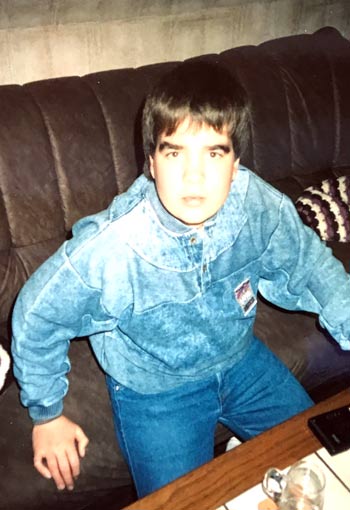
"On August 29, I unfortunately got my first rejection..."
The kidney didn't "start" at first. I had to be dialyzed (I think) twice more until it worked. And then I felt better. I had to (was allowed to) drink 5-7 liters and I can still remember my first bag of potato chips, which I ate in hospital. That (and many other things that taste delicious) were forbidden during dialysis because of the potassium. Unfortunately, I had my first rejection on August 29, which was treated with 500 mg Decortin daily. I then had to stay in the MHH for a total of 6 weeks. The first 2 weeks with "strict bed rest". My mother was with me the whole time, she lived in an apartment in the nurses' home.
Then I finally came home and "my new life" could begin. Initially, I had to go to the outpatient clinic every week for check-ups and by November my values were getting worse again. I had my second (and fortunately my last so far) rejection. I felt well looked after again in ward 64b. I still remember the nurses Hanna Harste, Anke Hartkopf, Birgit Nitz, Heike Hermann and Birgit Brüning. Incidentally, something very historic happened in Germany during my departure from the children's hospital: it was November 9, 1989 and the Wall came down in Berlin.
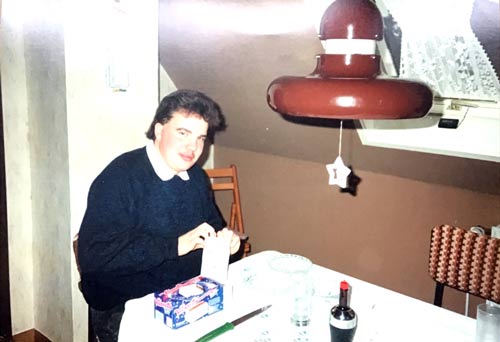
"I can't list all the things I experienced during this time that would not have been possible with dialysis."
From then on, things really took off and I "hit the ground running". I graduated from secondary school in Marklohe, then two years of vocational school in economics with a secondary school certificate and on August 1, 1993, I began my vocational training as an energy electronics technician at the municipal utilities in Hanover (now enercity), which I successfully completed in 1997. Since then I have been working there full-time and have been working shifts since 2000. From 2005 to 2008 I went to the master school in Berenbostel and since May 2008 I have been able to call myself a master electrician in the electrical trade and work in the electricity fault clearance service.
In 1993 and 1996 I went to Austria for rehabilitation at the Ederhof, which I have wonderful memories of.
More than 31 years have now passed since my transplant. WAHNSINN!!!!!!!!!!!!
I can't even begin to list all the things I've experienced during this time that would not have been possible with dialysis. Vacations, normal work, drinking and eating whatever I wanted. Simply doing THINGS that a "healthy person" never thinks about because it's normal for them. When I look back, I'm just incredibly grateful for a life that was mainly made possible by medicine. Of course I only think back on the good things, but there were - and still are - times when I'm not doing so well. Carcinoma in the "old kidney" and thyroidectomy in 2003. How are the blood values developing? What happens if the kidney breaks down??? What will happen then??? These are thoughts that come to me more and more often the longer I am transplanted. And even over 30 years of immunosuppressants and all the other drugs "don't go by without a trace". But as I think I tolerate the tablets well, which is not a matter of course, I'm happy to accept that for the quality of life I have with my new kidney.
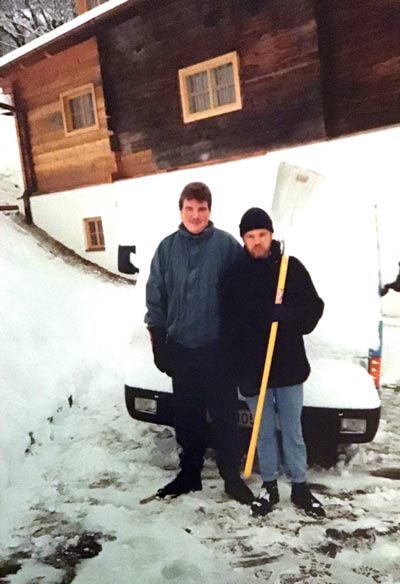
"I hope that my kidney will be with me for a very long time and that everyone who is waiting for a life-saving donor organ will be as lucky as I was..."
Finally, a big thank you goes to my unknown donor, whose death gave me a new lease of life, and to my family, who are always there for me, especially my mother, for whom it was - and is - certainly not always easy with me. Whether in hospital or elsewhere J. She always wrote down the dates in a little book over the years, which helped me a lot.
In conclusion, I can only say that I hope that my kidney will be with me for a very long time and that everyone who is waiting for a life-saving donor organ will be as lucky as I was and still am. And, above all, that the general public will come to terms with organ donation after the German Bundestag unfortunately rejected the opt-out solution.