Nursing is more than just routine - especially in oncology
"High level of competence; making decisions quickly; recognizing emergency situations; taking responsibility; being vigilant; enduring palliative situations" - these are just a few of the words Susanne Blöß uses to describe what she considers a specialist in oncology Nursing.
Susanne Blöß has been working at the MHH since 1990 and has held various positions since then. She trained as a pediatric nurse. Her roots lie in pediatric oncology. She is now an academic nurse with a Master's degree and works in the Oncology Nursing Consultation Service (OPK) at MHH. There she cares for and advises patients after a bone marrow transplant (BMT) and their relatives.
To mark World Cancer Day 2023, which is also Oncology Nursing Day at Hannover Medical School (MHH) this year, we spoke to Susanne Blöß about her work and experiences in oncology nursing and what she appreciates most about the profession.
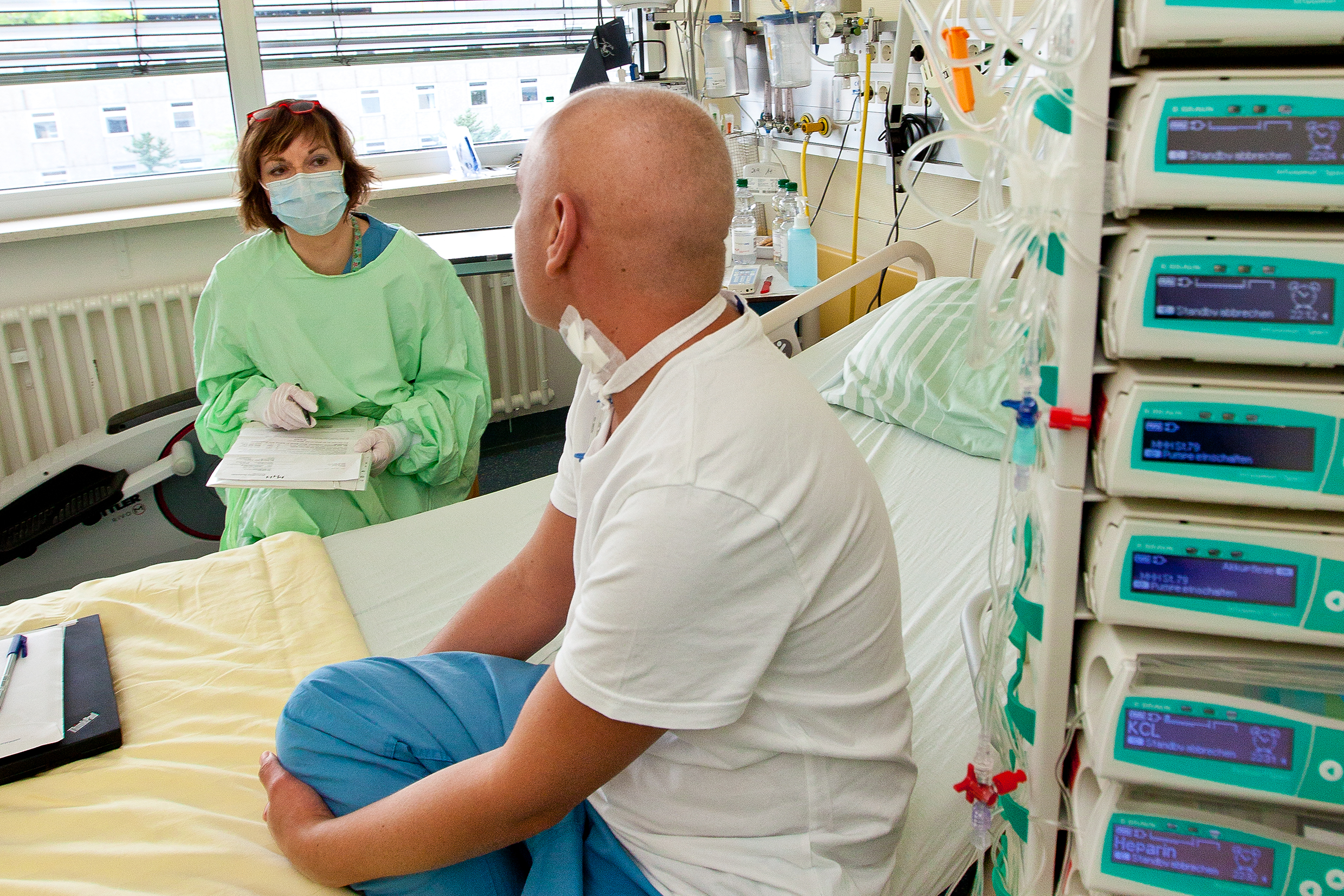
Ms Blöß, why did you choose Nursing in Oncology?
I originally came from pediatric oncology. There we always said about new employees: "Either you come, look and stay or you come, look and go". Why is that the case? Oncology Nursing is challenging in many ways. On the one hand, you have to understand the different therapeutic approaches, which requires an interest in science. You have to have technical empathy - you have to set up infusion regimes independently, but also carry them out - and at the same time you have to monitor the patients and keep a constant eye on them, notice the smallest changes and react to them. This observation includes monitoring medical parameters, blood values, but also changes in the patient's character. You must always be ready to talk, support and train parents and relatives. Understand family systems and communicate in a multi-professional team. The job is very complex and varied. Every day I deal with the existential challenges of life. All my professional life, I have been very close to death, but also to life and survival. I can't hide and the challenge is the "professional handling of closeness" - because Nursing is relationship work. I help those affected to deal with the challenges of the disease, the therapy and the complications and to integrate them into their lives.
In your opinion, what makes a specialist in oncology Nursing?
The willingness to engage with people and their relatives in extreme situations; a high level of medical and nursing competence; the ability to make quick decisions independently; to recognize emergency situations; to take responsibility; to be vigilant; to endure palliative situations; to accompany patients through the course of treatment; openness and scientific interest and the willingness to understand new therapy options; relationship work and curiosity.
...what do you value most about the profession?
Oncological Nursing and the setting in which it operates offers many opportunities for personal development, as new projects have to be developed time and again to optimize the treatment of patients. In pediatric oncology, appreciative work in a multi-professional team is standard. We all pull together for the benefit of the patients and their relatives. For example, ward rounds never take place without the pediatric nurse in charge. Everyone has the right to speak and is listened to. The exchange takes place on an equal footing and with mutual respect in order to find the best treatment decision for the patient, which can then be supported by the entire team. So that certain decisions are transparent and comprehensible. The learning never stops and every day brings new challenges. I also believe that the work we do is socially relevant. Hospitals are a place where people in need find refuge, help and support in extreme situations - regardless of gender, origin or religion. I can help shape this place.
Your best experience in oncology Nursing so far?
...is also a sad one. It's the story of Anton and his parents. Anton was born with a severe immunodeficiency, so he had to have a bone marrow transplant at the age of six weeks. He was his parents' first child. The bone marrow transplant (BMT) was not successful, so Anton had to undergo a second BMT, which had far-reaching complications. This resulted in a very long stay in the Clinical Department. His mother looked after him and stayed by his side. When he was finally discharged, it was clear that the family would need support at home, as Anton could only be discharged with a feeding tube and artificial nutrition via the port. In my position at the time, I initiated this process and took responsibility for it. I thought that it would be a relief for the parents if the care service took over all medical and nursing aspects. That turned out to be a fallacy. The mother, who had cared for her child in the Clinical Department for so long, was afraid to hand over these tasks to the nursing service. For example, she preferred to mix the parenteral nutrition, draw up and administer the necessary antibiotics and p.o. medication herself. I bowed to her wishes and found an outpatient care service that nevertheless stood by her parents' side, was there and relieved her mother in the areas that were a relief for her. For example, ironing and folding laundry. This meant the family could spend time together at home.
Anton died when he was just under 2 years old - unexpectedly and suddenly from sepsis. A colleague and I went to the funeral. As we stood at the boy's grave, his parents thanked me for the gift of time at home. I looked down the hill and was glad that I had given in to the mother's wishes and supported the unusual solution. This has taught me to listen even more to those affected and their relatives and to find sensible solutions to problems that fit into the respective living environment. We learn from our patients and their relatives when we listen.