Black skin cancer: How is it diagnosed and treated?
Status: 27.05.2022
More and more people in Germany are developing skin cancer. Although the risk of developing the disease increases with age, younger people are increasingly affected. The most important risk factor: UV radiation.
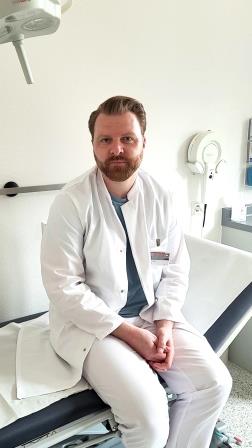
In skin cancer, a distinction is made between so-called "black" and "light" skin cancer. Black skin cancer (malignant melanoma) is a malignant form that can spread in the body at an early stage. It is therefore considered particularly dangerous. Kai-Christian Klespe, senior physician at the Skin Tumor Center of the Comprehensive Cancer Center (CCC) at Hannover Medical School, explains in an interview how malignant changes in the skin can be detected and how malignant skin cancer can be treated.
Why is black skin cancer considered particularly dangerous compared to light skin cancer?
Black skin cancer is generally more aggressive than light skin cancer. There are significantly more deaths from black skin cancer than from light skin cancer, as it spreads faster and more frequently via the lymphatic and blood vessels, i.e. it can form metastases. This is why it is so important to detect it as early as possible. The risk of developing black skin cancer is currently around two percent, i.e. around one in 50 people in Germany.
How can malignant changes in the skin be detected?
There is a simple rule for black skin cancer that you can use to identify a conspicuous mole yourself: the ABCDE rule. A stands for asymmetry: if the mole is round or oval, this is considered good. B stands for border: irregular, blurred borders of the birthmark are to be classified as suspicious. C is the coloration: Several shades of brown/black or lightening of the color are conspicuous. D means diameter: Up to a diameter of five millimetres, the birthmark is considered inconspicuous. Finally, E stands for elevation, i.e. whether the mole grows flat or spherical, for example.
Unfortunately, there is no such rule for light skin cancer because it can look very different. This makes it all the more important that we all regularly examine our skin ourselves for conspicuous skin changes and consult a dermatologist if we are unsure or if there are any changes.
What happens if the dermatologist discovers a preliminary stage of skin cancer?
The dermatologist can usually tell with the naked eye whether it is a precancer or a skin cancer. A preliminary stage can be treated very well with special creams/gels or light therapy, but also with minor surgery under local anesthesia.
What treatment or therapy options are there for skin cancer? What determines which treatment or therapy is used?
As a rule, skin cancer is surgically removed and then assessed under the microscope to determine whether it has been completely removed. In rare cases, a second operation may be necessary if not all parts have been removed or if a certain safety margin should be maintained. If the operation is performed at an early stage, i.e. the cancer has not yet spread via blood or lymph channels, those affected are considered cured after a successful operation. In the case of advanced skin cancer, i.e. when metastases have already formed, either surgery or radiotherapy or drug therapy can be carried out. If the latter is an option, we have immunotherapy methods at our disposal that are also used for other types of cancer. These so-called immunotherapies use the body's own immune system to fight the cancer. Nowadays, drugs are also available that can influence the cell division of cancer cells and thus keep it under control. Nevertheless, metastatic skin cancer is still an aggressive disease today.
What are the chances of recovery from skin cancer?
The chances of recovery depend on whether it is a black or light skin cancer and how early it is detected. Light skin cancer is cured in almost all cases by surgical removal. In the case of black skin cancer, it depends on how large it has grown and whether it has already spread. Simply put, the earlier it is detected, the better the chances of recovery. That's why I would like to encourage everyone to take advantage of the skin cancer screening that is covered by statutory health insurance for everyone over the age of 35 every two years.
Further information:
Skin Cancer Month MayProtect against skin cancer and detect skin cancer
Hanover Skin Tumor Center (HTZH) of the MHHThe center treats patients with benign or malignant neoplasms of the skin