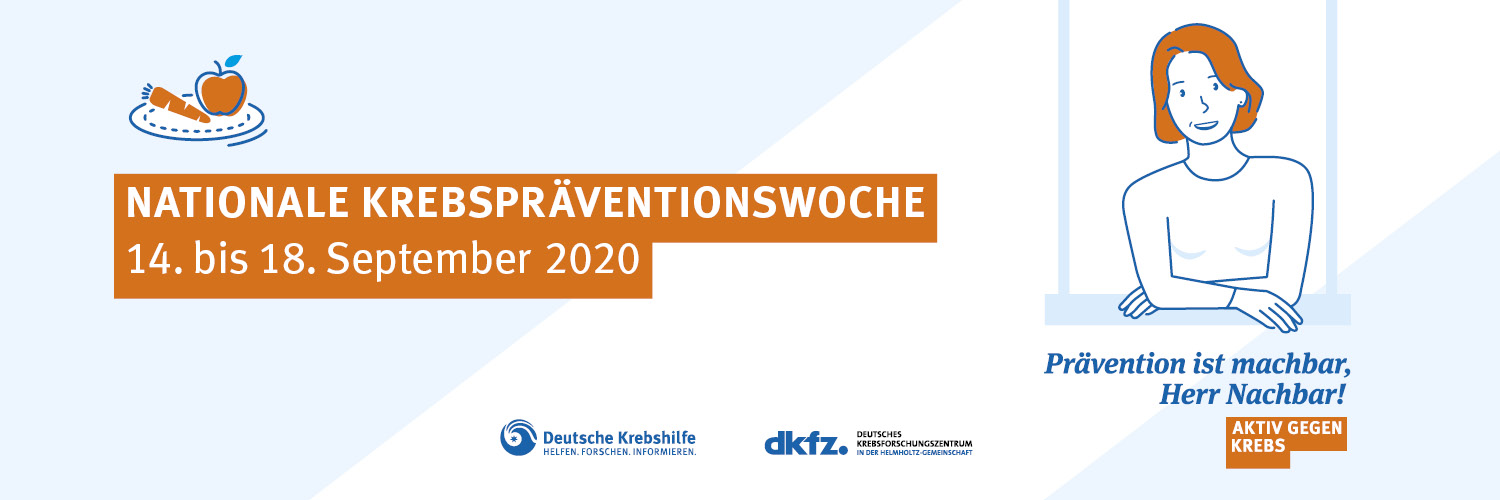
"Reducing cancer risk with a knife and fork"
In Germany, around 500,000 people are diagnosed with cancer every year. According to experts, around 40 percent of all cancers could be prevented by adopting a healthy lifestyle. This includes, above all, physical exercise, avoiding smoking, drinking little alcohol, UV protection and a healthy diet.
German Cancer Aid and the German Cancer Research Center (DKFZ ) have formed a strategic partnership to raise awareness of the potential of cancer prevention and motivate people to adopt a healthier lifestyle.
To kick off the partnership, they launched the first National Cancer Prevention Week in 2019 under the motto "Prevention is possible, Mr. Neighbour! Active against cancer". Every year, Cancer Prevention Week focuses on a different lifestyle factor that influences the risk of cancer.
This year, the focus is on the topic of "healthy eating".
Studies show that diet has a significant influence on the risk of developing cancer. Our daily diet contains countless different substances. Some promote the growth of cancer cells, many slow it down.
We asked our nutrition experts at the MHH: "What is a healthy diet?", "What risks does nutrition entail?" and "How can I manage to eat healthily in the long term?". Because hand on heart: we don't always have the time and leisure to swing a wooden spoon to conjure up top cuisine.
The most important information, tips and tricks from our nutrition experts at MHH to help you stay healthy throughout the day:
"Our experience shows that not everyone is aware that we not only need to meet our energy requirements, i.e. calories, but also our need for nutrients such as carbohydrates, protein, fat, vitamins... in order to stay healthy. A healthy diet fulfills these requirements without us having to resort to supplements or pursue outlandish nutritional principles. The secret of a healthy diet is based on variety and a good balance, which we can clearly see in various illustrations:
Enjoyment and (taste) experience are a matter of course for us."
"Again and again you hear or read about problematic ingredients in food. Mold should not be consumed as it can contain fungal toxins. The risks of alcohol consumption are well known. Other substances, on the other hand, cannot always be avoided, especially as they are invisible.
Examples:
- Heavy metals such as cadmium and lead - in fruit and vegetables
- Nitrosamines - are contained in cured meat and sausage products
- Trans fatty acids - are formed when fat is heated to high temperatures
- Acrylamide - also produced at high heat during the production of cookies, potato chips, etc.
- Hydrocarbons - get onto the meat when smoking and grilling with charcoal
The list could certainly be continued. The conclusion is: don't eat a one-sided diet, as you can keep your intake of the individual harmful substances low through variety and the foods in question almost always have their good sides, such as "good" nutrients and enjoyment value."
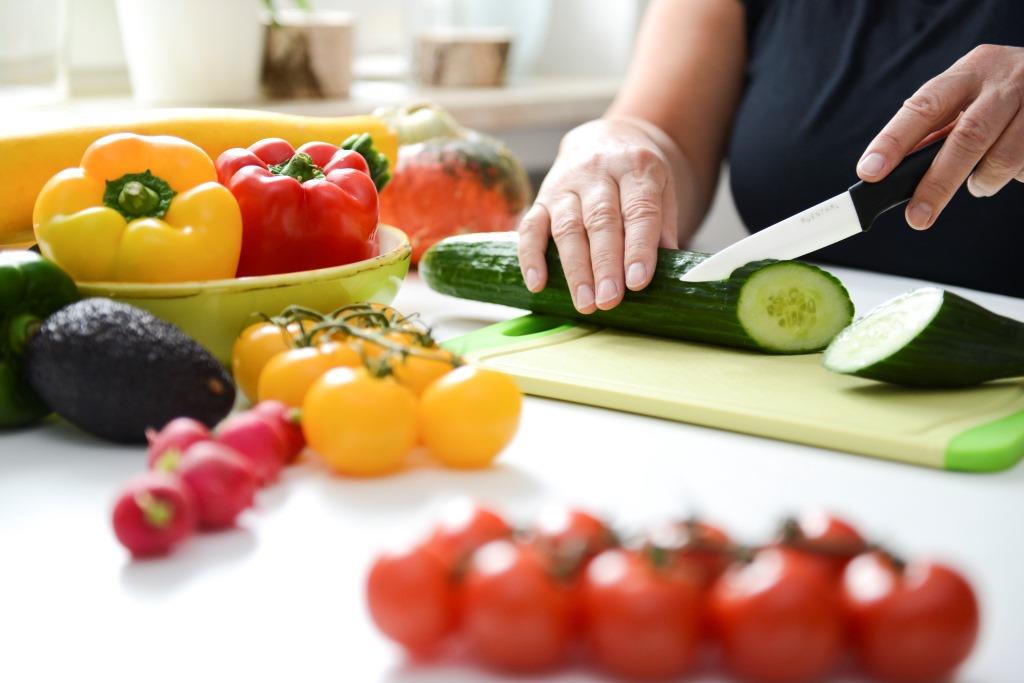
"The best way to eat healthily is to do it yourself in the kitchen. Recipes don't have to be complicated. For example, some vegetables can be baked in the oven and eaten with a quark dip.
Or simply throw different vegetables into a pot, cook, season and possibly puree, refine with sour cream and the soup is ready.
Of course, a few ingredients are required: You should have staples such as pasta, flour and so on on hand. You should also buy fresh fruit, vegetables and dairy products. Vegetable boxes that are delivered weekly can be helpful. If you lack the imagination to prepare meals, there are now also suppliers who deliver the ingredients and recipes to your home as so-called cooking boxes. For example, "HelloFresh" and "Marley Spoon".
On the other hand, food doesn't always have to be hot. Colorful plates with cheese, bread, vegetable strips and fruit can easily replace a hot meal."
"Here, too, the old-fashioned sandwich comes into play. Self-wrapped wraps for on the go are also possible and more modern. Healthy additions for the handbag include nut mixes in many variations, including dried fruit such as trail mix and the like, mini tomatoes or cucumbers and blueberries..."
"The answer is quickly given: seasonal and regional! We can not only do a lot for our personal health but also for everyone by helping to save water, pollutants, truck journeys and much more.
You can find seasonal calendars, for example, at 5 a day - what's in season - fall or Regional seasonal calendar for vegetables.
There is also a lot to be said for buying unprocessed food. When it comes to processed and packaged goods, you should take a critical look at the often very long list of ingredients. They contain many additives that we at least don't need in a healthy diet."
"Yes - frozen products can be a good addition to your diet if you can't go shopping every day. And if the freezer is already there, you also have the option of preparing lovingly cooked food in larger quantities and keeping some of it in stock. When things have to be quick again..."
"In fact, people who have switched to a healthier diet tell us that they no longer feel so tired and suffer less from bloating. An improvement in the appearance of the skin can also be achieved. There is certainly also a positive psychological effect, because it feels good to be able to influence your own health."
Contact
Annette Schünemann and Dagmar Bolgen offer personal nutritional advice or referral to consultants by calling the MHH telephone number -9083 or by email.
And if it should be the top cuisine...
...master chef Thomas Kammeier from the EUREF-Campus Berlin-Schöneberg has developed five healthy recipes exclusively for Cancer Prevention Week.

Five recipes for a healthy week that are not only exceptionally tasty, but also particularly healthy:
- Creamy risotto with beet, root vegetables and shiitake mushrooms
- Sweet potato with roasted corn-fed chicken breast and Indian cauliflower
- Lettuce with tender wheat and poached egg
- Falafel with hummus, eggplant and tomato salad
- Salmon fillet fried on the skin with Mediterranean vegetables, basil pesto and lime polenta
Simply click on the respective dish to get the matching recipe. The bundled copy with all recipes is available here.
But it's not just what we eat that is important
In a healthy lifestyle, diet is inseparable from physical activity and avoiding obesity. Obesity occurs when we supply our body with more calories than it can consume. Therefore, exercise should always be considered together with nutrition when it comes to actively preventing cancer.
Nevertheless, cancer is not a matter of guilt: despite a healthy diet and plenty of exercise, you can still get a tumor - cancer cannot be prevented with certainty.
Further information material...
can be downloaded from the German Cancer Aid, here.
The National Cancer Prevention Week
The strategic partnership is a contribution of German Cancer Aid and the DKFZ to the National Decade against Cancer, which was proclaimed by the Federal Ministry of Education and Research in January 2019.