A look back: the development of tumor documentation over time
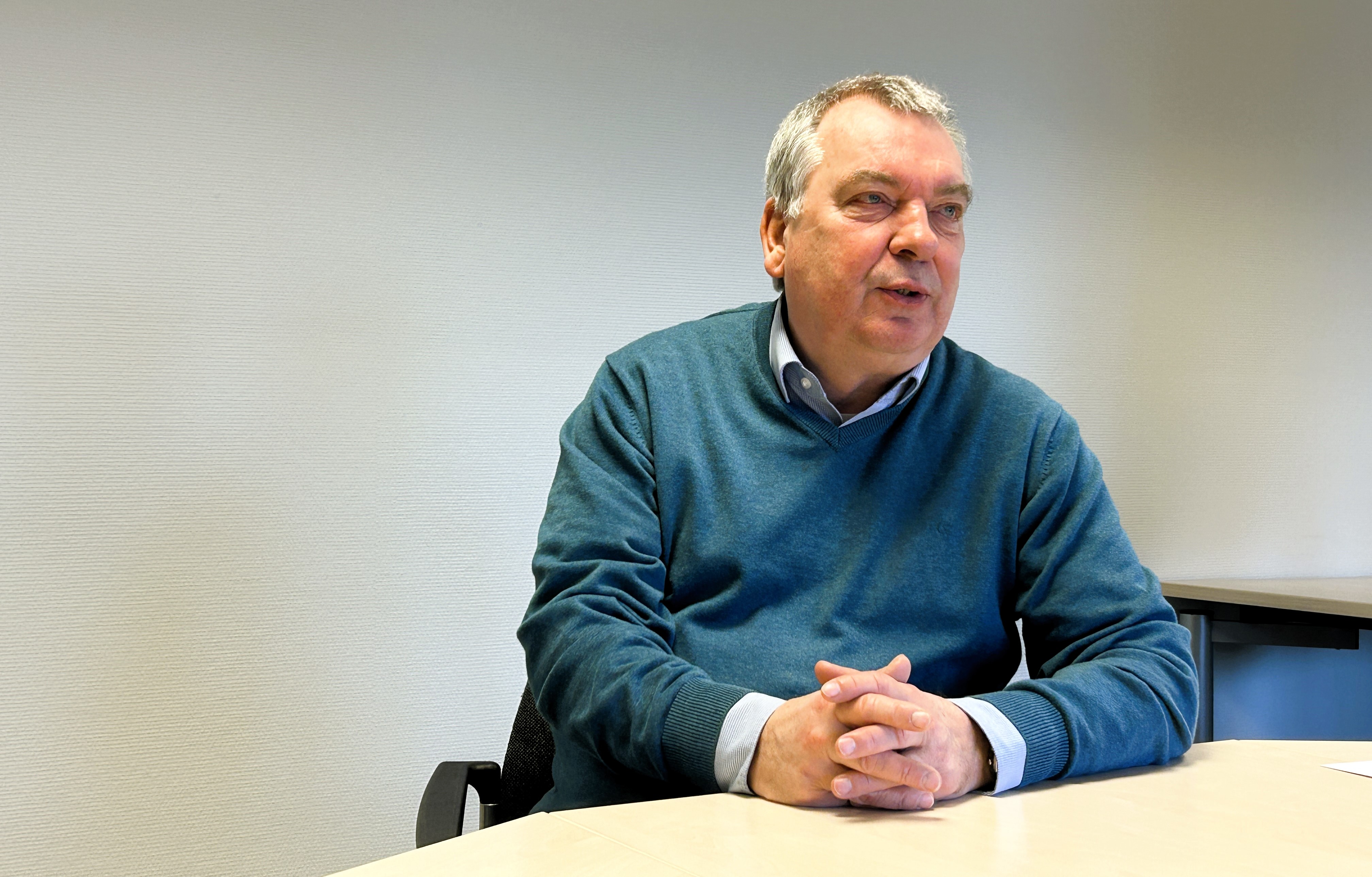
Dr. Bernd Günther has worked at the MHH for over four decades - oncological care structures have been his hobbyhorse since the beginning. Most recently, he was head of tumor documentation at the hospital. He has been retired since the beginning of the year. In this interview, he talks about his time at the MHH and the development of tumor documentation, which is now a central component of oncology.
Status: 18.03.2025
Dr. Günther, you worked at the MHH for 43 years. What stages did you go through at the MHH?
I worked in cancer medicine the whole time, first in the Tumor Center of the MHH, later in the Comprehensive Cancer Center - a further development of the Tumor Center under a new name. Until 2024, I also took on administrative tasks in the Clinical Department for Hematology, Oncology and Stem Cell Transplantation. This dual function came about because the Tumor Center was part of the Clinical Department until 1995 and significant impetus came from there. In 1995, it then became an independent Facilities or Institutions of the MHH with statutes and an elected Board of Directors.
What motivated you to work in oncology?
It wasn't a conscious decision, but a coincidence of life. I started at the MHH in November 1981 - a time of great upheaval in cancer medicine. New therapeutic approaches led to progress, but at the same time there was criticism of inadequate care. During this phase, the first tumor centers were established, German Cancer Aid was founded, and the German government launched funding programs. At the MHH, Professor Hubert Poliwoda and Professor Volker Diehl initiated the "Hannover Oncology Cooperation Model" around 1980. The aim was to provide comprehensive, high-quality oncological care by supporting physicians in private practice and regional Clinical Departments. From today's perspective, one could say that this was the first major outreach program in German cancer medicine. The project also included accompanying economic and socio-medical research. This is where I came in: After completing my degree in economics at the University of Hanover and gaining work experience in health economics, I became a project member and later coordinator of the tumor center.
What was the biggest motivation for you personally to work for the Cancer Center at the MHH for so long?
Almost all tasks in the Tumor Center, now the CCC, are based on tumor documentation data - from patient treatment and clinical studies to quality assurance and certifications. It is a central foundation of cancer medicine and requires sound expertise. I was motivated by the thematic diversity, which kept my day-to-day work exciting. Our team used to be much smaller than it is today, which is why all-rounder qualities were required. I was involved in projects such as the first study center of the German Hodgkin Study Group, the "MEDKOM" video conference network, the editing of the "Onkologische Mitteilungen für Niedersachsen" and the development of a documentation and follow-up system for the whole of Lower Saxony and Bremen. I was also involved in the conception and establishment of new care services, the organization of training courses and budget management. I particularly appreciated the innovative climate at the university hospital, the collaboration with dedicated colleagues and the productive environment at the MHH.
What role does tumor documentation play today compared to your early days in terms of research and patient care?
Tumor documentation has developed from a "nice to have" to a "must have". In the old Federal Republic of Germany, there was only one epidemiological cancer registry in Saarland, so it was impossible to draw valid conclusions about other regions. From 1980 onwards, tumor centers began to systematically record diagnoses and treatments - including at the MHH. The aim was to integrate the documentation into everyday clinical practice and to offer physicians added value, for example through current epicrises. The continuous expansion increased the value of the register and increased medical interest in evaluations and projects. Today, there has been a nationwide epidemiological cancer registry for over 20 years and a clinical cancer registry throughout Germany since 2018 - both with a legal basis and mandatory reporting. It is crucial that the registries deliver results and can provide Clinical Departments and researchers with data. In addition, the German Cancer Society's certification system has been in place for around 20 years and now covers almost all entities. Certification is not possible without data and tumor documentation. National research networks also expect data for joint projects. In short, tumor documentation is now an integral part of oncological research and patient care - a long, arduous journey that has not yet reached its destination.
How have the requirements for tumor documentation changed, especially with the increasing importance of digital systems, big data and AI?
Today, tumor documentation is more comprehensive, more specific and more up-to-date. With the variety of diagnostic criteria, the data to be recorded has grown, especially for certifications. Whereas in the past, priorities were set, today all patient data must be recorded in full - often under time pressure, for example with four-week reporting deadlines. Digital systems make access easier, but alone do not ensure the quality of content. Important information is often missing or insufficiently classified. The discrepancy between the desire for valid data and the willingness to contribute to quality remains a problem. Physicians suffer from redundant documentation for record keeping, billing, quality assurance or studies. Instead of using existing data, new documentation requirements are constantly being created, which makes actual patient care more difficult. Buzzwords such as digitalization, AI and big data alone will not solve any problems. It is often a long and arduous process before medical informatics provides practicable solutions. With often incomplete data and poor documentation quality, a lot of natural intelligence and manual work is still needed to keep tumor documentation at the required level. I definitely see potential in the new technologies and we should always remain optimistic.
What developments have you observed in cancer medicine? What role will tumor documentation play in the future?
When I started at the MHH in 1981, there was great euphoria in cancer medicine - many would certainly have predicted greater progress by 2025. However, many expectations were not fulfilled as hoped, both then and later with new substances or therapeutic concepts. Progress is undeniable: more cures, longer survival times, better tolerability of therapies. But the figures also show limits: 23,133 people died of cancer in Lower Saxony in 2023 - around 2,000 more than in 2006. The mortality rate remains at around 45% of new cases. It is important that all cancer patients are treated according to the best available science. Studies such as WiZen from 2022 show better survival rates in certified centers. This means that not all patients receive therapies with results that would be possible - an unsustainable situation for the healthcare system. Tumor documentation and clinical cancer registries are essential to uncover such deficits in care. My latest project, the "Oncological Care Atlas for Lower Saxony", aims to do just that. I hope it will be further developed with broader participation in order to continuously improve the quality of cancer care.
Now that you have retired, how do you look back on your time at the MHH? What are you proud of?
I look back positively on my professional life. I had exciting tasks in an interesting field. I was able to contribute to some projects and processes running smoothly. In this respect, I am largely satisfied with what I have achieved. I was particularly pleased with the interest shown by new and young colleagues, to whom I was not only able to teach them some MHH history, but also enjoyed giving them short tours of the MHH. After more than 40 years, you know almost every corner. Again, I have a problem with the word "pride". Too little has been completed and, as I said, there are still many construction sites and a lot to do.
What is the most important lesson you would give young colleagues for tumor documentation or cancer medicine?
The more you know and can do, the more you enjoy your work and the more successful you can be. I believe that it is important to take advantage of all opportunities for further education and training in order to understand the overall system of cancer medicine and oncological care.
Interview/ Text: Maike Isfort