Further information
We investigate signal transduction mechanisms that are relevant for carcinogenesis and inflammation with the aim of opening up ways for an effective and rational "signal transduction therapy" of these diseases by modulating the signaling mechanisms.
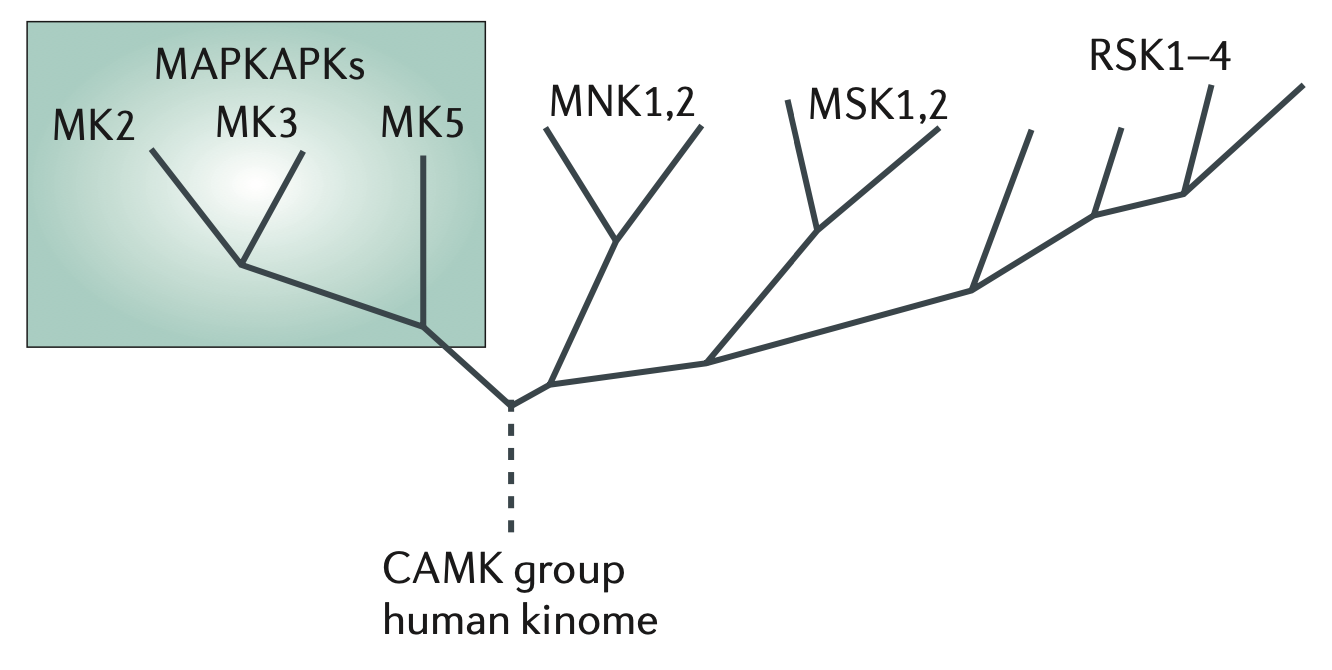
In particular, we are interested in a family of MAP kinase-activated protein kinases, termed MAPKAP kinases - MKs - and the substrates of these enzymes.
The possibility that protein kinases and protein phosphatases might represent important drug targets was considered to be a remote idea more than twenty years ago. Meanwhile, the human kinome is known and the spectacular therapeutic results obtained with STI571 (Gleevec), suggested that compounds that modulate the activities of particular protein kinases, are likely to be some of the major drugs in the 21st century.
Basic research in regard of signal transduction therapy of cancer and inflammation is the major aim of the group. Especially, we are interested in a small family of MAP kinase-activated protein kinases designated MAPKAP kinases or MKs.