Ambystoma Mexicanum Bioregeneration Center
Over the past few decades, plastic surgery has continuously developed new techniques and procedures to restore function and aesthetics, thus impressively advancing the quality of medical care. Regeneration has always been a central theme in this context. The axolotl (Ambystoma mexicanum), with its pronounced regenerative abilities, represents an ideal model organism for research. The team at the Kerstin Reimers Laboratory was able to identify AmbLOXe, an enzyme from the lipoxygenase family, as a factor involved in regeneration. Together with the Institute of Technical Chemistry at Leibniz Universität Hannover, the enzyme is now being investigated with regard to an application to improve human wound healing.
In addition to improving regeneration and wound healing, the axolotl could also offer solutions in the search for new antibiotics. The axolotl could also offer solutions in the search for new antibiotics. The animals produce so-called antimicrobial peptides to defend themselves against pathogens. These are currently being studied at the AMBC. The extraction process is not painful or harmful to the animals. Scientific studies are always designed in such a way that our animals do not have to lose their lives or suffer unnecessarily. We are also developing alternatives to animal experiments as part of various projects and are already using them in everyday scientific work.
We are particularly interested in promoting translational research and linking biomedical research with species conservation and animal welfare. In this way, we want to make a contribution to sustainability in research and development.
Our international cooperation partners include numerous university Facilities or Institutions as well as private Institutes and zoos. Since the official founding of the AMBC in 2010, we have been the point of contact for veterinarians who are increasingly confronted with axolotls and other ambystomatids as patients. We offer training, advice and practical support on the topics of species-appropriate animal husbandry, diseases, diagnostics, therapy, anesthesia and surgical techniques.
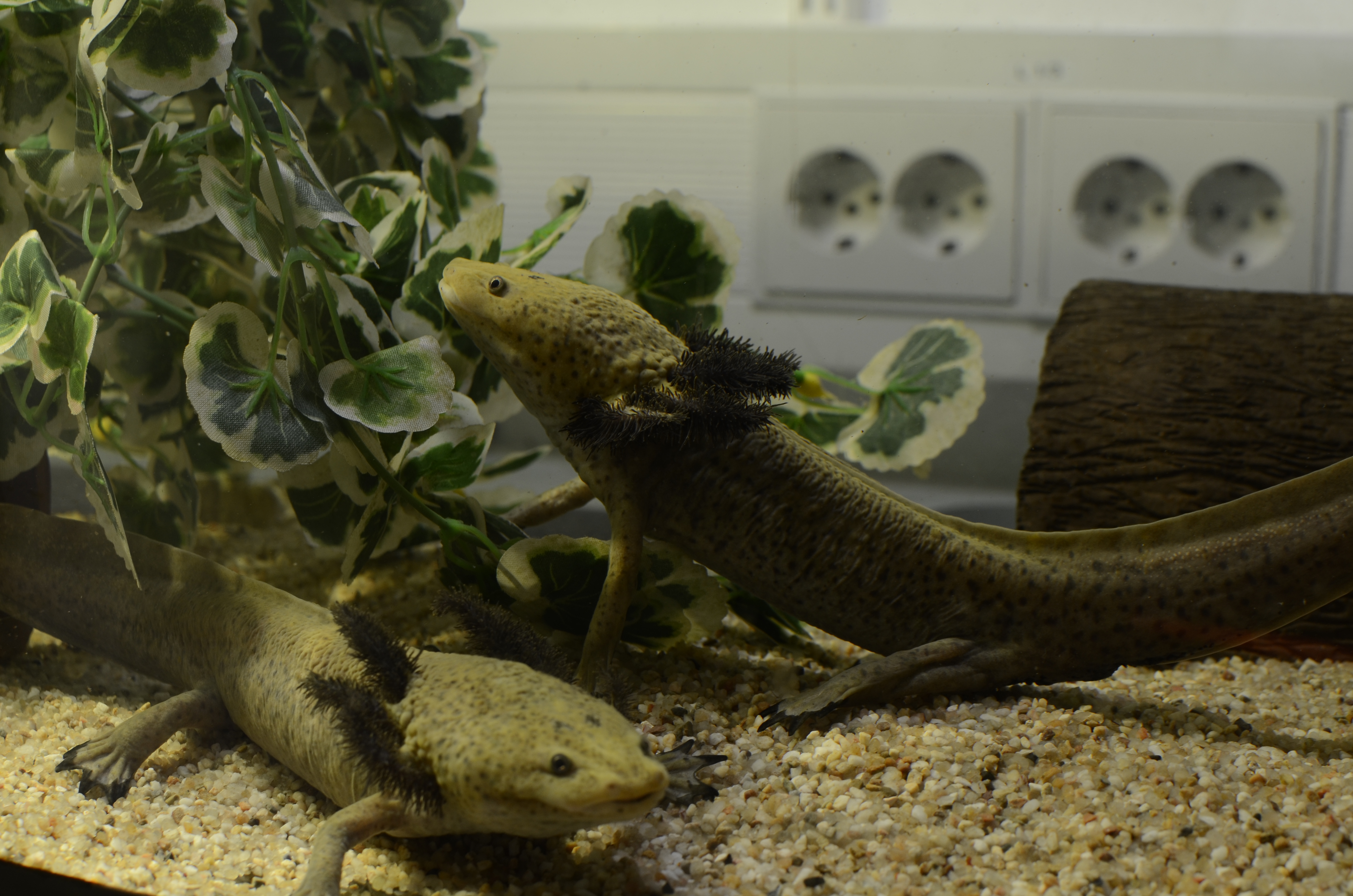
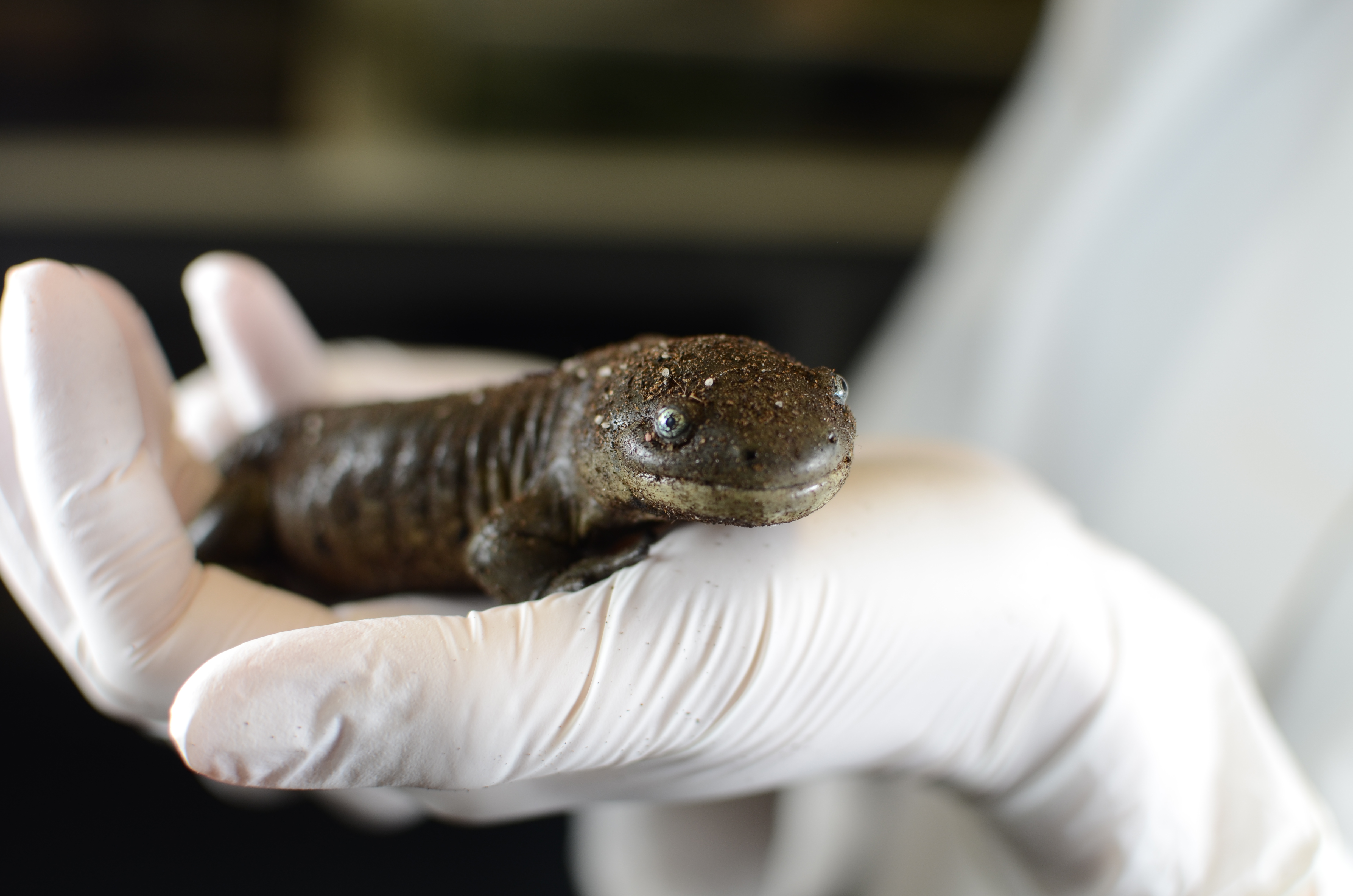
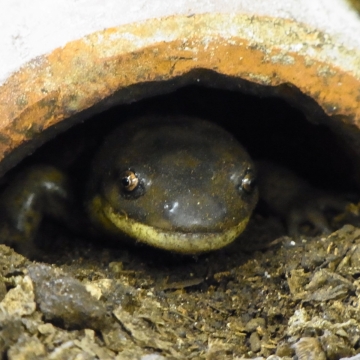
Originally native to Mexico, the axolotl is now threatened with extinction. The Center is now home to other species, some of which are also endangered. Ensuring the survival of the species also means securing an important resource for biomedical research - only recent (non-extinct) species make in vivo observations possible. Both are carried out at the AMBC: targeted species-preserving breeding and biomedical research. Only captive-bred animals live in our Facilities or Institutions in order to conserve natural populations (if they still exist). The AMBC participates in the Citizen Conservation Project(https://citizen-conservation.org/) with Ambystoma dumerilii .
We would like to thank the Rotary Club Hannover- Leineschloß and the Evangelische Krankenhaushilfe e.V. der MHH for their generous support of our commitment to species conservation and animal welfare.
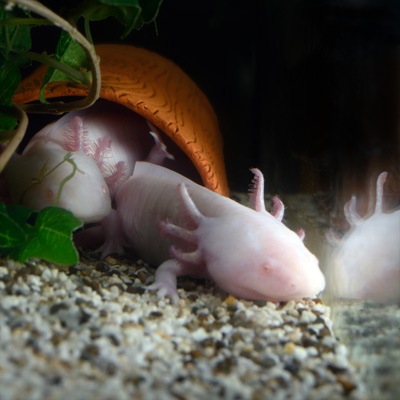
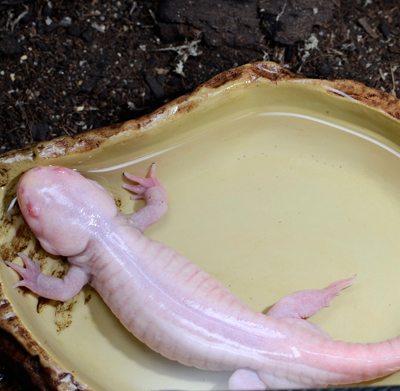
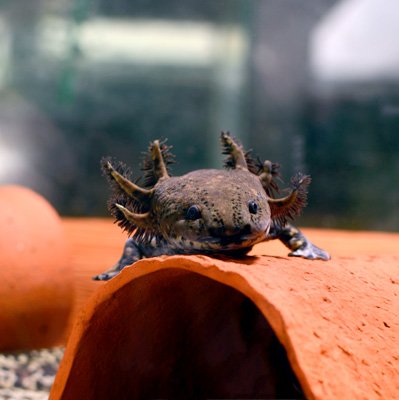
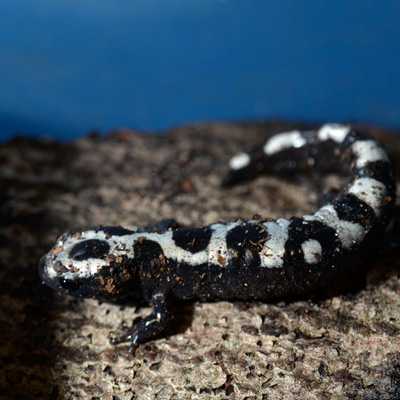
The following species currently live at the center:
Further reading
Stamm A, Strauß S, Vogt PM, Scheper T, Pepelanova I (2018). Positive in vitro wound healing effects of functional inclusion bodies of the epidermal lipoxygenase from the Mexican axolotl. Microbial Cell Factories 17:57. doi: 10.1186/s12934-018-0904-0.
Bucan V, Peck CT, Nasser I, Liebsch C, Vogt PM, Strauß S (2018). Identification of axolotl BH3-only proteins and expression in axolotl organs and apoptotic limb regeneration tissue. Biol Open. 7(8):bio036293. doi: 10.1242/bio.036293.
Waqas SFH, Noble A, Hoang AC, Ampem G, Popp M, Strauß S, Guille M, Röszer T (2017). Adipose tissue macrophages develop from bone marrow-independent progenitors in Xenopus laevis and mouse. Journal of Leukocyte Biology, jlb-1A0317.
Liebsch C, Voitel S (2017). Ambystoma dumerilii Duges, 1870-Lake Pátzcuaro salamander. Amphibia 16(1), 26-33.
Guelke E, Bucan V, Liebsch C, Lazaridis A, Radtke C, Vogt PM, Reimers K (2015). Identification of reference genes and validation for gene expression studies in diverse axolotl (Ambystoma mexicanum) tissues. Genes, 560(1), 114-123.
Fülbier A, Schnabel R, Michael S, Vogt PM, Strauß S, Reimers K, Radtke C (2014). Successful nucleofection of rat adipose-derived stromal cells with Ambystoma mexicanum epidermal lipoxygenase (AmbLOXe). Stem Cell Res Ther 5(5):113. doi: 10.1186/scrt503.
Allmeling C, Riedling M (2013). Dicamptodon tenebrosus - husbandry and courtship of the Pacific giant newt. Amphibia 12(1), 27-31.
Liebsch C, Reimers K, Strauss S, Vogt PM and Mutschmann F (2013) Amputation and regeneration of limbs in the axolotl (Ambystoma mexicanum) Kleintierpraxis 58(10),505-511.
Strauß S, Ziegler T, Allmeling C, Reimers K, Frank-Klein N, Seuntjens R, Vogt PM (2013). In vitro culture of skin cells from biopsies from the critically endangered Chinese giant salamander, Andrias davidianus (Blanchard, 1871) (Amphibia, Caudata, Cryptobranchidae). Amphibian and Reptile Conservation 5(4):51-63.
Allmeling C, Strauß S, Vogt PM, Reimers K (2013). "Axolotl"(Ambystoma mexicanum) husbandry conditions, rearing and husbandry-related diseases. Amphibia 12(1):5-8.
AbuQarn M, Allmeling C, Amshoff I, Menger B, Nasser I, Vogt PM, Reimers K (2011). The yeast two hybrid system in a screen for proteins interacting with axolotl (Ambystoma mexicanum) Msx1 during early limb regeneration. Biochimica et Biophysica Acta (BBA)-Proteins and Proteomics, 1814(7), 843-849.
Allmeling C, Strauss S (2011). The coloration of the axolotl(Ambystoma mexicanum). Aquaristik Fachmagazin 221:72 - 79, Tetra Verlag.
Menger B, Vogt PM, Jacobsen ID, Allmeling C, Kuhbier JW, Mutschmann F, Reimers K (2010). Resection of a Large Intra-Abdominal Tumor in the Mexican Axolotl: A Case Report. Veterinary Surgery, 39(2), 232-233.
Allmeling C. (2010). On the husbandry and development of the Anderson's cross-toothed newt Ambystoma andersoni. Elaphe 2010, 18(3):30-38.
Menger B, Jahn S, Allmeling C, Reimers K, Mutschmann F, Jacobsen ID, Vogt PM (2009). Therapy of a melanosarcoma in an axolotl (Ambystoma mexicanum) by resection and skin grafting. Small Animal Practice, 54(3), 149-154.
Reimers K, Qarn MA, Allmeling C, Bucan V, Vogt PM (2006). Identification of the non-specific cytotoxic cell receptor protein 1 (NCCRP1) in regenerating axolotl limbs. Journal of Comparative Physiology B, 176(7), 599-605.
Book contributions
Allmeling C (2013). Ambystoma mexicanum (Shaw&Nodder 1798 ) - Axolot. Schultschik, G., Grosse, W.-R., Mannheim (Eds.). Endangered newt and salamander species guidelinesfor conservation breeding. Mertensiella No 20d, 7-15, Chimaira, Frankfurt am Main.
Contact person
Laboratory management:
Dr. rer. nar. Sarah Strauß
Phone: 0511 532 - 8863
Strauss.Sarah(at)mh-hannover.de
Head of husbandry and breeding:
Christina Liebsch
Phone: 0511 532 - 8863