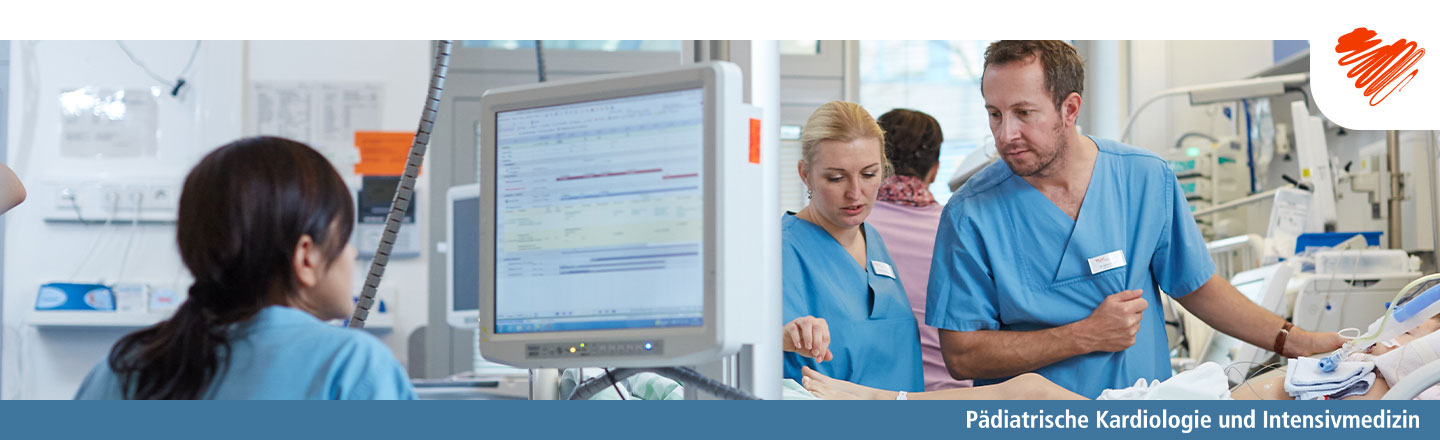
Our aim is to provide critically ill children with the best possible care as quickly as possible. However, since life-threatening emergencies in children are rare, it is good if the Clinical Department providing first aid has a center with extensive experience in treating these patients available in the background.
For the patients concerned, it is often crucial for the prognosis that a great deal of expertise is available quickly. In this way, care processes can be optimized in terms of time and maximum diagnostic and therapeutic resources can be made available.
In particular, complex diagnostic procedures such as MRI or high-resolution angio-CT, but also special specialist disciplines such as neurosurgery, cardiac surgery or transplant surgery or the provision of organ replacement therapies (ECMO or dialysis) are involved in the further planning for the respective patient at an early stage.
However, it is often sufficient for the stabilization of a critically ill child to be able to ask a colleague experienced in intensive care medicine for advice. Our team at Pediatric Intensive Care Unit 67 is therefore available around the clock for medical colleagues in emergency situations (even without a primary transfer request).
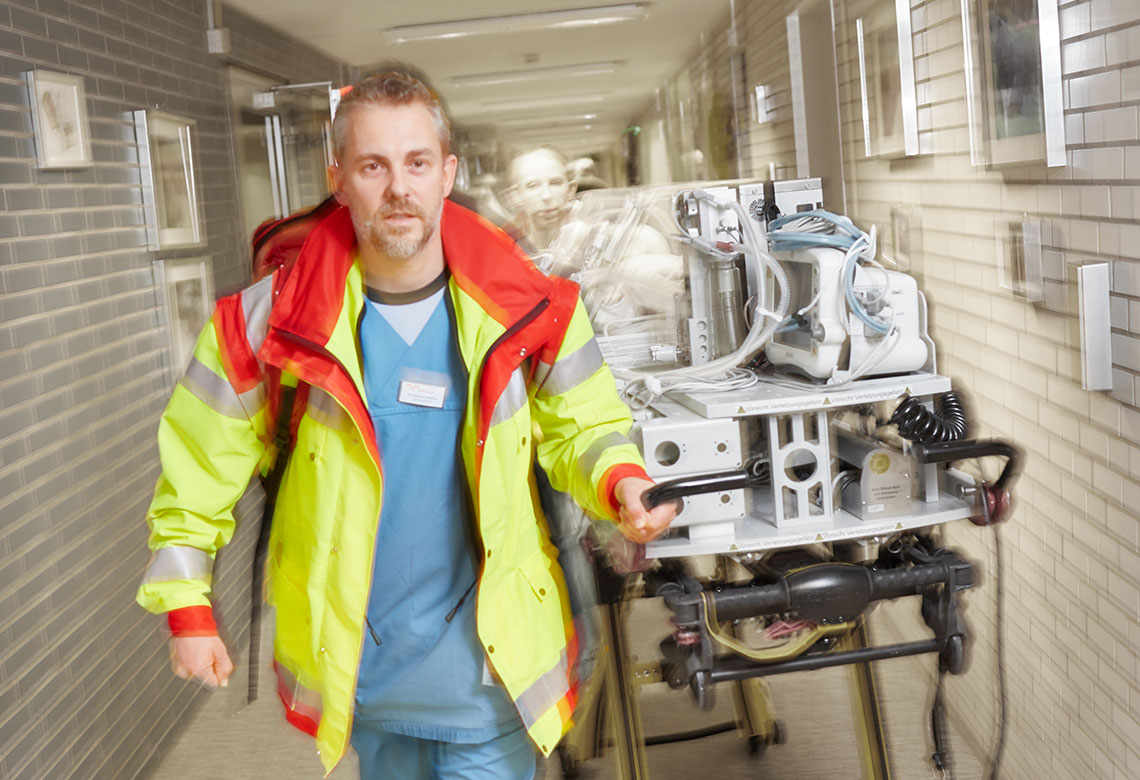
If a transfer to the MHH is indicated, in most cases it is possible for us to organize the transport or pick up the patient ourselves (primarily from Clinical Departments of the Paediatric Intensive Care Network, PIN).
If, in exceptional cases, there is no admission capacity at 67 or the patient's condition is too unstable for a transfer, on-site co-care by an experienced intensive care physician from our team is possible. We will also help to organize an alternative intensive care unit for the patient.
More information on consulting More information about our transportation service More information on the PIN Emergency contact
Advice - by telephone or on site
Telephone consultation
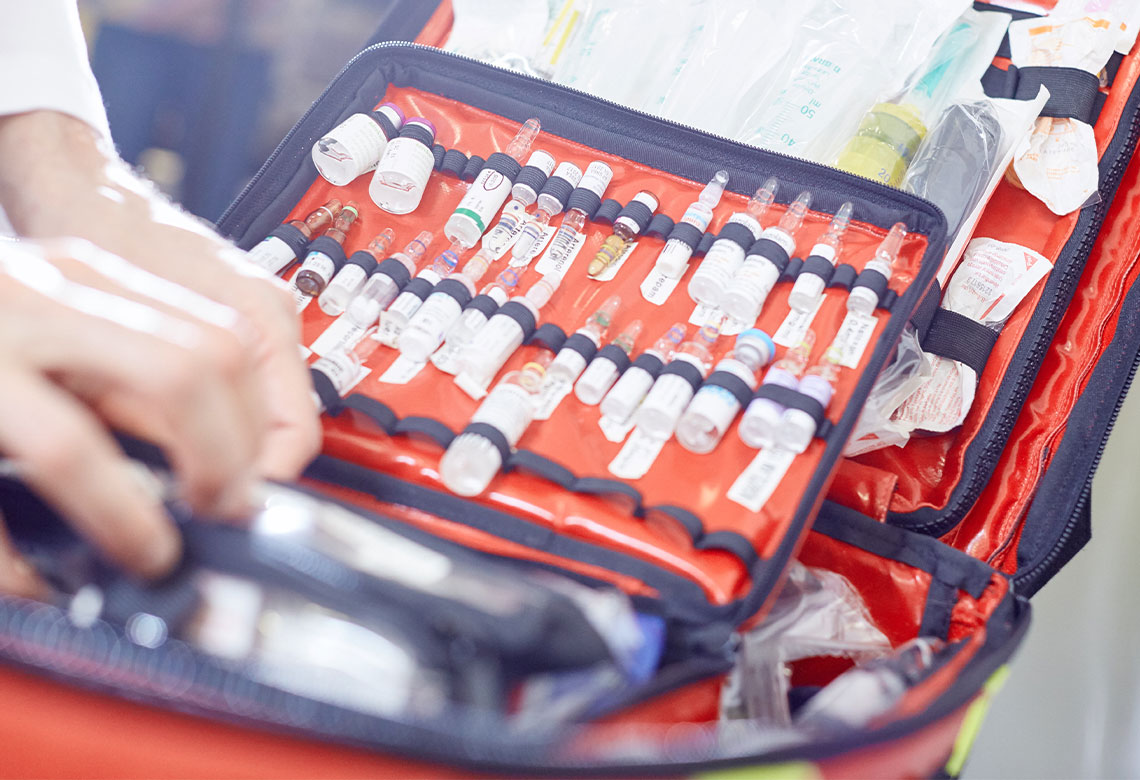
A colleague with experience in intensive care medicine is always directly available on intensive care unit 67. It is easy to contact them at any time - 7 days a week, 24 hours a day. Our consultation aims to ensure the best possible care for your patient and to identify and then provide the necessary resources. We always maintain a collegial style that leaves room for any questions - everything can be discussed. The colleague on duty in ICU 67 will endeavor to answer critical questions immediately - but can always call on a senior physician with experience in intensive care medicine and cardiology.
This ensures that the course for further treatment is set at an early stage and that optimum use is made of the available resources. A telephone call is of course possible at any time; however, if there is time for a short preparation, it is a good idea to fill out the questionnaire and fax it in advance, even if transportation should become necessary later. This way, the colleague in the intensive care unit has the information immediately.
Download questionnaire consultation-transport (PDF)
On-site consultation
Occasionally it is necessary to see the patient in order to plan and prepare a treatment or transportation - for example, to evaluate organ replacement procedures or to assess the limitations of therapies. In this case, it is possible for a colleague in your Clinical Department with experience in intensive care medicine to carry out an assessment and consultation. In a telephone call with you, we will decide what the best option is for the patient.
How to contact us
Transfer and transportation
Procedure
For an initial evaluation of your patient and to plan the appropriate means of transportation, please contact us by telephone first. We will discuss the situation with you and determine with you how the transport will be organized. It is often possible for us to arrange the transport directly and determine the appropriate means of rescue and any necessary equipment. If we are unable to provide transportation, we will try to find an acceptable alternative with you.
Means of rescue
Depending on the urgency, the equipment required and the weather conditions, we will select a means of rescue that can carry out the transportation safely and quickly.
Christoph Niedersachsen, an intensive care transport helicopter, is stationed at Hannover-Langenhagen Airport and Christoph IV, a rescue helicopter, is stationed at Hannover Medical School and is ready for use if necessary. Depending on the underlying illness, the patient can be picked up by helicopter.
Alternatively, in cooperation with the Hanover control center, all of our rescue vehicles, including an intensive care transport vehicle, can be deployed if necessary.
Technical possibilities
If it is not possible to achieve sufficient stabilization on site, a team from Hannover Medical School can perform ECMO cannulation in your Clinical Department and then transfer the patient to ECMO. Transport to high-frequency oscillation ventilation is not possible - please contact us to evaluate such patients.
Repatriation
In the interests of patient care close to home, we aim to transfer transferred patients back at an early stage. We will be in close contact with you to decide when the time is right.