Professors Programm
With its "concept of parity" the MHH was once again successful in the fourth round of the professors programm.
In order to work against the "leaky pipeline" in scients the federal government and states called the professors progamm into life in 2008. It aims at supporting and sponsoring female professors and fostering equal treatment within the university.
The MHH was successful in every round, raising around 8 million Euros.
You can read more about the appointed professors below.
Appointed professors 2025
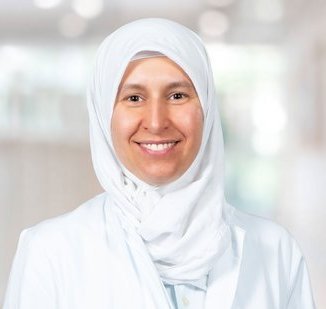
Prof. Dr. Nagoud Schukfeh was appointed to the W2 professorship "Hepatobiliäre Kinderchirurgie" within the professors program in 2025.
Her main focus within her research is the examination of the interaction of inflammation and fibrosis in the development and progression of biliary atresia.
Appointed professors 2018
Prof. Dr. med. Dr. phil. Sabine Salloch was appointed to the W3 professorship for Ethics and History at MHH as part of the Women Professors Program III. After a long vacancy, she succeeds Professor Brigitte Lohff, who retired in 2013. As this is the first regular professorship to be filled as part of the female professorship program at MHH, this appointment also frees up funds for targeted gender equality measures for the first time. The MHH has committed to using these funds for a coordination position in the Competence Center for Gender-Sensitive Medicine and for a new mentoring program for female scientists at an early career stage (IPM Junior), among other things.
Professor Dr. Ines Yang was appointed to the W2 professorship for "Digitalization and Bioinformatic Data Analysis in Dentistry" in 2019 as part of the female professorship programme, which is based in the Clinical Department of Dental Prosthetics and Biomedical Materials at the MHH headed by Professor Meike Stiesch. Her research focuses on microbial processes in oral biofilms, particularly in connection with periodontitis and peri-implantitis, which she investigates using bioinformatic methods based on data from the latest high-throughput sequencing methods.
Appointed professors 2013
Hildegard Büning is W2 Professor for "Infection Biology of Gene Transfer" at the Institute of Experimental Haematology.
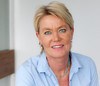
Doris Steinemann is a W2 professor for "Functional Genomics". She heads the Functional Genomics TEAM at the Institute of Human Genetics. Her research focuses on identifying the significance of genetic changes in hereditary tumor diseases. The aim of her research is to use the latest techniques to identify genetic changes that may represent a predisposition to cancer (in particular hereditary breast and ovarian cancer and childhood leukemia).

Tanja Zimmermann is a W2 professor for "Psychosomatics" with a focus on transplant medicine and oncology. Professor Zimmermann focuses on coping processes in cancer patients, the effectiveness of psychosocial support services for cancer patients and the importance of partnership support in chronic illnesses. Another focus of her work is Communications and skills training for adolescents and young adults as well as parent training.
Appointed professors 2008

Heike Bantel is a W2 professor for "Translational Hepatology". Professor Bantel deals with the basic scientific processing of clinically relevant issues in hepatology and gastroenterology. One focus of her research is the identification of new biomarkers for the detection of apoptotic cell death, which is indicative of disease activity, disease progression or treatment response in hepatological diseases.
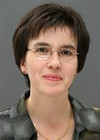
Faikah Güler was a W2 professor for "Ischemia-Reperfusion Injury and Transplantation". She had been working at the MHH Clinical Department of Nephrology and Hypertension since 1999. There she researched mechanisms of acute kidney failure and transplant rejection. Her work focused on the investigation of molecular mechanisms that lead to tissue damage caused by oxygen deficiency (hypoxia). She was appointed junior professor for transplant dysfunction in 2003 and then to the aforementioned professorship in 2008 as part of the Women Professors Program 1.
We were shocked to learn that Faikah Güler passed away unexpectedly on March 19, 2020. Professor Güler was associated with us as a mentee and later as a mentor in the MHH's Ina Pichlmayr Mentoring Program and also as a long-standing member of the Commission for Gender Equality and as a scientist interested in gender research. We will cherish her memory.
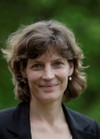
Susanne Häußler was a W2 professor for "Pathophysiology of bacterial biofilms". The specialist in microbiology headed the "Pathophysiology of Bacterial Biofilms" group at TwinCore, the Center for Experimental and Clinical Infection Research in Hanover. The group focused on the development and control of chronic infections caused by the bacterium Preudomonas aeruginosa.
The professorship as part of the female professorship program proved to be an important and short career step: Professor Häußler was appointed to the W3 professorship for Molecular Bacteriology in December 2011. Upon accepting the appointment at the MHH, she also became Head of the Department of Molecular Bacteriology at the Helmholtz Center for Infection Research in Braunschweig.