
Martin Dorn
Head of anesthesia functional service / specialist for intensive and anesthesia care / BBA
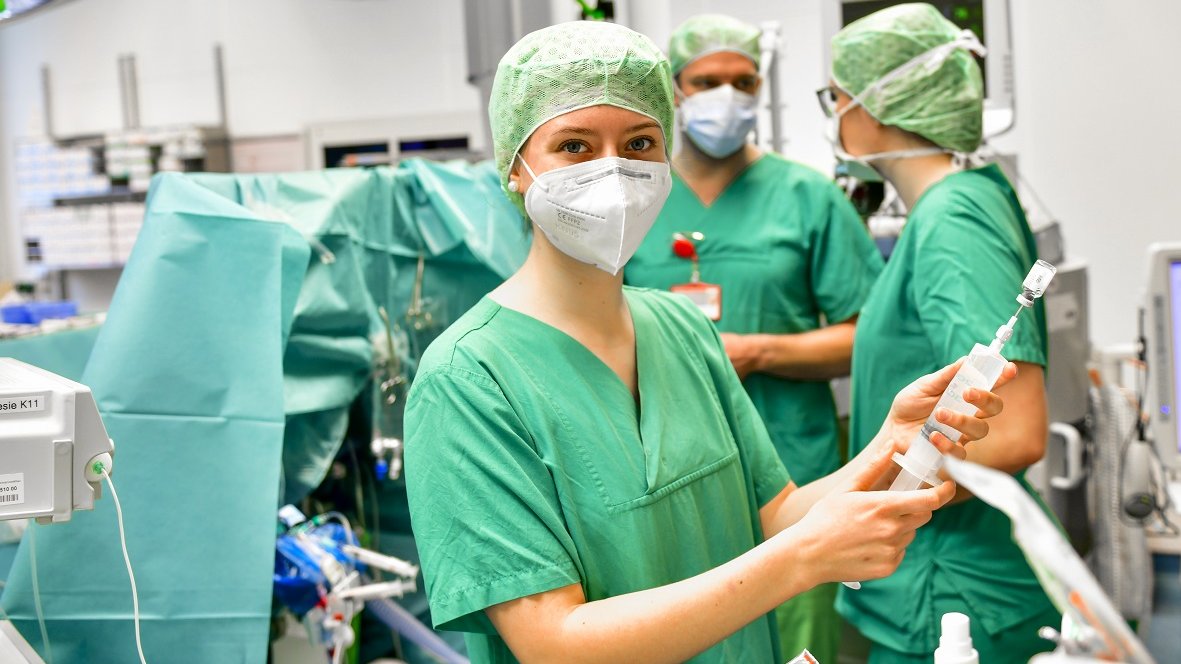
Welcome to the pages of the Anesthesia Functional Service. One thing first: since 2015, we have been increasingly supported by the professional group of anesthesia technical assistants (ATA). This is a great stroke of luck for us, as the shortage of nursing staff has also reached us. In practice, both professions carry out identical activities.
Our team is growing steadily and we now have over 125 full-time and part-time employees. They work at various times, including late and night shifts in the recovery rooms. We also provide on-call duty and standby duty to meet all the requirements of operating theater operations. Furthermore, we offer working hours adapted to your personal situation by individual arrangement (family-friendly university).
Our field of application includes the central OR with the specialist disciplines: Cardiac, thoracic, transplant and vascular surgery as well as trauma surgery, urology, plastic, hand and reconstructive surgery, neurosurgery, ophthalmology and ear, nose and throat medicine. Anesthesiological care is also provided in the Central Emergency Room, the entire polyclinic areas, the operating theatre area of the children's clinic, the children's cardiac catheterization laboratory and in dermatology. Finally, anesthesiological care is also provided in other buildings on the campus in the areas of oral and maxillofacial surgery, gynecology and obstetrics, including the delivery room, as well as general, visceral and transplant surgery.
Working with patients of all ages with the widest possible range of illnesses, in so many different specialist medical areas, with the correspondingly different rooms and work processes, requires a high degree of flexibility, commitment, experience and competence from our staff.
For this reason, we offer the possibility of specialist training in intensive care and anesthesia care. It is desirable that as many nursing staff as possible complete this further training.
Similarly, we are working on the further qualification of our ATAs in order to offer professional training prospects here too.
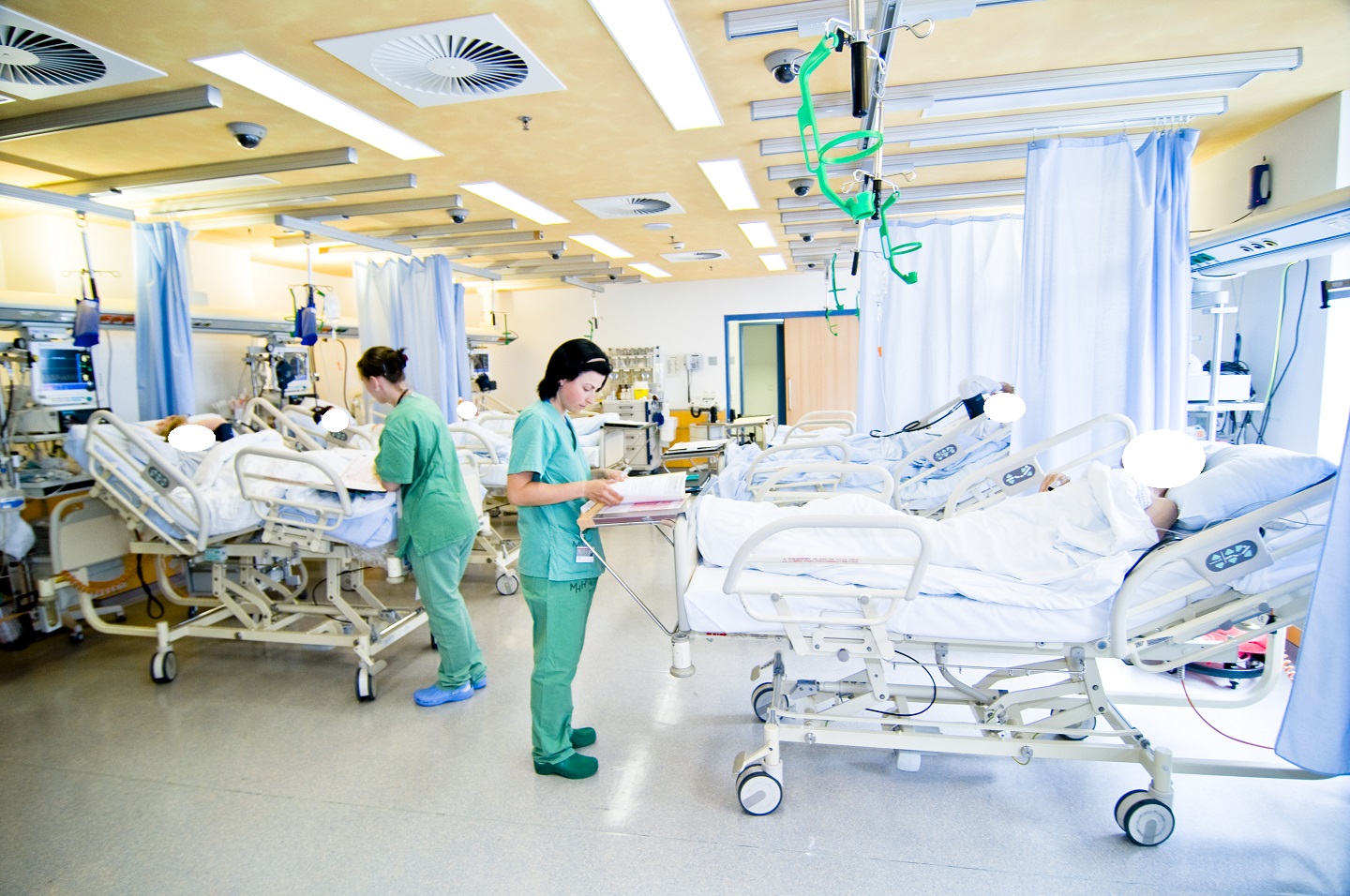
The focus here is on the holistic care of patients who find themselves in an exceptional psychosocial situation. Our most important task here is to give patients a feeling of safety and security. Our nursing tasks also focus on assisting with the positioning required for the operation or intervention and keeping patients warm during the operation or examination.
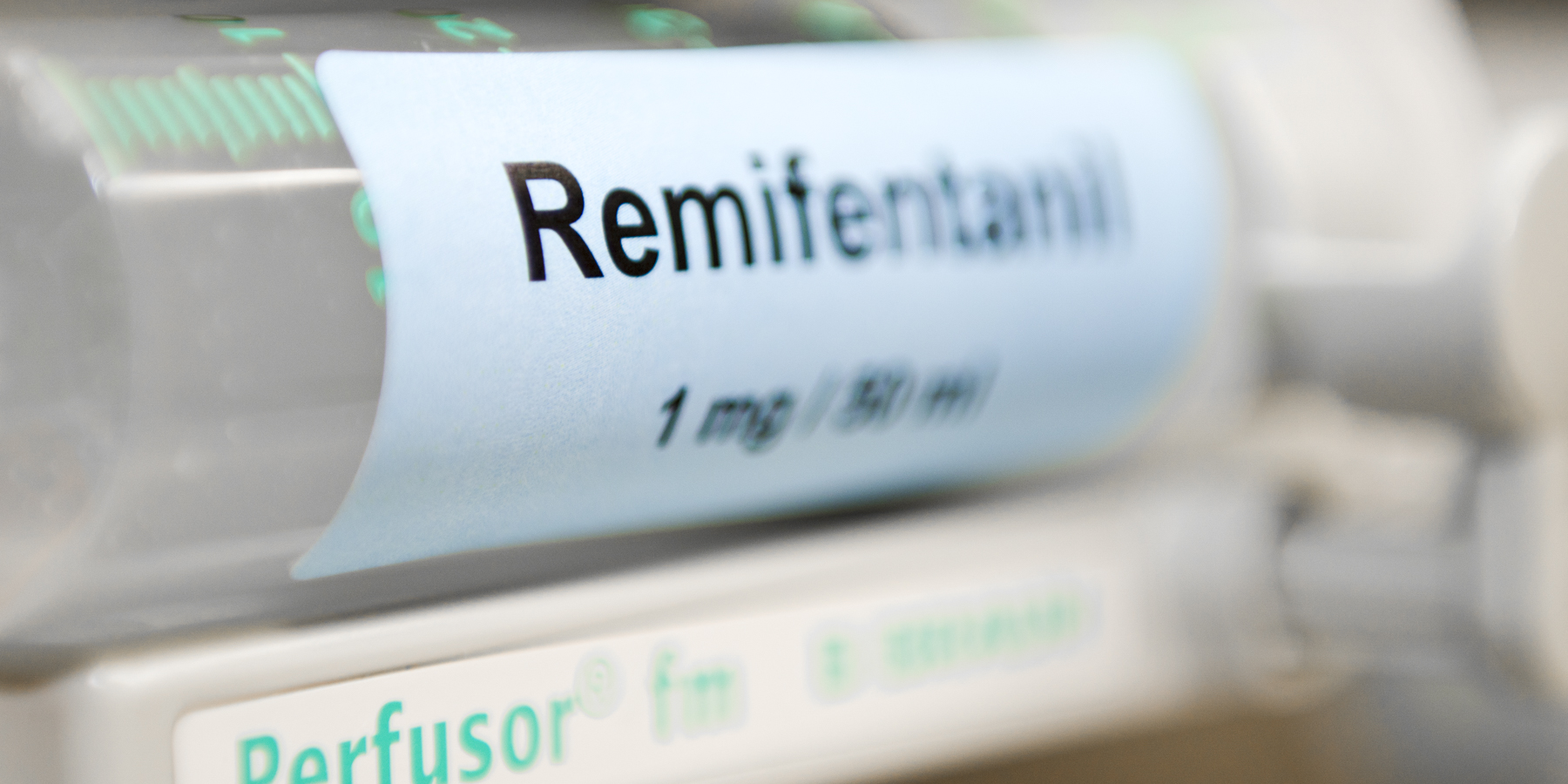
For example, ensuring that all equipment required for anesthesia is ready for use and consistently complying with the Medical Devices Act and hygiene standards.
First and foremost, the ordering, storage and preparation of medical devices and medicines should be mentioned here. We are also responsible for preparing all the medication, endotracheal tubes, catheters, probes, etc. required for the individual patient.

We are actively involved in the various phases of anesthesia: preparation and induction of anesthesia, maintenance of anesthesia during the procedure and withdrawal of anesthesia with subsequent postoperative care in the recovery room or transport to the intensive care unit.
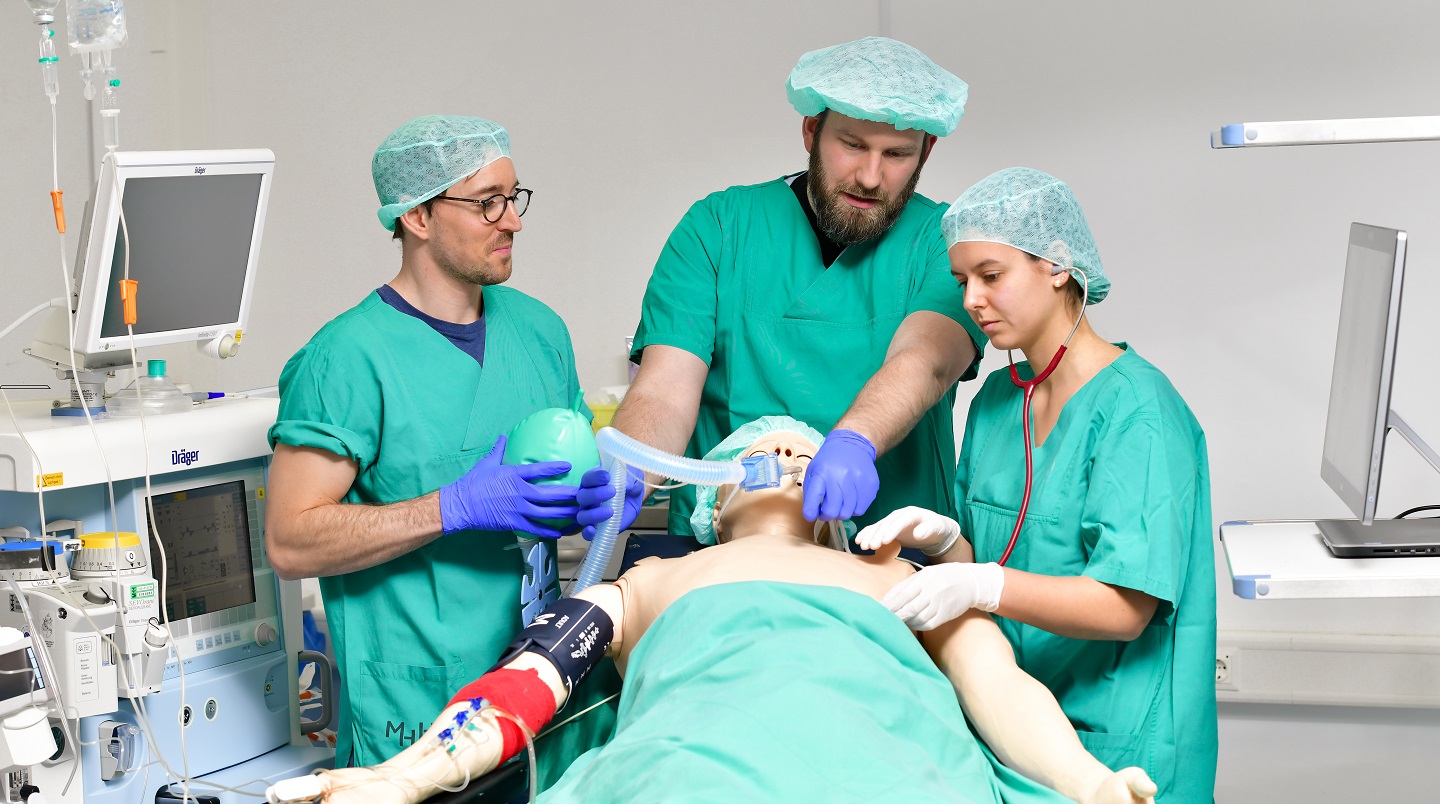
We are actively involved within the MHH, including in various training and further education courses with lecturers from our team. These are, for example
Training plays a very important role in our field. Only well-trained employees are motivated and perform their work efficiently. We therefore take a lot of time, usually up to two years. Induction is based on a constantly updated competence-based concept.

