Thank you to Professor Ingo Just,
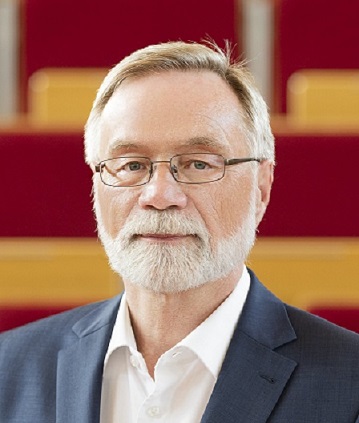
Director of our Institute from July 1, 2000 to March 31, 2025:
Prof. Dr. med. Ingo Just, Director of the Institute of Toxicology and Dean of Studies, concluded his active service at Hannover Medical School (MHH) on March 31, 2025.
Ingo Just, born in 1955, graduated from high school in Dortmund in 1974. His academic career began with studies in pharmacy in Münster, which he completed in 1981 with his license to practice as a pharmacist. In the same year, he began studying human medicine in Berlin and received his doctorate in 1988 with a dissertation on "The Formation of Arachidonic Acid Oxygenation Products in the Presence of Peroxidases and Foreign Substances."
As a physician-scientist and later as a senior research associate (C2), he conducted numerous fundamental studies on the molecular mechanisms of action of clostridial protein toxins together with his mentor, Prof. Klaus Aktories. For this, he employed the then-emerging mass spectrometric methods, which allowed the identification of the covalent modifications of substrate proteins catalyzed by the toxins. He published his research findings, generated at the pharmacological institutes in Giessen (1988-89), Essen (1989-91), Homburg/Saar (1991-95), and Freiburg/Brsg (1995-2000), in top-tier journals.
Ingo Just received his habilitation in pharmacology and toxicology in 1995 and passed the specialist examination in pharmacology and toxicology in 1999. From July 1, 2000, he was a full professor (C4) and director of the Institute of Toxicology at Hannover Medical School. In Hannover, enterotoxins from Clostridia (research groups: Harald Genth, Ralf Gerhard, Andreas Pich, Astrid Rohrbeck) and neurotoxins from C. botulinum and C. tetani (research group: Andreas Rummel) remained the central research focus. Professor Just also initiated the establishment of the central research department for mass spectrometry-based proteomics (research group: Andreas Pich) at the institute. From 2002 to 2013, his research topics were part of the Collaborative Research Center 621 "Pathobiology of the Intestinal Mucosa," and from 2013 onward, he participated in the CDiff research consortium – Epidemiology and Systems Biology of the Pathogenic Bacterium Clostridioides difficile – funded by the North German Center for Microbial Genome Research.
"Teaching is not about filling an empty pail, but about kindling a fire." This saying, attributed to Heraclitus of Ephesus (520–460 BC), perfectly encapsulates the philosophy of Professor Ingo Just, a truly inspiring academic teacher. He is also deeply interested in the organization of teaching and works tirelessly to raise awareness of its importance in university medicine. As Deputy Dean of Studies (2009–11) and Dean of Studies (2011–25), Professor Ingo Just was actively involved in academic self-governance, working to further develop teaching for both students and faculty at Hannover Medical School (MHH). He further developed the Hannibal model study program at MHH, introduced mandatory professional development courses in higher education didactics for junior faculty, and further developed the ILIAS learning management system and the IQuL platform for electronic examinations. Teaching Excellence Initiatives (LOMs) and teaching awards, which he initiated, provide incentives for outstanding teaching. The excellent organization of teaching at Hannover Medical School (MHH) allowed students to continue their studies with virtually no delays during the COVID-19 pandemic. At the Dean's Office, Professor Ingo Just established a department for teaching and learning research, which has provided important impetus for improving the medical curriculum.
Beyond MHH, Professor Ingo Just is a sought-after figure in higher education and university law. He served as founder and spokesperson of the Northern Network (federal states of Lower Saxony, Hamburg, Schleswig-Holstein, Mecklenburg-Western Pomerania, and Berlin) of Deans of Medical Studies (2017-2025), as a member of the Teaching Committee of the German Association of Medical Faculties (2015-2025), as the university representative of the state of Lower Saxony on the Board of Trustees for University Admissions (SfH) in Dortmund (2015-2023), and as an expert for the Institute for Medical and Pharmaceutical Examination Questions in Mainz (IMPP, 2002-2008).
We sincerely thank our institute director and friend, Prof. Ingo Just, for the many years of trusting collaboration and for everything he has made possible for us as his staff. We wish him all the best in his planned activities and honorary positions "in retirement."
Research focus
At the Institute of Toxicology, various families of bacterial protein toxins are being investigated with regard to their structure and mode of action:
- glucosylating toxins from Clostridium difficile and Clostridium sordellii
- neurotoxins with protease activity from Clostridium botulinum and Clostridium tetani
- exoenzymes with ADP-ribosyltransferase activity from Clostridium botulinum and other bacterial species
The glucosylating toxins (molecular mass 250–307 kDa) and the neurotoxins (molecular mass 140–150 kDa) possess a multidomain structure:
In addition to the enzymatically active domain, the toxins have domains for receptor binding to the target cell and for translocation across the endosome membrane to enter the intracellular space. These different steps that mediate the toxin's effect are being intensively researched at the Institute.