Innovative therapy development in amputation medicine
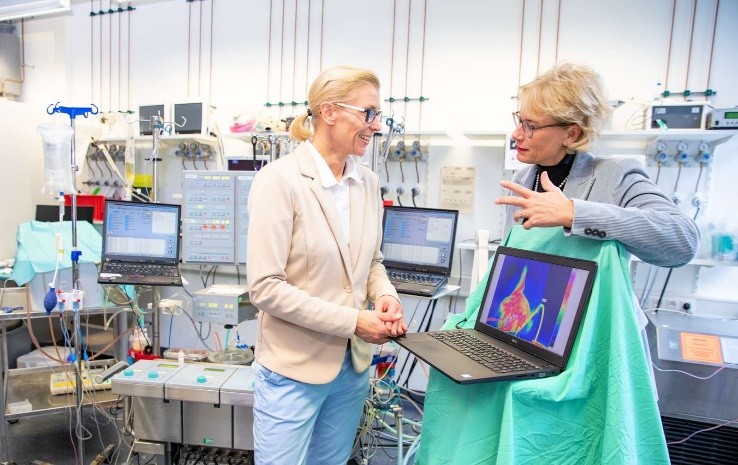
Prof. Dr. Kirsten Haastert-Talini (WG Peripheral Nerves) is cooperating with Prof. Dr. Bettina Wiegmann in the development of a transportable, artificial blood circulation system - similar to organ transplants - that keeps severed limbs viable outside the body for a longer period of time and optimally prepares them for replantation.The basic structure of the system for ex vivo extremity perfusion (EVEP) and initial investigations into the suitability of different perfusion solutions on large animal extremities were published in the journal "Military Medical Research". The Peripheral Nerves working group contributed to the investigations of blood gases, serum markers, thermal imaging and joint mobility, as well as histological examinations of the peripheral nerves. The research focus of the project, which is funded by the Federal Office of Bundeswehr Equipment, Information Technology and In-Service Support, is therefore on the regeneration of peripheral nerves, which has been a unique feature of this field of research to date. The system that has now been developed initially ensures that the EVEP functions reliably for six hours and that all tissues, including the peripheral nerves, are not additionally damaged. In the future, further modifications will be made to ensure that the peripheral nerves can undergo the intrinsic processes in preparation for reinnervation (Waller degeneration) undisturbed.
Link to the press release
https://www.mhh.de/presse-news/neuartiges-care-system-soll-abgetrennte-gliedmassen-retten