02.06.2026
iNDUCARE: Producing heart cells from iPSCs faster and more cost-effectively
MHH researchers receive millions in funding from the European Union to improve a production platform for personalized cell therapy.
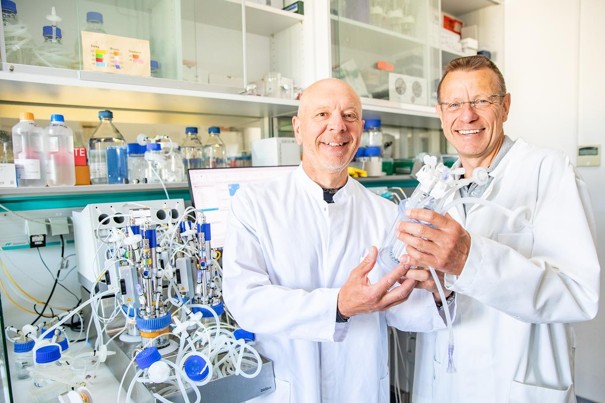
Heart failure is one of the leading causes of death worldwide. Treatment options are limited, especially when heart failure is caused by congenital heart defects. Affected individuals require mechanical circulatory support or an organ transplant as early as young adulthood. Both options have drawbacks: cardiac support systems require permanent blood thinning and are not a permanent solution; donor hearts are rare and require lifelong immunosuppression. An alternative is the use of so-called human induced pluripotent stem cells (hiPSCs). These genetically reprogrammed somatic cells can develop into any cell type — for example, into heart muscle cells. Such laboratory-grown cardiomyocytes (hiCMs) are intended to replace lost heart muscle tissue and improve heart function in the future. If the hiPSCs are derived not from donated somatic cells but from the recipients themselves, immunosuppression is not even necessary. This is because the immune system does not recognize the cells derived from the body’s own, autologous hiPSCs as foreign. However, their production has so far been very labor-intensive and expensive.
A research team led by Prof. Dr. Robert Zweigerdt, a cell biologist at the Leibniz Research Laboratories for Biotechnology and Artificial Organs (LEBAO) at the Clinical Department of Cardiac, Thoracic, Transplant, and Vascular Surgery at Hannover Medical School (MHH), and LEBAO Director Prof. Dr. Ulrich Martin aims to solve this problem. With their iNDUCARE project, they aim to utilize a manufacturing process for autologous hiCMs that is already approved in the U.S. and improve it so that personalized heart repair becomes affordable and clinically feasible in the future. The European Union is funding this international collaborative project with a total of eight million euros. As the coordinator, MHH will receive approximately two million euros of this amount.
(Text: Kirsten Pötzke)
Full Article: Medizinische Hochschule Hannover : Producing heart cells from iPSCs faster and more cost-effectively