01.04.2005
MHH appoints Chair of Neurosurgery
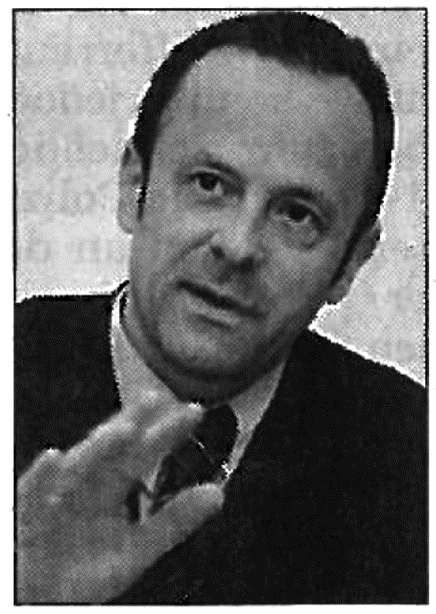
Press release by Dr. Arnd Schweitzer, Administrative Unit Communications, MHH
Prof. Dr. med. Joachim K. Krauss to head the Department of Neurosurgery from 1 April
After a lengthy vacancy, Hannover Medical School (MHH) has been able to fill the Chair of Neurosurgery again: Prof. Dr. med. Joachim K. Krauss will move from the Faculty of Clinical Medicine Mannheim at the University of Heidelberg to the MHH on Friday, April 1, 2005, to head the university's Neurosurgical Department. Following the retirement of Prof. Dr. Dr. h.c. mult. Madjid Samii retired at the end of September 2002, the chair initially remained vacant. Prof. Dr. Matthias Zumkeller has since headed the MHH Department on an interim basis with great success. The MHH Presidium is delighted that the chair can now finally be filled by a top-class and internationally renowned professor. "This also means that all plans to divide up neurosurgery at MHH and transfer some of the beds to the International Neuroscience Institute (INI) have failed," says Dr. Andreas Tecklenburg, MHH Presidium member for patient care.
Professor Krauss' curriculum vitae
Joachim K. Krauss was born in Kehl in 1957. He studied Human medicine at the University of Freiburg from 1977 to 1985. He obtained his doctorate with "magna cum laude" in neuropharmacology on the subject of "The modulation of the release of the potential neurotransmitter cholecystokinin from the caudatoputamen of the rat". His stations as a physician: Neurological Department Elzach (1985 to 1987), Department of Stereotaxy and Neuronuclear Medicine and Department of General Neurosurgery, University of Freiburg (1988 to 1993). Dr. Krauss qualified as a specialist in neurosurgery, worked as a senior physician in the Department of General Neurosurgery in Freiburg from 1993 to 1995 and was awarded the venia legendi in June 1995. His habilitation thesis: "On the pathophysiology and diagnosis of normal pressure hydrocephalus". In the following two years he worked as an assistant professor in the Department of Neurosurgery at Baylor College of Medicine, Houston, USA. He then took up the position of Senior Consultant and Head of Functional Neurosurgery in the Department of Neurosurgery at the Inselspital, Bern University Hospital, Switzerland. From 1999, he was Deputy Clinic Director at the Neurosurgical University Clinic in Mannheim and was appointed Adjunct Professor at the University of Heidelberg in June 2001.
Professor Krauss is a member of numerous medical societies, commissions and medical advisory boards, including first as Director and now as Vice President of the World Society of Stereotactic and Functional Neurosurgery (since 2004) and First Secretary of the European Society of Stereotactic and Functional Neurosurgery (since 2002). He is also a member of the Executive Committee of the European Dystonia Research Group (since 2003). In addition to being a specialist in neurosurgery, Professor Krauss is also a specialist in neurology and has several additional qualifications: Sports Medicine, Rehabilitation Medicine, Specialized Neurosurgical Intensive Care Medicine and Specialized Pain Therapy.
Professor Krauss has received several prizes for his work to date: in 1997 he was awarded the German Society for Neurotraumatology and Clinical Neuropsychology Award and in 2002 the Oppenheim Prize of the German Dystonia Society. He is the author of numerous scientific papers that have been published in renowned medical journals. He is also the editor of three monographs dealing with various aspects of functional neurosurgery.
His clinical focus
With his team, Professor Krauss will cover the entire spectrum of modern neurosurgery, including the treatment of tumors of the nervous system (neuro-oncology). Functional neurosurgery and spinal surgery will be a particular focus. In functional neurosurgery, Professor Krauss modulates brain activity - one example is deep brain stimulation with a so-called brain pacemaker for Parkinson's disease. Professor Krauss pioneered the introduction of this technique for the treatment of dystonia. In the case of torticollis, the most common form of dystonia, certain muscles can also be switched off directly to alleviate the symptoms. In pain therapy, Professor Krauss also uses the stimulation of nerve structures to help patients with otherwise untreatable pain conditions. To treat trigeminal neuralgia and other cranial nerve disorders, so-called microvascular decompression according to Jannetta is used. Professor Krauss has developed a comprehensive treatment scheme for spinal surgery with a concept tailored to the individual patient: the spectrum ranges from simple injection techniques, decompression and complex stabilization to elaborate spinal reconstructions. Professor Krauss will also contribute his expertise in skull base surgery to the existing interdisciplinary MHH network.
His scientific focus
Professor Krauss is planning clinical studies in Hanover for new spinal implants, which should be better tolerated than previous ones. Another focus: researching the causes of hydrocephalus in adults. "Clinical research for the benefit of patients also has direct applications in functional neurosurgery," says Professor Krauss. In basic research, he and his colleagues would like to further uncover the disease mechanisms of movement disorders. He has been collaborating with American and English scientists in this area for some time.