Individually reducing immunosuppression after liver transplantation in children
Biomarker pattern in the blood indicates how an organ is accepted by the body
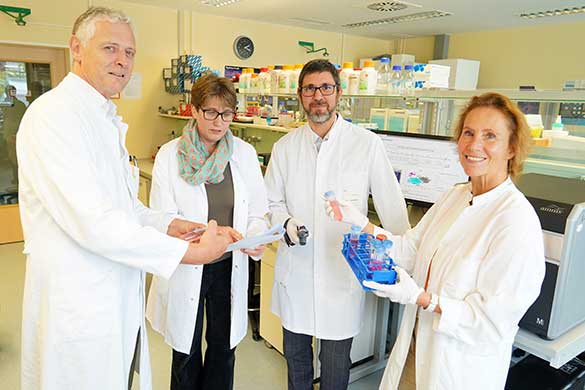
If a child receives a life-saving liver transplant, it must take medication for the rest of its life to suppress the immune system so that the transplanted liver is not rejected. Researchers have now been looking for new biomarker candidates in the immune system that will help them identify children with a low likelihood of organ rejection. "These findings could help us to adjust the immunosuppressive drugs more individually and thus reduce the dose," explains Professor Ulrich Baumann, Clinical Department of Paediatric Kidney, Liver and Metabolic Diseases and Neuropaediatrics. "In this way, we can minimize the side effects without increasing the risk of organ rejection."
In the multicenter European study of the European Society for Pediatric Gastroenterology, Hepatology and Nutrition Network (ESPGHAN), the researchers found a specific pattern in the children's blood, consisting of soluble mediators and cells of the immune system, which is associated with successful organ function without signs of rejection. "This pattern could be crucial for assessing early on who is at lower risk of rejection," says Professor Christine Falk, Institute of Transplant Immunology. "It is remarkable that this pattern appears as early as two weeks after transplantation and remains stable throughout the first year." The team published the results in the Journal of Hepatology.
"In the long-term study, which we conducted as part of the multicenter ChilSFree study, we examined blood samples from liver transplanted children over a period of one year," says Dr. Imeke Goldschmidt, Clinical Department of Paediatric Kidney, Liver, Metabolic Diseases and Neuropediatrics. "Above all, we wanted to understand the immunological mechanisms that contribute to acceptance of the transplanted liver."
For the analyses, the researchers used a Luminex-based multiplex protein technique with which they identified certain immune mediators, the cytokines. Immune cells use these cytokines to communicate with each other. On the other hand, flow cytometry was used to determine the number of immune cells such as T, NK or B cells. "In order to identify specific cytokine profiles in the plasma of patients, we used machine learning methods, among other things. These allow us to objectively identify patterns associated with immunological tolerance or rejection," explains Dr. Evgeny Chichelnitskiy, Institute of Transplantation Immunology, who shares first authorship with Dr. Goldschmidt. Using these two methods, the researchers were able to find out which combination of immunological markers and cells play a role in the children and how their immune cells react to the new organ.