In memory of Professor Michael Manns
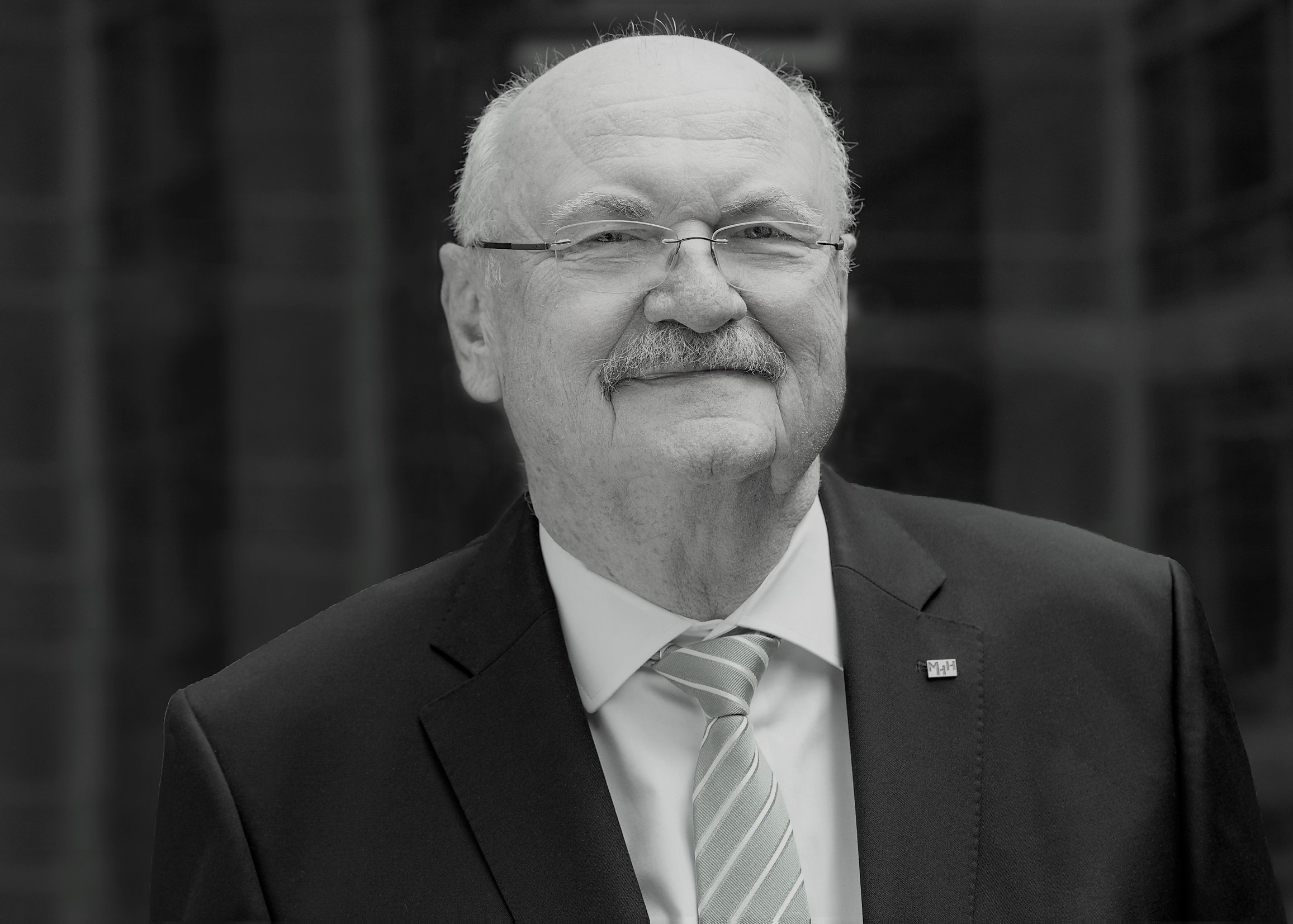
On August 15, 2025, Professor Michael Manns died at the age of 73; his death has shaken the medical world and the MHH. Patients, staff, colleagues and companions have paid tribute to his scientific and clinical achievements and remembered his humanity and empathy.
"The MHH Transplant Centre and the entire field of transplant medicine owe Professor Manns a great deal. We mourn his loss," says Professor Moritz Schmelzle, Director of the MHH Transplant Centre and the Clinical Department of General, Visceral and Transplant Surgery.
"Professor Manns was an outstanding transplant researcher and physician. His scientific work saved patients with hepatitis and autoimmune diseases from losing their donor organ. He contributed significantly to the fact that patients with hepatitis can now be cured and rarely need a transplant." The rare donor organs are now available to other seriously ill liver patients. Liver transplants for oncological diseases have also benefited from his research work.
"In the years of his MHH presidency from 2019 to 2025, Professor Manns was always wholeheartedly committed to the Transplant Centre," said Professor Schmelzle. His prudent moderation of the generational change of clinic directors was exemplary, as was his active support of research initiatives on organ transplantation.
His commitment to organ transplantation at the MHH began in 1991, when Professor Manns was appointed to the Chair of Gastroenterology, Hepatology and Endocrinology at the age of 39. His research on autoimmune diseases of the liver and their recurrence after liver transplantation enriched the already ongoing application to the German Research Foundation (DFG) for a Collaborative Research Center (SFB). They contributed to the SFB 265 "Immune Reactions and Pathomechanisms in Organ Transplantation", whose spokesperson was the transplant surgeon Professor Rudolf Pichlmayr, being approved by the German Research Foundation (DFG) in 1992.
In the 1990s, Hanover was already the most important German Transplant Centre, with around 100 liver transplants a year. The Manns/Pichlmayr partnership in internal medicine and surgery, their scientific and clinical collaboration, consolidated this leading role and ensured continuity. When Professor Pichlmayr died suddenly in August 1997, Professor Manns took over as spokesperson and head of the SFB. Further research topics such as xenotransplantation were added; in 1998, the SFB was successfully extended by three years.
At the beginning of the 2000s, the development of organ transplantation threatened to stagnate. However, new findings and innovative methods of basic research were available; another SFB was applied for. From 2007 to 2019, the German Research Foundation (DFG) funded the CRC 738 "Optimization of conventional and innovative implants" at the MHH. Professor Manns was again the spokesperson. The aim of the research was to better understand the mechanisms of organ rejection and to create an optimal balance between the tolerance of foreign organs and preserved immunocompetence.
Professor Manns combined scientific excellence and clinical expertise with caring for his patients in a special way. For many years, he supported the patient organization "Lebertransplantierte Deutschland e.V." on its advisory board with his extraordinary expertise.
"We will miss him very much as a great person and approachable expert," says board member Christina Hülsmann, who is a member of the Patient Advisory Board of the MHH Transplant Centre. The Patient Advisory Board also thanks him for his tireless commitment to patients, which will remain unforgotten. Founding member Egbert Trowe, who member passed away in 2023, was a long-time colleague of Professor Manns, including on the Board of Trustees of the German Liver Foundation.