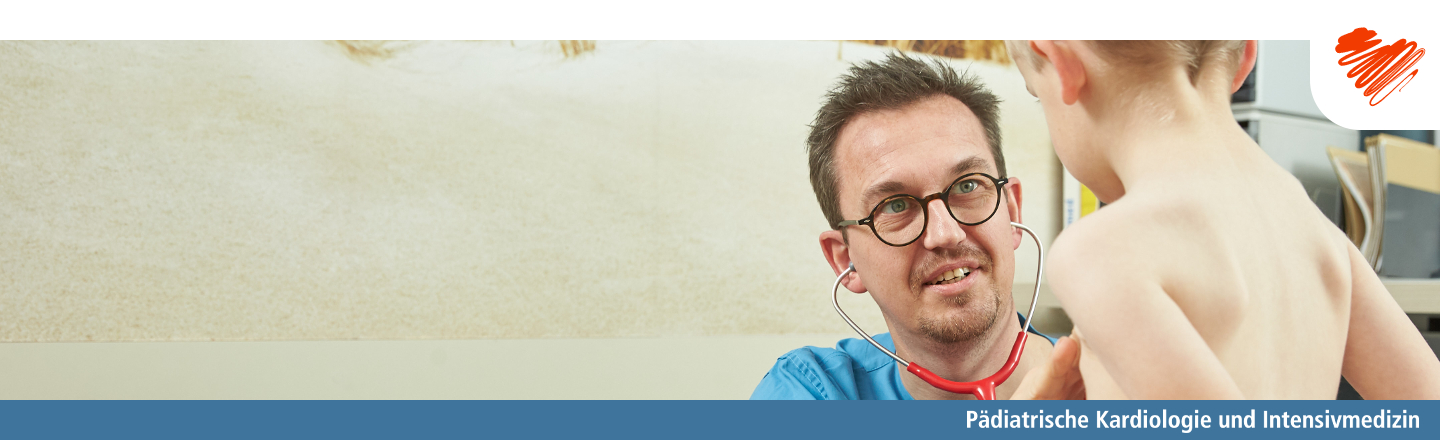
The entire Clinical Department team and our completely renovated and attractively designed ward invite you to get to know us. We look forward to seeing you!
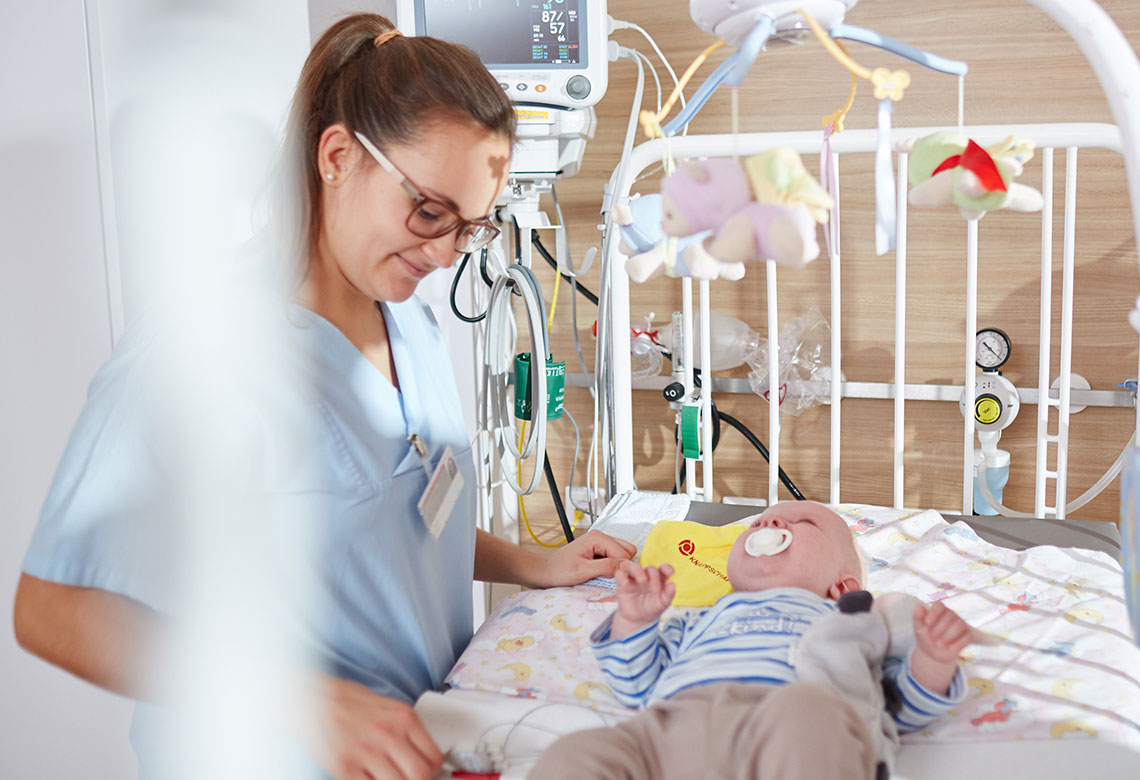
During the renovation - thanks to the generous support of the project and parents' associations - many wishes and suggestions could be implemented: We currently have 18 cardiology beds with complete central monitoring. The rooms are divided up in such a way that parents can be accommodated - and sometimes even siblings. For our adult patients, rooms have been created that allow for privacy; attractive bathrooms are available in the rooms.
In addition to the patient care rooms, there is a playroom, a parents' lounge, an echo laboratory, two physicians' rooms, the large ward room and a kitchen for preparing meals.

Questions and answers about inpatient hospitalization
There are always many questions before an inpatient admission. What do I need to take with me to hospital? How does a hospital stay work? And where exactly do I have to report to when I arrive at the Clinical Department? We have therefore put together some information for you on the rest of this page. Simply click on the drop-down boxes to see the explanations for individual points.
If you are scheduled to have a procedure with us, we will usually write to you and send you the admission details. If you as a patient or your child develop signs of an infection before admission (temperature > 38.5°C; cough, runny nose; diarrhea; vomiting) or if an appointment does not suit you, please let us know. We will then discuss the next steps with you. In such a situation, it is sometimes advisable to postpone a non-urgent procedure. Please also let us know if you need an interpreter so that we can take care of it.
As a general rule, please do not discontinue any medication without consulting a physician. If you are taking medication to thin the blood (Marcumar, warfarin, ASA, clopidogrel) or medication for hyperthyroidism (overactive thyroid), please contact us beforehand.
Please remember to bring the following items with you:
- our cover letter with the appointment for inpatient admission
- pink referral form (usually issued by the pediatrician)
- Doctor's letters (copies)
- Findings (copies)
- Yellow prevention booklet
- Vaccination card
As well as - if applicable:
- Medication (necessary for the current treatment)
- Home ventilation and accessories
And absolutely:
- Clothing (comfortable everyday clothing, underwear, shoes, sleepwear)
- Washing utensils (toothbrush, favorite shower kit)
- Towels and washcloths are provided
- Don't forget your favorite toy and cuddly toy
On the day of admission, please present yourself first at the gate at the entrance to the Children's Hospital, Building K10, at the time stated in the letter (usually in the morning) with the pink admission slip. During registration, your personal data will be recorded and the admission documents will be prepared. If you wish to make use of optional services (private patients, self-pay patients, supplementary insurance), please let us know when you are admitted. If a parent is also to be admitted, please also state this at the central admission desk.
Please then take the documents to the cardiology outpatient clinic (level S, same level as the entrance, take the corridor behind the glass door opposite the entrance to the right, then report to the cardiology outpatient clinic, registration). An ECG is usually performed there and your height and weight are recorded.
From there, please go to cardiac ward 68 by taking the corridor behind the outpatient clinics to the left (past the first elevators, also past the play oasis) until you reach the second elevators. From there, please go to level 2 and reach cardiac ward 68. Please report to the nursing staff in the ward room in the middle of the ward.
In order to make the stay as effective as possible, a number of interviews and examinations take place on the day of admission. In addition to an ECG, further examinations are carried out. These include echocardiography - an ultrasound examination of the heart - as well as a physical examination including blood pressure measurement, and sometimes other examination procedures. A blood sample is often taken at the end of the physical examination, often with a small plastic cannula inserted. If you or your child are scheduled for procedures the next day (surgery, cardiac catheterization, CT or MRI examinations), you will also have a discussion with the physicians involved. You will speak with the surgeons, interventional cardiologists and, if necessary, the anesthesiologists. The discussions usually take place in the afternoon. However, as it is often not possible to give you an exact time with absolute certainty, we would ask you to remain available on the ward until all the consultations have been completed. If you have to leave the ward for urgent reasons, we ask you to sign out with Nursing and leave a telephone number where we can reach you - so that we can reach you at short notice for consultations.
On the day of the procedure, you are usually not allowed to eat breakfast (you will be given information about the fasting time in the information sessions). Fluids are then often administered via an IV (continuous drip infusion). You will also be informed of the probable time of the procedure during the information sessions. You can accompany your child to the area in front of the operating theater or the cardiac catheterization laboratory. You will usually be given a sedative there. During the procedure, parents can move around freely, go for a walk or spend the waiting time in the parents' lounges in cardiac ward 68 or intensive care unit 67, for example. You will then be informed at the end of the procedure and can take your child to the recovery room, cardiac ward 68 or intensive care unit 67. You will then be informed about the procedure by one of the physicians involved.
Babies are fed according to their needs (if you have any questions, please ask the nursing staff). For the other patients, breakfast is served from 7:45 to 8:45; lunch from 11:30 to 12:15 and dinner from 18:00 to 19:00. Parents who are also admitted are catered for via the Canteen (you will receive a ticket for this).
The prescribed blood samples are usually taken between 8:00 and 8:30. The curve discussion takes place between 8:30 and 10:30. The ward physicians then visit the patients for ward rounds. This is the place where you can discuss any questions you may have. It often helps to make a note of questions and then clarify them during the ward round. Tuesday is the senior physician's ward round, Thursday is the chief physician's ward round.
Scheduled examinations (ultrasound examinations, ECGs, X-ray examinations, etc.) usually take place between 9:00 and 16:30. Therefore, please always sign out of the ward if you wish to leave it. And please leave a telephone number on the ward where you can be reached.
Pre-procedure consultations usually take place in the afternoon. Occasionally, however, the examiners may still be carrying out procedures and therefore the pre-procedure consultation takes place late. We ask you to apologize for this and not to leave the ward until all discussions have taken place.
You will usually be informed of your discharge from the Clinical Department two to three days in advance. In particular, questions about further care (next appointment with the responsible physician, medication plan and administration, follow-up treatment, transfer back to a referring hospital) should be clarified in advance. If you need certificates for your stay with us, please contact the case manager in good time (preferably the day before discharge at the latest). On the day of discharge, you will receive a provisional physician's letter to take home with you. The final physician's letter will be sent by post to the referring colleague.