Some newborns and especially premature babies are very susceptible to serious infections. It is assumed that the immune system is immature. However, it is still not understood what exactly is immature and what the principle is that distinguishes the neonatal immune system from the adult immune system. Only when this has been clarified will it be possible for physicians not only to protect against infections by administering antibiotics but also to specifically promote the maturation of the immune system.
Our research group has set itself the goal of elucidating the special features of the immune system, including the molecular mechanisms that distinguish it from the adult immune system. The long-term goal is to develop new therapeutic concepts with an immunomodulatory approach.
Research focus
The overarching goal of our research is to identify the molecular mechanisms that promote or disrupt the immunological maturation of the innate immune system during the transition from intra- to extrauterine life.
In various projects we are investigating the immunological programming of neonatal innate immune cells for their response to pathogens and environmental stimuli and the changes in these response patterns during the first years of life during the critical phase of adaptation to the environment.
In addition to hematopoietic innate immune cells, we also study the neonatal mucosal immune system and its tolerance mechanisms that allow microbial colonization after birth.
Additional information on our research work can be found on the RESIST Cluster of Excellence website.


Further information
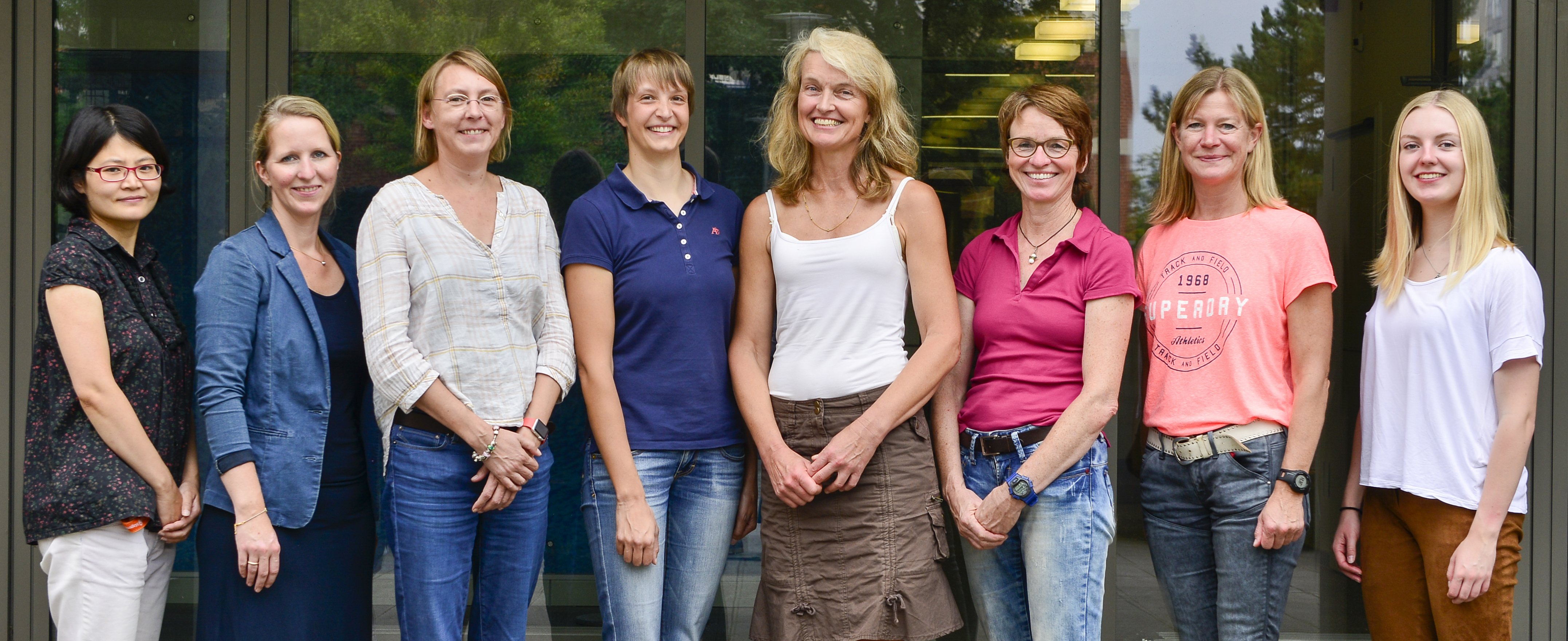
Employees
Ulas T, Pirr S, Fehlhaber B, Bickes MS, Loof TG, Vogl T, Mellinger L, Heinemann AS, Burgmann J, Schöning J, Schreek S2, Pfeifer S, Reuner F3, Völlger L, Stanulla M5, von Köckritz-Blickwede M, Glander S, Barczyk-Kahlert K, von Kaisenberg CS, Friesenhagen J, Fischer-Riepe L, Zenker S, Schultze JL, Roth J, Viemann D. S100-alarmin-induced innate immune programming protects newborn infants from sepsis. Nat Immunol. doi: 10.1038/ni.3745. [Epub ahead of print] (2017)
Heinemann AS, Pirr S, Fehlhaber B, Mellinger L, Burgmann J, Busse M, Ginzel M, Friesenhagen J, von Köckritz-Blickwede M, Ulas T, von Kaisenberg CS, Roth J, Vogl T, Viemann D.In neonates S100A8/S100A9 alarmins prevent the expansion of a specific inflammatory monocyte population promoting septic shock. FASEB J.31:1153-1164 (2017)
Fassl SK, Austermann J, Papantonopoulou O, Riemenschneider M, Xue J, Bertheloot D, Freise N, Spiekermann C, Witten A, Viemann D, Kirschnek S, Stoll M, Latz E, Schultze JL, Roth J, Vogl T. Transcriptome Assessment Reveals a Dominant Role for TLR4 in the Activation of Human Monocytes by the Alarmin MRP8. J Immunol. 194:575-83 (2015)
Austermann J, Friesenhagen J, Fassl SK, Ortkras T, Burgmann J, Barczyk-Kahlert K, Faist E, Zedler S, Pirr S, Rohde C, Müller-Tidow C, von Köckritz-Blickwede M, von Kaisenberg CS, Flohé SB, Ulas T, Schultze JL, Roth J, Vogl T, Viemann D. Alarmins MRP8 and MRP14 Induce Stress Tolerance in Phagocytes under Sterile Inflammatory Conditions. Cell Rep. 9:2112-23 (2014).
Börgeling Y, Schmolke M, Viemann D, Nordhoff C, Roth J, Ludwig S. Inhibition of p38 mitogen-activated protein kinase impairs influenza virus-induced primary and secondary host gene responses and protects mice from lethal H5N1 infection. J Biol Chem. 289:13-27 (2014).
Friesenhagen J, Viemann D, Börgeling Y, Schmolke M, Spiekermann C, Kirschnek S, Ludwig S, Roth J. Highly pathogenic influenza viruses inhibit inflammatory response in monocytes via activation of rar-related orphan receptor RORα. J Innate Immun. 5:505-18 (2013).
Friesenhagen J, Boergeling Y, Hrincius E, Ludwig S, Roth J, Viemann D. Highly pathogenic avian influenza viruses inhibit effective immune responses of human blood-derived macrophages. J Leukoc Biol. 92:11-20 (2012).
Koenen P, Barczyk K, Wolf M, Roth J, Viemann D. Endothelial cells present an innate resistance to glucocorticoid treatment: implications for therapy of primary vasculitis. Ann Rheum Dis. 71:729-36 (2012).
Viemann D, Schmolke M, Lueken A, Boergeling Y, Friesenhagen J, Wittkowski H, Ludwig S, Roth J. H5N1 virus activates signaling pathways in human endothelial cells resulting in a specific imbalanced inflammatory response. J Immunol. 186:164-73 (2011).

- J. Roth and T. Vogl, University of Münster
- J. Schultze, LIMES Institute, Bonn
- M. v. Köckritz, TiHo, Hanover
- M. Schmolke, Geneva, Switzerland
- C. Härtel, University Hospital Lübeck
- J. Baines, Max Planck Institute for Evolutionary Biology, Plön, Germany
- Flu Research Net (BMBF network)
- Appenrodt Foundation
- DFG (material grant)
- VW Foundation



.
Press
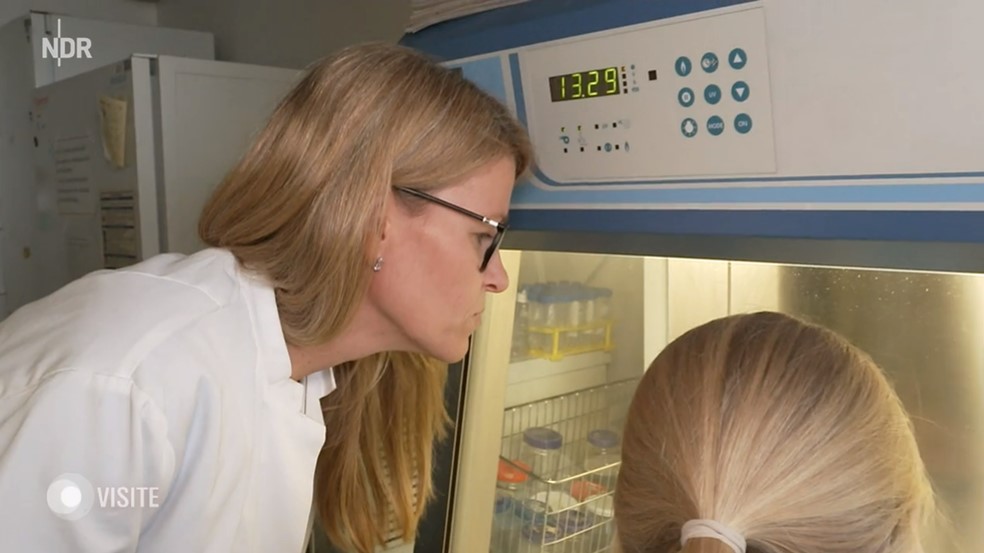
Significance of a caesarean section for the child's microbiome - NDR Visite
16.05.2023
In this article, PD Dr. Sabine Pirr, a specialist in pediatric and adolescent medicine and neonatologist, explains the potential disadvantages of a caesarean section for the development of the child's microbiome and immune system with reference to current research results from the Experimental Neonatology working group. You can view the full article here.