A team headed by the MHH is researching new therapies for chronically inflamed bile ducts.
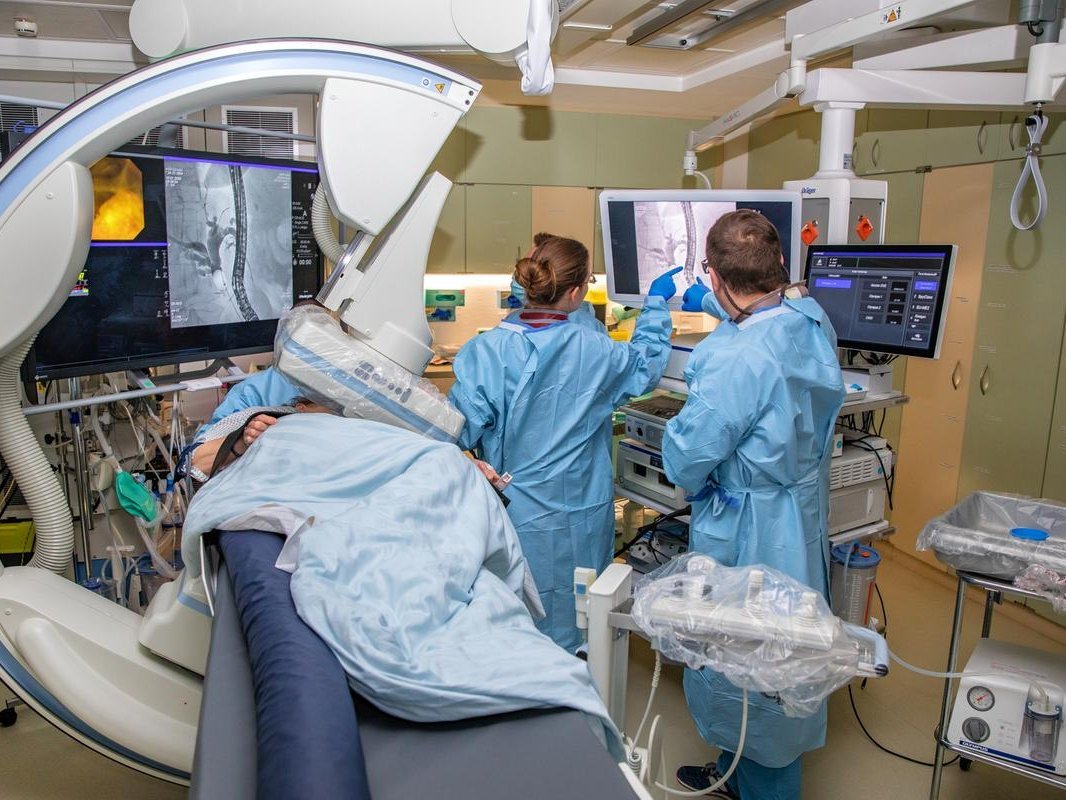
During a bile duct endoscopy: Dr. Friederike Klein and Prof. Dr. Dr. Benjamin Heidrich discuss on the screen what they can see endoscopically during the examination of the patient. Copyight: Karin Kaiser / MHH
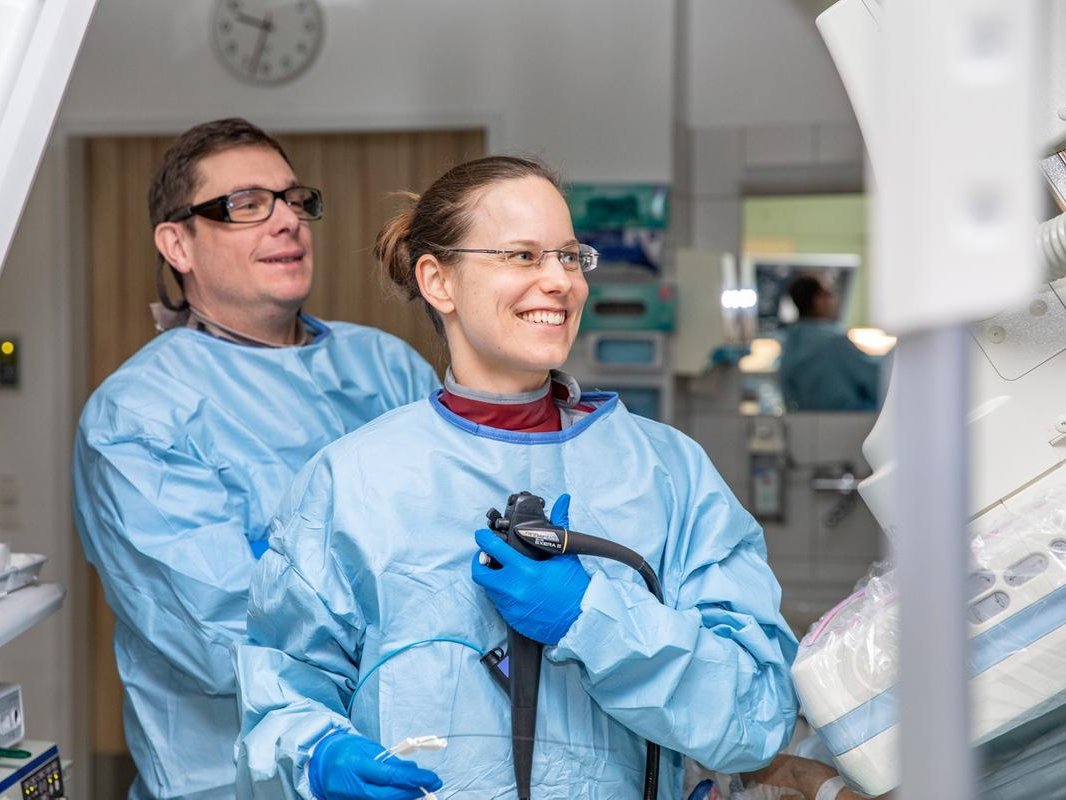
During a bile duct endoscopy: Prof. Dr. Benjamin Heidrich and Dr. Friederike Klein perform the examination endoscopically. Copyight: Karin Kaiser / MHH
In order to digest fats from food, the intestine needs bile. This is produced in the liver and from there it reaches the intestine via the gallbladder and bile ducts. If these bile ducts become chronically inflamed, this can lead to agonizing itching, fatigue and weight loss as well as liver failure. Primary sclerosing cholangitis (PSC) often results in a liver transplant. The disease usually develops between the ages of 30 and 50. In Germany, around one in 10,000 people are affected.
Disease is currently incurable
There is currently no cure for PSC. It is only possible to treat the symptoms. For example, antibiotics are used, but these have too broad an effect and lead to resistance. A team from Hannover Medical School (MHH) and the Helmholz Center for Infection Research (HZI) is now researching a new therapeutic approach in the "StopPSC" project - based on flu drugs. "We are developing tailored therapies for primary sclerosing cholangitis using optimized active substances to improve the prognosis of patients," says the project's spokesperson, Prof. Dr. Benjamin Heidrich from the Clinical Department of Gastroenterology, Hepatology, Infectious Diseases and Endocrinology at the MHH.
The state of Lower Saxony and the Volkswagen Foundation are supporting the "Sialidase targeting pathoblocker therapy for primary sclerosing cholangitis" (StopPSC) project with two million euros as part of the "zukunft.niedersachsen" program. The program funds projects that aim to develop new diagnoses and therapies for rare diseases. Diseases are considered rare if they affect fewer than five in 10,000 people. Rare diseases are often particularly difficult to diagnose and treat.
Research team develops pathoblockers
The basis for the research work is that a complex community of different types of bacteria lives in the bile ducts - even in healthy people. If certain types of bacteria become more prevalent, the disease worsens. This is not about the bacteria themselves, but about the enzymes they produce: the so-called sialidases attack the cells of the bile ducts so that they are no longer protected from the bile acid and become inflamed. In the StopPSC project, the researchers now want to develop an active substance that can specifically inhibit the sialidases. Such active substances that inhibit the pathogenic substances produced by bacteria are called pathoblockers.
The team first investigates on the computer and then in the laboratory whether certain flu drugs work strongly and precisely enough. They then want to find out how the active substances get into the bile ducts and how they can be distributed well there. Their aim is to develop a patent that companies can bring to clinical application. StopPSC builds on previous research within the Cluster of Excellence RESIST and the German Center for Infection Research (DZIF ). The DZIF also supports StopPSC financially.
Text: Bettina Bandel