Prof. Dr. Dr. Ralf Hass
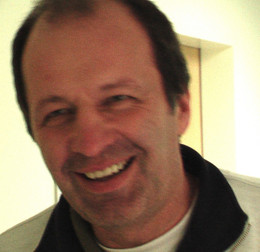
Curriculum Vitae
Address:
Ralf Hass
AG Biochemistry and Tumor Biology
Clinical Department of Gynaecology and Obstetrics
Hannover Medical School (MHH)
Carl-Neuberg-Str. 1
30625 Hannover
Phone: +49 511 5326070
Fax: +49 511 532 6071
@ hass.ralf@mh-hannover.de
Scholarships/awards
Fellowships/awards:
1985
Fellowship from the Schilling-Stiftung Foundation for studies at the University of California, San Diego, (UCSD) CA, USA
1986
Boehringer Ingelheim Foundation for studies at Boehringer Ingelheim, Richfield, CT and at the New York Medical College, Valhalla, NY, USA
1988
Ph.D. award from the Fonds of the Chemical Industry
1990 - 1992
Two-year post-doc fellowship from the German Research Foundation (DFG) for studies at the Harvard Medical School, Boston, MA, USA
1993 - 1995
Two-year habilitation fellowship and research grant from the German Research Foundation (DFG) for studies at the Harvard Medical School, Boston, MA, USA
1996
Post-Habilitation fellowship from the Boehringer Ingelheim Foundation
2004
Mentor for research fellows in the International Academy of Life Science (IALS) (www.lifesciences.net)
2016
Honorary membership of the Signal Transduction Society (STS) (www.sigtrans.de)
2020
Heinrich-Maass-memory award for breast cancer research
Projects and list of publications
Projects and references
ORCID Connecting Research and Researchers/Ralf Hass Publons/Ralf HassCurrent research projects
present research project
BIOCHEMISTRY and TUMOR BIOLOGY lab
clinic of Gynecology
The interdisciplinarity of our projects provide an excellent platform to translate our stem cell research, particularly with respect to mesenchymal stroma/stem cells (MSC) and MSC-derived components such as exosomes, along in vivo models further into the clinic. Initial clinical trials allow optimistic future perspectives to pursue a potentially beneficial use of our stem cell preparations and their products (e.g. exosomes) in various human diseases.
1. stem cells and exosomes
- stem cell isolation (mesenchymal stroma-/stem-like cells = MSC) derived from different tissues and prospective clinical applications
a) characterization and expansion of MSC in vitro culture
b) differentiation of MSC along specialized maturation pathways
c) Clinical application possibilities of MSC for regenerative and/or curative effects during injuries/different diseases
d) Isolation and characterization of MSC-derived exosomes for potential clinical applications
e) application possibilities of MSC-derived exosomes as a cell-free system for regenerative and/or curative effects during injuries and various different diseases
f) In addition to a successful use in life-threatening conditions such as chronic kidney disease (CKD) or amyotrophic lateral sclerosis (ALS), a therapeutic attempt involving repeated infusions of MSC-derived exosomes and released metabolites successfully treated a 3-year-old girl suffering from life-threatening pulmonary arterial hypertension (PAH)—a condition for which all other treatment options had been exhausted at that time (https://www.mhh.de/presse-news/dank-nabelschnur-stammzellen-erstmals-therapieerfolg-bei-schwerem-lungenhochdruck).
2. patient-specific anti-tumor medicine
- Establishment of tumor primary cultures (mammary and ovarian carcinoma) of patients following tumor surgery or biopsy
a) molecular characterization of cancer cell proliferation and associated signaling mechanisms
b) role of estrogens and gestagens (HRT) in primary cultures of mammary carcinoma
c) role of different chemotherapeutic compounds in primary tumors and tissue metastases
d) personalized anti-tumor medicine: inhibition of distinct signal pathways in tumor-derived primary cultures to optimize patient-specific chemotherapeutic concentrations( à personalized chemosensitivity assays)
e) role of pharmacokinetic and chronobiological modifications on tumor primary cultures
3. tumor heterogeneity by cancer cell fusion and therapeutic intervention using exosomes
- Spontaneous cell fusion following co-culture of MSC together with cancer cells and generation of new cancer cell populations after fusion with MSC
a) Characterization of new cancer cell populations in vitro and in vivo
b) identification of cancer stem cells after fusion or by retrodifferentiation
c) Characterization of tumor-therapeutic approaches to target the new cancer hybrid cells
d) application of MSC-derived exosomes (see above) as a vehicle for a tumor- specific addressing of chemotherapeutic agents
4. establishment of patient-specific tumor models
- Development of the SCCOHT-1 cell line as the first SCCOHT cell culture model worldwide in 2009; publication of the SCCOHT-1 cell line model after subsequent multi-disciplinary characterization in 2012 and therapy options
- Development of additional unique human cell culture models, such as the promyelocytic leukemia cell line TUR (TPA-U937-resistant), as well as breast cancer hybrid cell lines (MDA-hyb1 to MDA-hyb5), ovarian carcinoma hybrid cells (SK-hyb1 and SK-hyb2), and a human mesenchymal stem cell line (MSC544)
a) Establishment of tumor-specific primary cultures using a specially-developed method that was patented by the MHH as tissue explant technology.
b) Testing of various media and culture conditions to optimize cell growth.
c) Characterization of specific biochemical and cell biological properties of the primary cultures
d) Immortalization of primary tumor cell cultures while fully preserving their specific biochemical and cell biological properties in vitro and in vivo.
e) Testing of tumor-specific therapeutic approaches using patient-specific tumor models for a translational approach within the framework of personalized anti-tumor medicine (see above)
references:
https://orcid.org/0000-0002-2481-7547
Scientific education
1981 - 1986
BIOCHEMISTRY studies at the University of Hanover and the University of California, San Diego, CA, USA
1983
Intermediate diploma examination BIOCHEMISTRY
1986
Hauptdiplomprüfung BIOCHEMIE
Diploma thesis at the Max Planck Institute for Experimental Medicine, Göttingen: "Characterization of endogenous lectins of the lymphatic system"
1987 - 1988
Dissertation at New York Medical College, Valhalla, NY, USA and Hannover Medical School (MHH): "Characterization of phorbol ester-induced differentiation of the human leukemia cell line U937"
1988
Doctoral examination with doctoral prize from the Chemical Industry Fund
1988 - 1990
Research assistant, Department of Molecular Pharmacology, Hannover Medical School (MHH)
1990 - 1994
Research Associate, Dept. of Clinical Pharmacology, Dana-Farber Cancer Institute, Harvard Medical School, Boston, MA, USA
1992
Appointment as INSTRUCTOR IN MEDICINE at Harvard Medical School
1994 - 1996
Guest scientist with a DFG habilitation fellowship at Dana-Farber Cancer Institute, Harvard Medical School, Boston, MA, USA and at the Institute for Peptide Research, Hannover; habilitation at Hannover Medical School (MHH): "Retrodifferentiation and programmed cell death"
1994
Award of the Venia Legendi for the subject: CELL BIOLOGY
1997 - 2000
Senior Assistant at the Institute of Anatomy, Cell and Neurobiology Group, Charité University Hospital, Berlin
since 2001
Appointment as Associate Professor at Hannover Medical School (MHH)
AG Biochemistry and Tumor Biology in the Clinical Department of Gynecology at Hannover Medical School (MHH)