Experience instead of survival
Symposium on 50 years of transplantation in childhood and adolescence
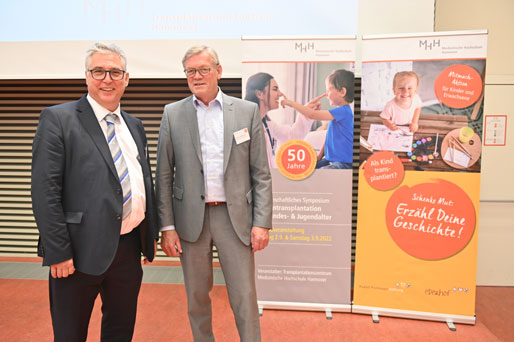
Children are different: their underlying diseases, which are treated by transplantation, differ from those of adults. Cooperation between the various specialist disciplines plays a special role here. On September 2 and 3, 2022, experts from Germany and abroad exchanged ideas at the Scientific Symposium of the Transplant Centre of Hannover Medical School (MHH). Together, they discussed current developments and special features of transplant medicine for children and adolescents in interdisciplinary sessions. The MHH experts contributed their expertise from 50 years of heart, lung, kidney and liver transplantation in children and adolescents at the MHH.
The program was diverse: from individual immunological long-term therapy approaches and cardiological complications after transplantation to psychosocial aspects, sexual counseling and family planning to ex vivo organ perfusion and mobile cardiac support systems for children and adolescents. There was good news for cystic fibrosis patients. A new combination of drugs means that they are unlikely to need transplants any more.
Transplant aftercare is becoming more important
It became clear that transplant and patient survival has continuously increased for all organs in recent decades. Whereas 50 years ago it was all about survival, today it is about continuing to live with the transplant. According to Professor Ulrich Baumann, Senior Physician at the MHH Clinical Department for Kidney, Liver and Metabolic Diseases, transplant survival for liver transplants is now as high as 41 years, excluding mortality in the first year. The transplant patients also have a very good quality of life thanks to the long-term results. For them, a door opens into a new phase of life with many social, emotional and physical challenges. Rehabilitation, psychosocial care, self-management and social integration are therefore important aspects of transplant aftercare. Nevertheless, there is a lack of standards and assessment limits in these areas. High demands on transplant medicine, high demands on society.
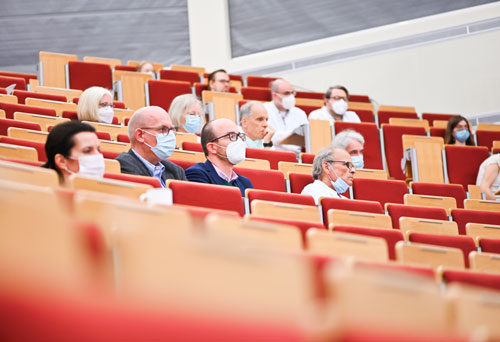
Staff shortages jeopardize transplantation
The needs in the clinical area were also highlighted. "Transplantation medicine requires great commitment from employees. 24 hours a day, 7 days a week, 365 days a year. But we need people who can do this," emphasized Professor Jürgen Klempnauer, former Head of the Clinical Department for General, Visceral and Transplantation Medicine at MHH, in his presentation.
In intensive care medicine in particular, the healthcare system is heading for disaster due to a shortage of staff. "Transplantation services are sacred to us! But this situation is acutely endangering organ transplantation," warned Dr. Michael Sasse, Senior Consultant specializing in Paediatric Intensive Care Medicine at the MHH. It is true that all transplant offers at the MHH are intensively examined and accepted wherever possible, even if there is not actually a bed available. However, seriously ill children for whom transplantation is a possibility and who may require acute intensive care can no longer be admitted due to a lack of resources.
At the end of the symposium, it became clear that four factors are relevant for successful transplantation medicine: A high level of organ donation, dedicated nursing staff, physicians who are ready for action and adequate funding for transplant medicine. "On the one hand, I would like us to reconsider the legal solution for organ donation in Germany. Secondly, politicians must ensure that Nursing is once again given a place in society. They have to provide working conditions that make young people want to work in the care profession again. There needs to be a change here," summarized Professor Axel Haverich, Head of the Transplant Centre and Director of the MHH Clinical Department of Cardiothoracic, Transplantation and Vascular Surgery. The Head of the Transplant Centre would also like to see a young generation of physicians who are committed to their work. The selection process for medical students should be viewed critically. "The best don't necessarily have to be the right ones."
Lectures, photos and book
This way!
Presentations by the speakersYou can find a playlist with the presentations of the symposium on our Youtube channel.
Photo galleryHere you can see the photos of the symposium.
Book "Encouraging stories from transplant patients"The book can be ordered using the order form.