"A new chapter in the fight against organ shortage"
MHH after the adoption of the decision solution in the Bundestag: hope and skepticism about the effectiveness of the measures
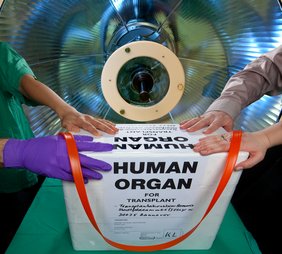
January 16, 2020, On January 16, 2020, the Bundestag voted by a majority to introduce the extended decision solution for organ donation in Germany. Hannover Medical School (MHH) and its Transplant Centre hope that the number of organ donations in Germany will increase as a result of a register and increased information and outreach to the public.
"With the adoption of the extended decision solution, a new chapter has been opened in the fight against the organ shortage in Germany. We very much hope that the implementation of the law will strengthen organ donation," said Prof. Dr. Michael Manns, President of the MHH.
What are the benefits of voluntary registration?
"Unfortunately, the opt-out solution has not found the necessary majority," added Prof. Dr. Axel Haverich, Head of the Transplant Centre at MHH, pointing to the positive experiences in other countries. It remains to be seen whether more people will register as organ donors than currently carry an organ donor card. He expressed the fear that it would mainly be those who object to organ donation after death who would register. As the only country in the Eurotransplant alliance without an objection solution, Germany will probably continue to be dependent on the solidarity of other countries and the import of organs.
There are currently 9,400 seriously ill people in Germany waiting for a donor organ, 1,082 of whom are at the MHH. In 2019, 3,192 people across Germany received a transplant; at the MHH there were 357. In the previous year, there were 3,264 transplants nationwide and 403 transplants at the MHH.
Two bills were up for decision
Two cross-party bills were put to the vote in the Bundestag. The decision solution adopted provides for the deceased person's consent during their lifetime or that of their relatives as a proxy as a prerequisite for organ donation after death, as well as a regular survey of willingness to donate at residents' registration offices. A decision during one's lifetime is not mandatory. The double objection solution, on the other hand, included a binding decision during a person's lifetime. Anyone who does not wish to donate organs must document this. Both drafts include a register of donors and a large-scale information campaign.
The MHH Transplant Centre
The MHH is the largest Transplant Centre in Germany. In 2019, a total of 357 organs were transplanted: 23 hearts, 147 kidneys, 77 livers, 103 lungs and seven pancreases.
Go to our organ donation debate topic page
More about the MHH Transplant Centre
MHH press release from 14.1.2020