A vehement plea for the contradiction solution
28th Annual Meeting of the German Transplantation Society (DTG) in Hanover: How can advances in transplantation medicine benefit more patients?
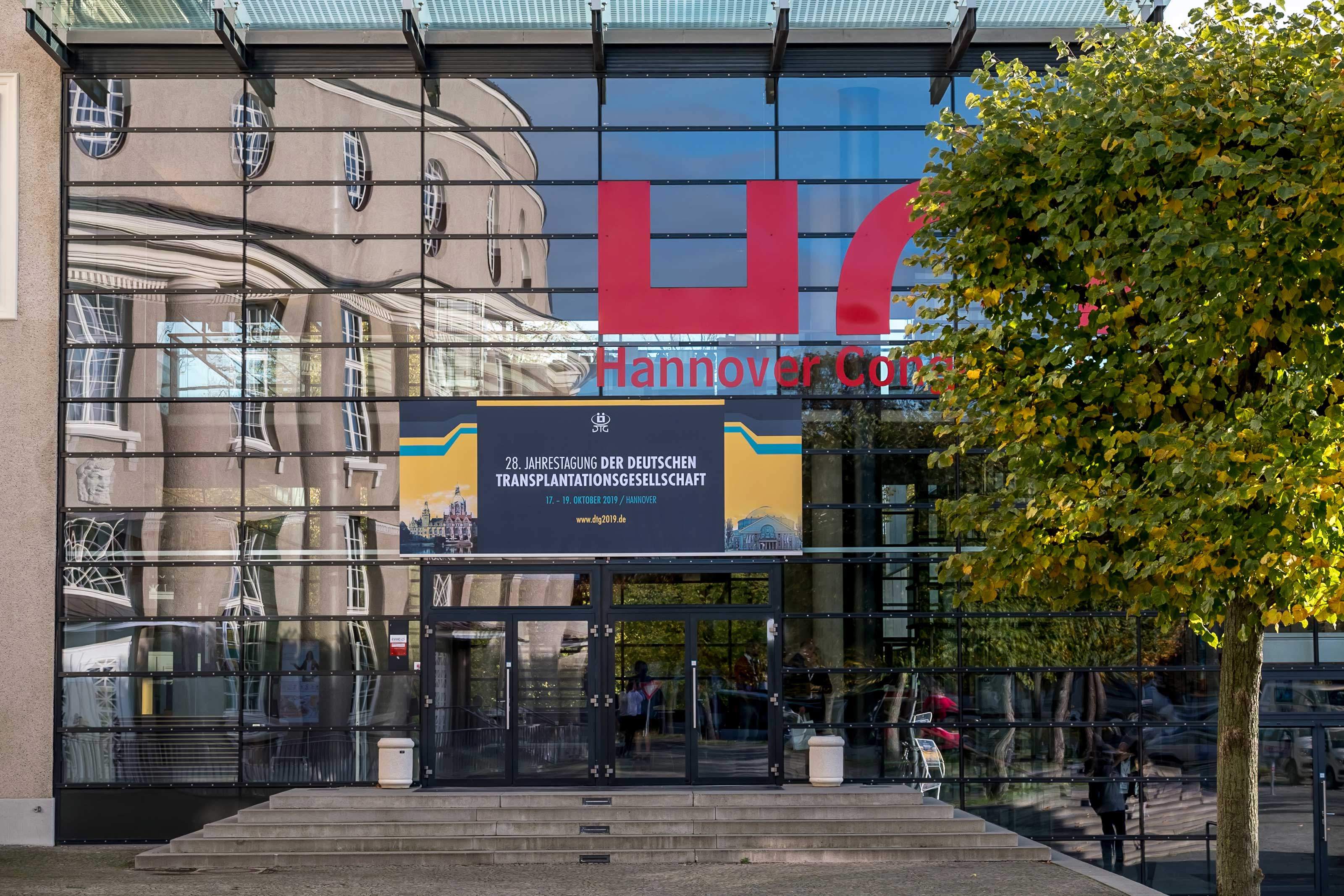
Is there a turnaround in organ donation and transplantation in Germany? The 28th annual conference of the German Transplantation Society (DTG) in Hanover was characterized by hopes for the second new organ donation law, which is to be passed by the German Bundestag in mid-January 2020. In Hanover, the DTG and its representatives once again spoke out vehemently in favor of the opt-out solution, which has led to an upswing in organ donation in a large number of European countries. "Organ donation and transplantation in Germany: a humanitarian crisis" was the verdict of outgoing DTG President Prof. Bernhard Banas (Regensburg), who will be succeeded by Prof. Dr. Dr. Christian Strassburg (Bonn). The annual meeting of the scientific society, which has more than 800 members, also offered lectures and discussions on the entire spectrum of clinical and scientific transplantation medicine - from clinical studies on immunosuppressants, the use of organ perfusion and the treatment of psychological problems after organ transplantation to xenotransplantation. The 23rd symposium of the Transplantation Nursing Working Group (AKTX Nursing) took place at the same time and was very well received.
For the second time since 2002, Hanover was the venue for the DTG conference. From October 17-19, 2019, the Hannover Congress Center, not far from Hannover Medical School (MHH), was the meeting place for German transplant medicine. "Hannover was home to pioneers of German transplant medicine and surgery such as Rudolf Pichlmayr and Hans-Georg Borst," said Congress Presidents Prof. Dr. Axel Haverich and Prof. Dr. Gregor Warnecke. The tradition in Hanover continues. Across all solid organs, the MHH operates one of the largest Transplant Centres in Germany and is working on innovative methods to further improve the results of transplantation and life with a transplant.
"In Germany, 30,000 people need a new organ"
But the most pressing question at the moment is: what can be done to ensure that more patients in Germany benefit from advances in transplant medicine? At the press conference during the DTG Congress, President Bernhard Banas painted a realistically bleak picture. According to official figures, there are currently 10,000 patients on the waiting list in Germany and three waiting list patients die every day. However, as many patients who are too ill for an operation are taken off the list, it must be assumed that there are around 30,000 patients in Germany who need a transplant, said Banas. Germany lags dramatically behind in international comparison: "In Germany, around one in every thousand deceased people becomes an organ donor, whereas in other countries the figure is three to four times higher." In 2018, there were around 11.3 donors per million inhabitants in Germany - in last place among the eight countries in the Eurotransplant network.
Many patients in Germany benefit from the network. The designated DTG President Strassburg pointed out: "In Germany, we transplant organs that come from other European countries." This means that organs are also transplanted that were removed in the Netherlands or Belgium, countries in which the opt-out solution applies. The front-runner in Europe, Spain, has around 48 donors per million inhabitants. There, too, an opt-out regulation applies - but organs are also removed from deceased people with heart disease, not just from brain-dead people. This practice of organ donation, which is now routine in more and more EU countries, as well as an extension of living organ donation beyond the immediate circle of relatives and loved ones, must also be openly discussed, the DTG representatives demanded at their press conference in Hanover.
22 of 28 EU states have an opt-out solution
The Transplantation Society strongly advocates the introduction of the opt-out solution in Germany. European countries with an objection solution have 25 to 30 percent more organ donations than countries with a consent solution, said Prof. Banas, referring to figures from the Council of Europe. In 22 out of 28 member states, the objection solution applies. Until now, organ removal in Germany has only been permitted with the consent of the deceased or on behalf of their relatives. Although surveys by the Federal Center for Health Education consistently show that a large majority of the population is in favour of organ donation after death, and 36 percent state that they have a donor card, this is only found in around 10-15 percent of potential organ donors and the rejection rates are relatively high.
The representatives of the DTG paid tribute to the commitment of Federal Health Minister Jens Spahn: he had recognized the precarious situation and actively launched two legislative projects within a short space of time. The "Act for Better Cooperation and Better Structures in Organ Donation" (GZSO), which strengthens transplantation officers and the commitment of Clinical Departments to organ donation, has been in force since April 1, 2019. A draft bill by a group of MPs led by Health Minister Spahn (CDU) and Karl Lauterbach (SPD), which provides for the "double opt-out solution", will be put to the vote in mid-January 2020.
Vote on the opt-out solution with an uncertain outcome
According to the proposal, all adults should be considered organ donors as long as they have not objected. In addition, relatives will be asked whether they are aware of the deceased's objection. The competing bill from the group led by Green Party leader Baerbock (decision solution), on the other hand, stipulates that citizens should be regularly asked about their willingness to donate organs when their ID cards are renewed. General practitioners should advise their patients at least every two years about a possible donation. The answers are then to be registered in a central database.
The outcome of the decision in the Bundestag is currently uncertain and will probably be close. Prof. Banas assumed a stalemate situation. The DTG, whose representatives had already been involved in a variety of hearings and events in the run-up to the decision, called on its members in the transplant centers to invite their members of the Bundestag so that they can find out about the situation of patients and the topics of organ donation and transplantation at the center on site.
Organ donation: decline in 2019 despite GZSO
The Act for Better Cooperation and Better Organ Donation Structures (GZSO) has so far had little effect on organ donation. Since April 2019, Clinical Departments have received appropriate financial compensation for releasing transplant officers from their duties and implementing organ removals. The German Organ Transplantation Foundation (DSO) has not yet been able to provide any good news for 2019. In the first nine months of 2019, organ donation is expected to have fallen by just a few percentage points. However, the number of organ donation-related contacts between Clinical Departments and the DSO has increased, as DSO Executive Board member Axel Rahmel reported in Hanover. In 2018, there were 2,811; according to projections, 3,038 contacts are expected for 2019.
Nevertheless, Rahmel was optimistic. If all Clinical Departments with intensive care units release transplant coordinators and the appropriate remuneration for organ removal - a maximum of just under 20,000 euros for a multi-organ donation - takes effect, there would be a total of more than 1,000 coordinators available in Germany - "in-house" in the clinics and at the DSO. This would far exceed the number of coordinators in Spain, where there are around 550.
Organ donation initiative plan: Implementation has begun - support for relatives and thank-you letters
Parallel to the legal changes, the full-time and voluntary players in organ donation in Germany agreed on a "Joint Organ Donation Initiative Plan" in 2019 under the leadership of the DSO and with the support of the Federal Ministry of Health. It contains measures to strengthen organ donation in Clinical Departments as well as in public, including the culture of organ donation and the social appreciation of organ donors and their relatives. Rahmel reported on the first central event to thank organ donors in September 2019 in Halle, which sent a positive signal with the opening of a "Park of Thanks, Remembrance and Hope".
In the coming weeks, a flyer will also be made available to all transplant centers, which was created in consultation with the DTG, patient associations and others. It explains the new regulation on the transmission of anonymized letters between organ recipients and relatives of organ donors. In a "thank you letter", transplanted patients can express their thanks to the organ donor and their relatives. Result letters from the centers also inform relatives about the outcome of the transplant. Patients and relatives must give their consent; the DSO and the transplant centers send the anonymous letters.
Participation in the initiative plan and political activities of the DTG
New laws, guidelines and initiatives: The DTG Board and numerous members were involved in a variety of ways in 2018/2019. Outstanding topics included the minimum volume regulation of the Federal Joint Committee (G-BA) for kidney and liver transplants and collaboration on the creation of the transplant register.
The German Medical Association (BÄK) and its committees, in particular the Standing Committee for Organ Transplantation (StäKO), are also important partners of the DTG, particularly in the development and implementation of guidelines for organ allocation and transplantation. 2019 saw a generational change in the leadership of the BÄK and the StäKO. Prof. Banas reported on a constructive discussion with the new President of the German Medical Association, Dr. Klaus Reinhardt. Many questions had to be clarified in connection with guideline work, such as the level of evidence for decisions in connection with a lack of sufficient data, or the definition of the terms "urgency" and "success", on which organ allocation is based.
New management of the German Medical Association's StäKO presents its agenda
Since 2019, the StäKO has been headed by the legal scholar Prof. Torsten Verrel (Bonn), who has been a member of the commission since 2006, succeeding Prof. Hans Lilie (Halle). At the DTG conference in Hanover, he reported on the work carried out and planned by the commission. The guidelines are to be revised once every term of office in future. For example, the revision of the kidney transplantation guideline was completed in 2019; however, approval by the Federal Ministry of Health is still pending. The pancreas guideline has yet to be implemented by Eurotransplant.
Prof. Verrel sees it as an important goal to standardize the structure and organization of the various guidelines as far as possible and to improve the transparency of the documentation of the evidence base. What is new is that the revised guidelines will first be subjected to a topicality check, in which the transplant centers can participate. Only then would the working groups be involved and an expert consultation procedure held.
Discussion on conference venues
Should the DTG conference be held in the German capital every second year? Berlin has already hosted the conference three times, most recently in 2018. Long-term planning and therefore financially attractive conference options as well as good political visibility speak in favour of this. Nevertheless, the DTG Executive Board's proposal was not accepted by the members in Hanover. However, the next conference venues have already been confirmed: Cologne (2020) and Stuttgart (2021).