Regular exercise stops ageing, protects against chronic diseases and maintains graft function
Scientists at Hannover Medical School have proven the importance of exercise for prevention in several studies
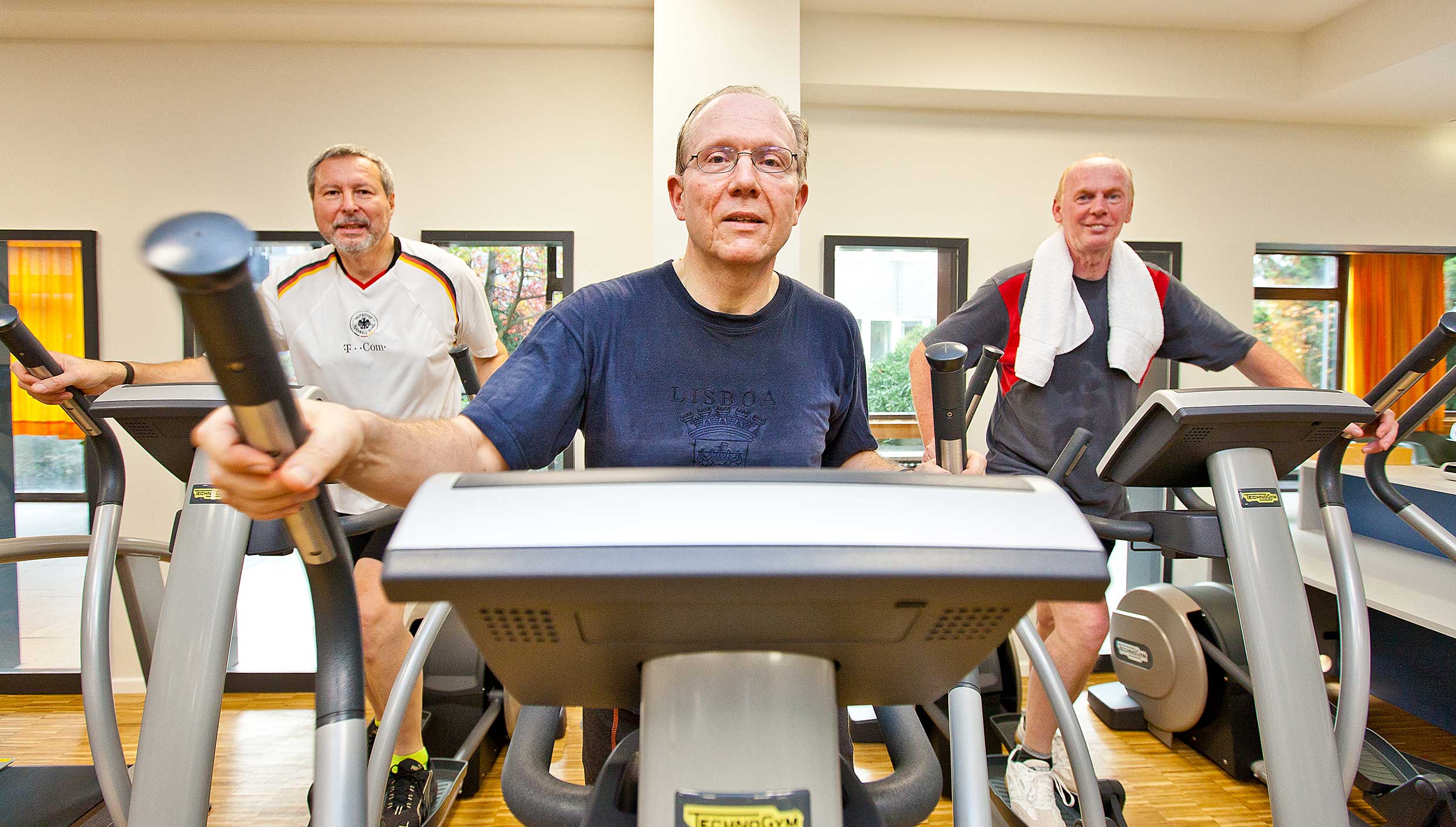
Regular exercise can help to prevent chronic diseases and ensure the success of a transplant. Regular swimming, cycling, running etc. are key factors that influence the regeneration of cells and their ageing. This has been proven by studies conducted by the REBIRTH Cluster of Excellence at Hannover Medical School (MHH), which investigated the effect of physical activity on regeneration and performance in test subjects and in animal studies. Both adults and children benefit from regular exercise. The study results have been published in renowned journals such as "Lancet Public Health" and have already been incorporated into everyday life in factories and schools from the model projects.
"Severe obesity, high blood pressure and elevated blood sugar levels are risk factors for cardiovascular diseases that can lead to organ failure," said Prof. Dr. Axel Haverich, Director of the MHH Clinical Department of Cardiothoracic Transplantation and Vascular Surgery and initiator of the studies at the annual conference of the German Transplantation Society. "We were able to show that regular physical activity reduces risk factors and protects against disease." In the REBIRTH active studies, the participants exercised regularly under medical supervision. Their performance and state of health were regularly monitored, including dental health as an important marker for chronic inflammation. "Transplanted patients also benefit from exercise training. This is indicated in particular by our animal studies," says Haverich. However, it has also been possible to reduce the occurrence or halt vascular damage in heart transplant patients after transplantation. REBIRTH active has thus become an integral part of the telemedical aftercare project "NTx 360 Grad" funded by the German Federal Ministry of Education and Research (BMBF).
Study: Training and telemedicine improve the fitness of VW employees
For one year, 312 Volkswagen AG employees at the Wolfsburg plant were individually monitored by physicians and coaches from the Hannover Medical School as part of the Audi BKK company health promotion program and compared with an untreated control group. A special app and the transmission of movement and activity progress via wearables made it possible to provide optimal support regardless of time and location. Health risk factors and the severity of metabolic syndrome (high blood pressure, elevated blood sugar, impaired fat metabolism) were reduced. The coached participants lost three to five kilograms and up to nine percent of their body fat. Their ability to work was increased by 4 percent. In October 2019, the MHH scientists, together with their cooperation partners Volkswagen AG and Audi BKK, were awarded the 2019 Health Prize of the RUFZEICHEN GESUNDHEIT! foundation, Baierbrunn near Munich, for their scientific study. (Haufe et al, Telemonitoring-supported exercise training, metabolic syndrome severity, and work ability in company employees: a randomized controlled trial, Lancet Public-Health, June 13, 2019)
REBIRTH active men study: Longer telomeres and greater resilience
67 male MHH employees took part in the REBIRTH active pilot study. They trained for half an hour every day for six months. Among other things, the length of the telomeres of white blood cells was examined as an indicator of the cells' ability to regenerate. Telomeres are the end pieces of chromosomes, consisting of DNA and proteins. They become shorter with each cell division, which leads to cell ageing. In the participants in the study who did sport, telomeres were even found to lengthen by six percent within six months. This indicates a recovery of the cells. According to the study, the test subjects were able to significantly reduce their biological age with the help of endurance sports. Their performance increased and the number of days absent from work decreased. (Melk et al., Improvement of biological age by physical activity, International Journal of Cardiology 176 (2014) 1187-1189)
REBIRTH active woman study: Good for the heart and blood vessels in women in midlife
Around 290 women over the age of 45 who had not previously been regularly active took part in the randomized study REBIRTH active women from 2013 to 2016. They exercised for an average of 30 minutes a day for six months. The increased physical activity had only a minor impact on telomere length. This could have been due to the limited intensity of the training. However, the six months of moderate endurance training improved cardiovascular fitness and endothelial function. Endothelial cells line the inner wall of blood vessels and play an important role in the development of chronic diseases.(Eigendorf et al, Effects of personalized endurance training on cellular age and vascular function in middle-aged sedentary women, European Journal of Preventive Cardiology (2019) 0(00) 1-4)
In animal experiments: Exercise prevents arteriosclerosis in transplanted mice
Arteriosclerosis in the transplant is a known complication that has a negative impact on the long-term function of transplanted hearts. It is caused by the immune response to foreign antibodies, but is also influenced by non-immunological factors. Mice that had been implanted with a part of a foreign aorta underwent regular physical training on a treadmill. They developed significantly less graft arteriosclerosis than the control group without training. This was indicated by markers in the endothelial cells of the blood vessels, among other things. The study once again proves that physical exercise prevents arteriosclerosis after transplantation. This protective effect is probably due to improved regeneration of the endothelial cells and their preserved functionality in the transplant. (Sommer et al., Physical exercise reduces transplant arteriosclerosis in a mouse aorta transplantation model, The Journal of Thoracic and Cardiovascular Surgery, January 2015)
REBIRTH active school pilot study: Primary school children become more efficient and have fewer risk factors for cardiovascular disease
Children and young people need exercise and sport for their physical and mental development. Today, this is clearly neglected in everyday life. Families and schools are often not sufficiently informed about the serious consequences and do not take any countermeasures. While around 50 percent of pre-school children are still sufficiently physically active, this figure drops dramatically to just 10 percent by adolescence. There is an acute need for action here. In the REBIRTH active school pilot study, pupils in the second primary school class were given playful exercise sessions throughout the school day. The study showed significant improvements in physical health and performance as well as a reduction in risk factors for cardiovascular disease among the participating primary school pupils. (Publication is in preparation.)
Health Award 2019 of the RUFZEICHEN GESUNDHEIT Foundation to MHH, Audi MKK and Volkswagen AG:
https://www.die-stiftung-rufzeichen-gesundheit.de/.
Contact person:
Prof. Dr. Axel Haverich
Director of the Clinical Department for Cardiac, Thoracic Transplantation and Vascular Surgery
of the Hannover Medical School
Head of the Transplant Centre MHH Hannover
Telephone (0511) 532-6581