Interdisciplinary prostate cancer consultation
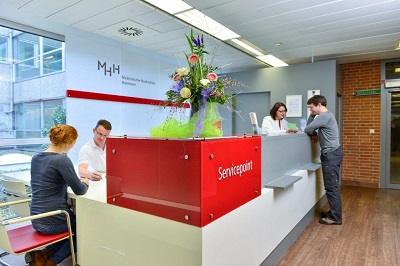
In our prostate cancer consultation, we offer comprehensive advice for patients - from both a radiotherapist and a urologist. In this interdisciplinary setting, we can enable the patient to discuss possible treatment options directly with the appropriate therapist. In addition to advice on guideline-compliant surgical treatment of prostate cancer, it is also important for us to include comprehensive advice from a radiotherapist.
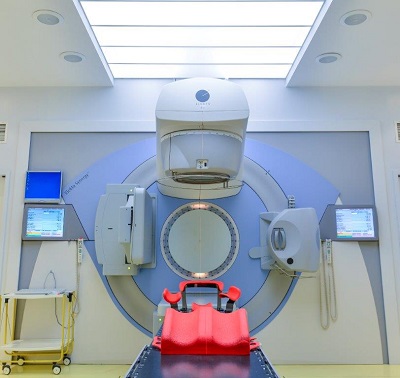
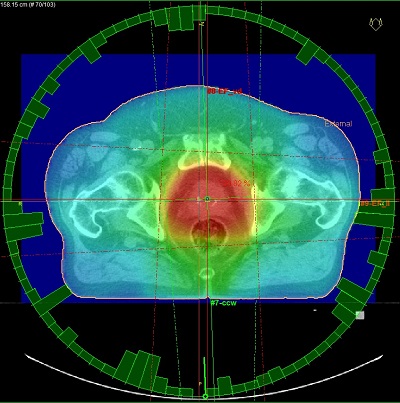
The Clinical Department of Radiotherapy and Special Oncology at Hannover Medical School is the only institution in the region that offers the complete spectrum of modern percutaneous high-precision radiotherapy, including stereotactic radiotherapy and brachytherapy at an internationally high level. As part of the interdisciplinary treatment of prostate cancer at the joint Prostate Cancer Center, radiotherapy is often used as primary curative (= with the aim of cure), post-operative or salvage radiotherapy (if the PSA value rises out of the zero range after surgery) in accordance with guidelines. All methods of modern high-precision radiation are used as standard (3D-conformal radiation, intensity/volume intensity modulated radiation [IMRT/VMAT], image-guided radiation therapy [IGRT]).
Prostate cancer is not always limited to the prostate. Patients with oligometastatic tumors - i.e. a low metastatic burden - are increasingly interested in direct treatment of their metastases, also against the background of new research findings. As a special feature, we therefore offer PSMA-PET-based high-precision radiotherapy in close cooperation with the Clinical Department of Nuclear Medicine and Radiotherapy at the MHH - e.g. in the case of isolated lymph node recurrence of prostate cancer after surgery and/or radiotherapy of the prostate has already taken place.
Depending on the findings, surgical removal of these tumor metastases detected in the most modern way can also be discussed if necessary. These new approaches to prostate tumors are made possible by a combination of state-of-the-art therapeutic and diagnostic methods from the Clinical Department of Urology, Radiotherapy, Radiology and Nuclear Medicine at Hannover Medical School "under one roof".
Not every case of prostate cancer can be cured and drug therapy for advanced prostate cancer must be initiated. In our interdisciplinary prostate cancer consultation, we advise all patients with metastatic disease in detail about the current guideline-based tumor therapy, which primarily or frequently includes anti-hormonal and/or chemotherapeutic therapy. In addition, during our consultation hours, patients also have the opportunity to participate in forms of therapy that are directed towards the future and are not yet generally available outside of clinical trials
Click here for the clinical trials!
Furthermore, we also advise you on the possibilities of radiotherapy with a symptom/findings-oriented intention. This means, for example, in the treatment of painful and/or stability-threatening bone metastases, brain metastases or soft tissue, lung or liver metastases (in the case of symptoms for symptom control or oligometastasis with the aim of a stable course of disease for as long as possible). The aim is to use modern methods of high-precision radiotherapy - such as stereotaxy in addition to the above-mentioned methods - to keep treatment as short as possible for the benefit of the patient, particularly in the presence of metastases, with good efficacy and few side effects (= as few radiation fractions as possible).
All treatment concepts are of course coordinated in advance in the interdisciplinary tumor conference with all other specialist disciplines involved.
For further details on radiotherapy, please see the Clinical Department of Radiotherapy and Special Oncology homepage.
In summary, our patients at the Medical School benefit above all from the cooperative collaboration of all the specialist disciplines from the fields of oncology, radiotherapy and urology that are important for their disease in order to ensure the best possible care.
Important information on all tumor conferences and the MHH Molecular Tumor Board can also be obtained from the Claudia von Schilling Center.
Appointments can be made at any time: Tel: (+49) 0511 / 532 - 3647.