After the transplant, I no longer mean survival, but life
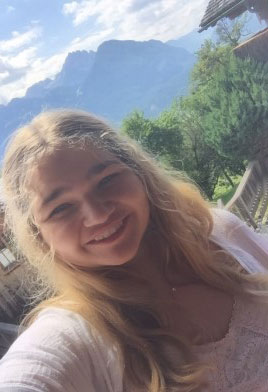
Wiebke, 16 years old, kidney transplant for five years
Organ failure can happen to anyone from one day to the next and suddenly your whole life changes forever.
It was there that I was diagnosed with acute kidney failure
At the age of 11, my family physician sent me to the "Auf die Bult" hospital in Hanover with suspected appendicitis. At the time, I had been suffering from symptoms such as nausea and headaches for a long time, but it was getting worse and worse, so much so that my heart was hurting. Various examinations were carried out "on the Bult" and my condition got worse and worse and I felt exhausted and weak. It was then determined that I had acute kidney failure and should be transferred to the MHH immediately by ambulance. At the MHH, the physicians carried out further examinations, and the important thing at this point was that they kept me awake even though I just wanted to sleep.
My parents had to learn a lot and had a lot of responsibility for me
After a long time, I had an operation to insert a central venous catheter (CVC), which allowed my body to be washed with blood to stabilize my values and relieve my organism. When I woke up the night after, it was one of the best feelings, for the first time in a long time I felt no pain or nausea, it was all gone. The next day I had a Tenkhoff catheter inserted into my abdomen for peritoneal dialysis. From that day on, I was on dialysis every night for 10 hours. However, peritoneal dialysis had the advantage that I could do it from home and therefore had as normal a daily routine as possible, as I could meet my friends and go to school during the day. At the same time, my parents had to learn this and therefore had a lot of responsibility for me. New dialysate was also delivered every month, so my home was like a warehouse. I also had to measure my weight and blood pressure every day.
The physicians had given my family little hope that I would ever leave the hospital
I was only told afterwards that it was a miracle that I was still alive, as the physicians had given my family little hope that I would ever leave the hospital, as my potassium level was 8.2, which the physicians thought was almost impossible. They also gave my family about 20% that I would survive and said that at the time I would have had a survival time of 5 hours without treatment. I was discharged four weeks later, at which time I had to get used to a lot of new things and learn how to swallow tablets (I practiced with Tic Tacs). I was given a complete change of diet and a strict drinking regime. It was a lot to take in at once and there were often minor complications, but from time to time I learned to deal with my new life situation and make the best of it. Nevertheless, I missed my old life.
I was also afraid of what my "new" life would look like
About eight months later, I received the call that a donor kidney was available for me and we went straight to the MHH. At that moment, I was overwhelmed by all kinds of feelings - on the one hand, I felt incredible joy and excitement, and on the other hand, I was also afraid of how I would feel after the transplant and what my "new" life would be like. After the 6 1/2 hour transplant (I was given bloc kidneys), which was completed with a few complications, I and my family were now faced with new challenges. The operation caused a hematoma to form, which pressed on the nerve in my leg and I often lost feeling in my leg and fell down. I had physiotherapy for almost a year, so that was an additional burden and challenge for us. I also had no appetite at all for about 5 days and ate almost nothing, which meant that all my nutritional values dropped and I had to take additional tablets to replace nutrients. The amount I was drinking was also a problem. After the transplant, I was initially only allowed to drink around 150 ml per day as I was pumped full of water during the operation. However, I then had to drink 3 liters from one day to the next. In addition, shortly after the transplant I had to go to check-ups very frequently or I caught one cold after another due to my weakened immune system. I was also very susceptible to urinary tract infections, which often landed me in the emergency room. As the infections put my new kidneys at risk, I now have to take antibiotics permanently as a prophylactic measure.
I have experienced a lot since then and have been able to travel to many different places
However, I got used to and enjoyed my "new life" more and more and would never want to miss it again, and from time to time the colds became less frequent and the check-ups less frequent. I have experienced a lot since then and have been able to travel to many different places, e.g. London, Austria, Finland.... In Austria, I went to youth rehab at the Ederhof, which helped me a lot. You got together with other young people who had experienced the same thing as you. This led to an interesting exchange among each other. I am so infinitely grateful for the opportunity to be able to live again, albeit with restrictions, but also with so many new opportunities and freedoms.
My illness has made me realize that health, family and friends are the most important things
Every day I am grateful to the people who have decided to donate their organs for their fellow human beings, because their decision gives sick people a new chance and a new life. I have experienced many things in the past - both positive and negative. However, I would like to say to everyone: "Keep your fighting spirit and try to see things in a positive light". My illness made me realize that health, family and friends are the most important things and that you should pay more attention to them.