Background
Our research group focuses on the care and treatment of patients with Tourette syndrome and other tic disorders as well as clinical research on various aspects of the disorder including clinical features, treatment options and underlying causes.
To this end, we offer a Tourette's consultation hour in which more than 2000 children and adults have been advised and treated over the past 20 years. This makes our consultation the largest of its kind in Germany. The consultation is open to patients of all ages and, in addition to diagnostics and obtaining a second opinion, includes advice on all aspects of the disease as well as treatment with all established and experimental treatment approaches. In addition to psychotherapeutic and drug therapy, the range of treatments on offer also includes the option of surgical treatment using deep brain stimulation (in cooperation with the Clinical Department of Neurosurgery at the MHH). A particular focus is on treatment with cannabis-based medication.
In addition, we are constantly conducting a large number of scientific studies on clinical aspects, new therapeutic approaches and the causes of Tourette's syndrome. Under the direction of Prof. Kirsten R. Müller-Vahl, 15 doctorates have been completed in recent years. Currently, 14 PhD students are being supervised in the working group. Prof. Müller-Vahl was and is a leading contributor to the national, European and American guidelines for the treatment of Tourette syndrome. The research group has been involved in numerous international projects on Tourette syndrome research in recent years, including:
- GTS COST Action BM0905: European Network for the Study of Gilles de la Tourette Syndrome, EU Framework Program COST (European Cooperation in Science and Technology)
- EMTICS: European Multicenter Tics in Children Studies, FP7- HEALTH-2011 No. 278367
- TS-EUROTRAIN: Marie Curie Initial Training Network: FP7-PEOPLE-2012-ITN No. 316978 (Interdisciplinary training network for Tourette Syndrome; structuring European Training capacities for neurodevelopmental disorders)
As former president of the European Tourette Society ESSTS (European Society for the Study of Tourette Syndrome), Prof. Müller-Vahl has played a leading role in the organization of international congresses, the development of treatment guidelines and further training and information on Tourette syndrome. Close cooperation with national and European self-help groups is particularly important to us. Prof. Müller-Vahl is the spokesperson of the Scientific Advisory Board of the Tourette Society Germany (TGD) e.V.
Overarching goals
Our patients are at the center of our thoughts and actions. That is why we strive to offer the best possible advice and treatment during Tourette's consultations. As the causes of Tourette's syndrome are still only partially understood and the treatments currently available are not effective and tolerable for all patients, we regularly conduct studies with the aim of better characterizing the clinical picture of the disorder, better understanding the causes of the disorder and ultimately finding better treatment methods.
Current studies and those conducted in recent years have therefore also dealt with very different aspects and ranged from studies on quality of life, tic suppression, premonition, free will and concomitant disorders such as tantrums and auto-aggression to studies on genetics, epigenetics, immunological aspects and imaging studies on various transmitter systems of the brain to therapy studies with internet-based behavioral therapy, cannabis-based medication and deep brain stimulation.
Special emphasis is currently being placed on research into the efficacy and safety of cannabis-based medications and endocannabinoid modulators in the treatment of tics and typical comorbidities of Tourette's syndrome such as ADHD, compulsions, depression, anxiety, sleep disorders, auto-aggressive behavior and fits of rage, as well as investigations into the significance of the body's own cannabinoid system in the development of the disorder.
Another important focus of research is currently the differential diagnosis and differentiation from functional (dissociative) movement disorders. To date, the diagnosis of Tourette's syndrome and other tic disorders has only been possible on the basis of clinical history and examination. An increasing number of patients are currently presenting to our clinic with a functional disorder with tic and/or Tourette-like symptoms, either exclusively or in combination with Tourette syndrome. A further focus of our studies is therefore the differentiation of functional movements from tics, research into the causes and treatment of this movement disorder.
Scientific collaborations
- Clinical Department for Psychosomatics
- Clinical Research Center (CRC) Core Facility
- Clinical Department of Neurosurgery
- Clinical Department of Neurology
- Institute of Biometry
- Institute of Clinical Pharmacology
- Clinical Department of Nuclear Medicine
- Section Biostatistics at the Paul-Ehrlich-Institut
- Clinical Department of Neuropsychology at the kbo-Inn-Salzach-Klinikum, Wasserburg am Inn
- Clinical Department for Psychiatry and Psychotherapy at the Ludwig-Maximilians-University, Munich
- Institute for Physiological Chemistry at the University Medical Center of Johannes Gutenberg University Mainz
- Clinical Department of Psychosomatics and Psychotherapy at the University Hospital RWTH Aachen
- Clinical Department of Neurology at the University of Lübeck
- Clinical Department for Child and Adolescent Psychiatry and Psychotherapy at the Technical University of Dresden
- Clinical Department of Psychiatry and Psychotherapy at the University Hospital of Cologne
- Clinical Department of Psychiatry and Psychotherapy at Freiburg University Hospital
Cooperation partners in the context of the TicGenetics study
- Rutgers University (Gary Heiman/Jay Tischfield).
- Children's Hospital of Philadelphia (Lawrence Brown).
- University of Iowa (Samuel Kuperman).
- Columbia University (Dorothy Grice).
- Seattle Children's Hospital (Samuel Zinner)
- New York University/ Nathan Kline Institute (Barbara Coffey and Benett Leventhal)
- Cincinnati Children's Hospital Medical Center (Donald Gilbert)
- University Medical Center Groningen, Netherlands (Pieter Hoekstra)
- Yulius Mental Health, Rotterdam, Netherlands (Jeroen Heijmens Visser)
- De Bascule, Amsterdam, Netherlands (Chaim Huyser)
- University Clinic Hamburg-Eppendorf, Germany (Alexander Münchau)
- Technical University Dresden, Germany (Veit Roessner)
- University of Ulm, Germany (Andrea Ludolph)
- Guys and St. Thomas Foundation Trust, London, UK (Tammy Hedderly)
- Institute of Psychiatry London, UK (Isobel Heyman)
- University of Sevilla, Spain (Pablo Mir)
- Hospital Clinic, Barcelona, Spain (Astrid Morer)
- Region Hovedstaden, Copenhagen, Denmark (Kerstin von Plessen)
- Yonsei University Severance Hospital (Dong-Ho Song & Keun-Ah Choen)
- Kwandong University MyongJi Hospital (Jeung-Eun Song)
- Hallym University Sacred Heart Hospital (Hyun-Joo Hong)
- Seoul Metropolitan Eunpyeong Hospital (Eun-Joo Kim)
- Ilsan Hospital (National Health Insurance Co.) (Young-Key Kim)
- Institute for Children's Social Development (Yun-Joo Koh)
Cooperation partners in the EMTICS study
- UMCG, Prof. Pieter Hoekstra
- UNIBA, Dr. Maura Buttiglione
- UCL, Prof. Anette Schrag
- LMU, Prof. Norbert Müller
- Cytolab, Mr. Adrian Urwyler
- ISS-GL, Dr. Roberta Creti
- ISS-RC, Dr. Giovanni Laviola
- ISS - PR, Dr. Paolo Roazzi
- TUD, Prof. Veit Roessner
- DUTH, Prof. Peristera, Paschou
- ProImmune, Dr. Nikolai Schwabe
- GSK (NVD), Dr. Immaculada Margarit Y Ros
- SCMCI, Prof. Alan Apter
- UniROMA, Prof. Francesco Cardona
- APD, Dr. Pascale Verstappen
- QMUL, Dr. Ute Christiane Meier
- UNICT, Prof. Renata Rizzo
- concentris, Dr. Sara Stöber
- VCAH, Dr. Zsanett Tàrnok
- SAS, Dr. Pablo Mir
- UZH, Prof. Susanne Walitza
- FCRB, Dr. Astrid Morer
- RegionH, Prof. Kerstin von Plessen
- GSTT, Dr. Tammy Hedderly
- ASL-Bari, Dr. Cesare Porcelli
- UZL, Prof. Alexander Münchau
- DH-PHE, Dr. Androulla Efstratiou
- AMC, Dr. Chaim Huyser
Cooperation partners as part of the TS-EUROTRAIN study
- DUTH Greece (Coordinator)
- deCODE Iceland
- Semmelweis Hungary
- KC Denmark
- UU Netherlands
- RUNMC Netherlands
- UMCG Netherlands
- UULM Germany
- BI PHARMA Germany
- VU University Amsterdam VU Netherlands
- Hungarian Academy of Sciences IOE Hungary
- Magnetic Resonance Unit, Max Planck Institute for Human Cognitive and Brain Sciences, Leipzig MPI Germany
- Massachusetts General Hospital, Harvard Medical School Harvard-MGH USA
- Rensselaer Polytechnic Institute RPI USA
- Tourette Society Germany TGD Germany
- Netherlands Foundation of patients with TS NFT Netherlands
Cooperation partner in the "Position Statement on the Use of Medical Cannabis and Cannbis-Based Medicines for Tourette Syndrome and Tic Disorders" of the Tourette Association of America (TAA)
- Sharon Anavi-Goffer, PhD (University of Aberdeen, UK)
- Michael Bloch, MD (Yale University)
- Cathy Budman, MD (Long Island Center for Tourette & Related Disorders)
- Barbara Coffey, MD MS (University of Miami)
- Keith Coffman, MD (Children's Mercy Kansas City)
- Joohi Jimenez-Shahed, MD (Baylor College of Medicine)
- Irene Malaty, MD (University of Florida Center for Movement Disorders and Neurorestoration)
- Kirsten Muller-Vahl, MD (Hannover Medical School)
- Paul Sandor, MD (University Health Network and University of Toronto, Toronto)
- Diana Shineman, PhD (Tourette Association of America)
- John Walkup, MD (Lurie Children's, Chicago)
- Abraham Weizman, MD (Director of Research Unit, Geha Mental Health Center, Israel)
Cooperation partners within the Tic Disorders and Tourette Syndrome Study Group of the International Parkinson and movement Disorder Society (MDS)
- Donald L Gilbert (Cincinnati Children's Hospital Medical Center)
- Mark Hallett (National Institute of Neurological Disorders and Stroke)
- Andreas Hartmann (Department of Neurology, Sorbonne Université)
- Andrea Lee (New York Presbyterian/Weill Cornell Medical College)
- Irene Malaty (University of Florida Center for Movement Disorders and Neurorestoration)
- Pablo Mir (University of Sevilla, Spain)
- Alexander Muenchau (University Clinic Hamburg-Eppendorf, Germany)
- Michael Okun (Department of Neurology, University of Florida)
- Tamara Pringsheim (Department of Clinical Neurosciences, University of Calgary)
- Harini Sarva (Department of Neurology, Weill Cornell Medical College)
- David Shprecher (Banner Sun Health Research Institute)
- Harvey Singer (Department of Neurology, Johns Hopkins University)
- Marina AJ de Koning-Tijssen (Department of Neurology, University Medical Center Groningen)
- Yulia Worbe (Department of Neurology, Hôpitaux de Paris)
Third-party funding
The following externally funded studies are currently being carried out in our working group
IdenTics - Identification of Tics and functional Tic-like movements using an artificial intelligence approach (German: Identifikation von Tics und funktionellen Tic-ähnlichen Bewegungen unter Verwendung eines KI-Modells)
The aim of this project is to use AI (artificial intelligence) to correctly classify people with tics, functional tic-like movements or both symptoms using videos.
Since such a study requires the largest possible number of videos, we are looking for people with the above-mentioned symptoms who are willing to send us a video of themselves. Your video would first be evaluated by experts in tic disorders. The video will then be anonymized so that it can no longer be traced back to you personally and re-evaluated using an AI model. The AI model should "learn" to make the correct diagnosis.
If this is successful, the care of people with tics and functional tic-like movements could be improved, as the AI model can already make a preliminary assessment.
If you are interested in taking part in the study, please send us a non-binding e-mail to IdenTics@mh-hannover.de.
Participation in the study is possible from home and takes approximately one hour.
People of any age who have been diagnosed with a tic disorder (including Tourette's syndrome), a functional tic-like movement disorder (dissociative movement disorder) or both may take part.
We look forward to receiving your email and will be happy to answer any further questions you may have.
Finished
We conducted a study to investigate the effect of the drug Ecopipam for the treatment of Tourette syndrome. After the first two studies were positive, a third study was conducted worldwide to confirm the effect.
Children (aged 6 and over), adolescents and adults with Tourette's syndrome took part in the study.
Further information can be found at: https: //emalexbiosciences.com/news/emalex-biosciences-announces-first-patient-dosed-in-phase-3-trial-of-ecopipam-for-tourette-syndrome/
☎ 0 511 532 5527 or email: tourette-studien@mh-hannover.de.
Finished
We were looking for children and adolescents with Tourette's syndrome to investigate the efficacy and tolerability of a new drug for the treatment of tics.
The investigational drug is called NOE-105 and is manufactured by the Swiss company Noema Pharma. In initial studies on humans, NOE-105 proved to be well tolerated. It was then to be tested in a 16-week study in children and adolescents with Tourette's syndrome. The purpose of the study was to determine the optimum dose for the new drug NOE-105. To this end, the dose was gradually increased. The study was open and took place without a control group, i.e. all participants received the drug NOE-105. There was no treatment with a "placebo".
Contact
☎ 0511 532 -5524 / -5527 / -2494 or - 31741. Email: tourette-studien@mh-hannover.de.
Currently paused
This study is about learning conscious self-control over activity in brain regions associated with the preparation and control of movement. Our aim is that during the study you will learn to regulate this activity yourself with the help of neurofeedback. The aim of this study is to investigate the effectiveness of neurofeedback in the treatment of patients with tic disorders. Neurofeedback is a computer-assisted training method in which the study participant is made aware of his/her own brain activity in a selected region. The extent to which conscious control over these areas influences tic symptoms is being investigated. In the long term, conscious self-control of this activity could help you to find strategies to better control your tics in everyday life.
The "neurofeedback training" takes place on two days in the MRT (approx. 60 min. each in the scanner). In addition, approx. 4-5 hours are used for handing out and discussing the study-relevant documents, filling out questionnaires and an introduction to the software. The expense allowance is 300€. Travel and accommodation costs are also covered.
Contact if you wish to participate:
Carolin Klages, klages.carolin@mh-hannover.de or ☎ 0511 532 5527
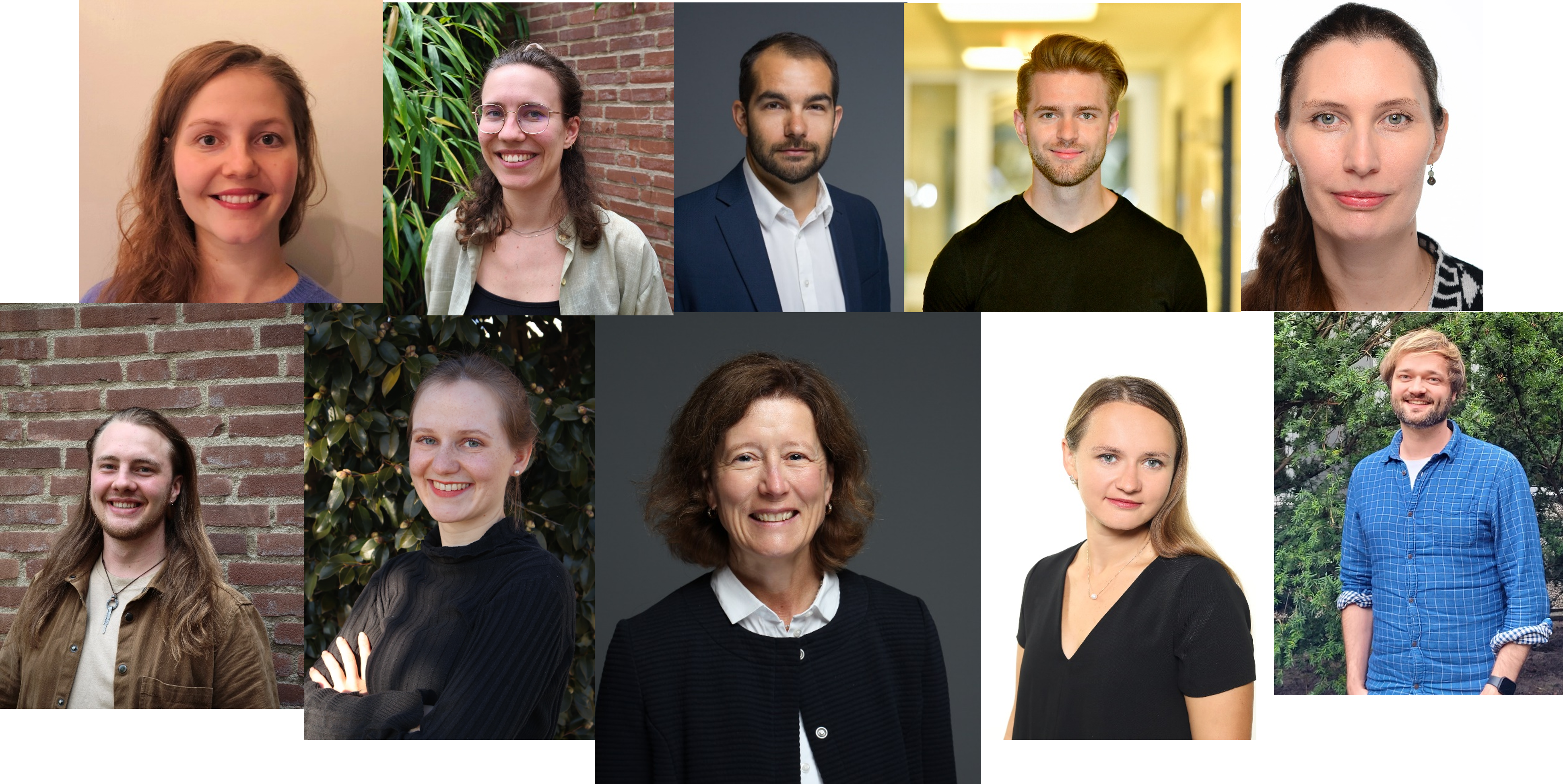
Research group members
Head of research group
Prof. Dr. Dr. Kirsten Müller-Vahl
Managing Senior Physician
Phone: +49 511 532 5258
mueller-vahl.kirsten@mh-hannover.de
Excellence at a glance: see here
Publications: Pubmed
Office
Martina Henning
Phone: +49 511 532 3551
Fax: +49 511 532 3187
Title of the doctoral thesis: Investigation of driving ability in ADHD patients under medical cannabis therapy compared to a control group under methylphenidate therapy
Telephone: +49 511 532 5524
Fax: +49 511 532 3187
Main areas of research:
- Tourette syndrome
- Functional movement disorders
Title of doctoral thesis: Internet-induced Tourette-like symptoms as a mass hysteria phenomenon
Publications: Pubmed
Phone: +49 511 532 5527
Fax: +49 511 532 3187
Main areas of research:
- Tourette syndrome
- Endocannabinoid system
- Therapy of Tourette's syndrome with cannabis-based medication
Title of doctoral thesis: Blood levels of endocannabinoids in Gilles de la Tourette syndrome
Phone: +49 511 532 5527
Fax: +49 511 532 3187
Main areas of research:
- Tourette syndrome
- Voxel-based morphometry (VBM)
- Surface-based morphometry (SBM)
- Functional magnetic resonance imaging (fMRI)
Main areas of research:
- Clinical aspects of Tourette syndrome
- Functional movement disorders
- Treatment of neurological and psychiatric disorders with cannabis
Publications: Pubmed
Main areas of research:
- Tourette syndrome
- urges
- Therapy research
- Connections between mental and somatic illnesses
Phone: +49 511 532 5527
Fax: +49 511 532 3187
hartung.kathrin@mh-hannover.de
Main areas of research:
- Tourette syndrome
- Functional movement disorders
Title of doctoral thesis: Follow-up study of functional movement disorders with "Tourette-like" symptoms
Title of the doctoral thesis: Urge and tic suppression: therapeutic mechanisms of habit reversal training in adults with Tourette syndrome
Title of the doctoral thesis: Urge and tic suppression: therapeutic mechanisms of habit reversal training in children with Tourette syndrome
Telephone: +49 176 1532 5389, +49 511 10580 221
Fax: +49 511 532 3187
jakubovski.ewgeni@mh-hannover.de
Main areas of research:
- Tourette syndrome
- Misophonia
- Research method: Meta-analysis
- Research method Prediction models for treatment success
Publications: Pubmed