Projects
The Department of Medical Psychology focuses on the psychosocial conditions of the development, course and treatment of chronic diseases. The focus here is on disease burden and coping as well as adherence, e.g. in type 1 and type 2 diabetes, obesity, TX and rare diseases of childhood and adolescence.
There is close cooperation with the pediatric clinic, the children's hospital AUF DER BULT Hannover and various pediatric clinics throughout Germany and internationally. Several multi-centre, national and international projects deal with the psychological aspects of new treatment technologies as well as the development and evaluation of corresponding patient training programs and training for physicians and diabetes consultants.
In cooperation with the Diabetes Center at the Children's Hospital AUF DER BULT, empirical studies are being conducted worldwide on the care situation and treatment quality of children and adolescents with type 1 diabetes. The international SWEET project aims to define evidence-based standards for qualified pediatric diabetes care and to establish reference centers.
In cooperation with the Helmholtz Zentrum München and the Institute for Diabetes Research, psychological stress on families is evaluated through population-wide screenings for the prediction and prevention of autoimmune diabetes in children and adolescents(www.GPPAD.org). Structured psychosocial counseling and patient training for children and adolescents with less common and rare diseases as well as their parents and siblings are being developed, evaluated and implemented nationwide in the Care-Fam-Net project of the G-BA's Innovation Fund and in the ModuS project.
Concepts to support the transition of chronically ill young people into adult medicine and eHealth services for patients and their families are also currently being developed.
On the other hand, the psychological promotion of guideline compliance for the prevention of nosocomial infections is being researched. As a follow-up to the cluster-randomized controlled studies PSYGIENE (DRKS00010960) and WACH (DRKS00015502), the IP-POWER project in cooperation with the Institute of Hygiene, Hospital Hygiene and Environmental Medicine at Leipzig University Hospital - AöR is investigating ways of empowering members of hygiene teams.
The focus is on communicative and social skills for cooperation with and leadership of clinically active employees to promote compliance with infection prevention guidelines. The project is funded by the Else Kröner-Fresenius Foundation.
In the "Preparedness and Pandemic Response in Germany (PREPARED)" project of the University Medicine Network (NUM), Medical Psychology is part of the "Personnel Management" work package and, in cooperation with the "Surveillance, Infection Prevention and Control" work package, is researching best practice concepts to ensure that hospitals remain capable of acting in pandemic situations and interpandemic phases in research, teaching and patient care.
You can find an overview of our projects on the following pages - where you can find more detailed information:
DIABETES
Development and evaluation of a structured training program for the use of real time glucose measurement systems (rtCGM)
Project management:
Team SPECTRUM of the AGPD e. V. and the AGDT e. V.
Cooperation partner:
Prof. Dr. Dr. Karin Lange, Research and Teaching Unit Medical Psychology, MHH
Tasks Medical Psychology MHH:
Funding:
Arbeitsgemeinschaft für Pädiatrische Diabetologie e.V.
Creation of curricula for training parents of younger children and curricula for training adolescents
Development and implementation of train-the-trainer seminars nationwide
Evaluation of the pediatric part of SPECTRUM
Project management:
Prof. Dr. med. Anette-Gabriele Ziegler, Institute for Diabetes Research, Helmholtz Zentrum München and Chair of Diabetes and Gestational Diabetes, Diabetes Research Group, Klinikum rechts der Isar, Technical University of Munich
Cooperation partner:
Prof. Dr. Dr. Karin Lange, Research and Teaching Unit Medical Psychology, MHH
Tasks Medical Psychology MHH:
Funding:
JDRF (Juvenile Diabetes Research Foundation), State of Bavaria, BKK Landesverband Bayern, B. Braun Foundation, German Diabetes Foundation, German Diabetes Aid
http://www.typ1diabetes-frueherkennung.de/
Assessment of the psychological and social consequences of participation in screening for early type 1 diabetes
Development of structured psychological counseling and support for parents of children with early type 1 diabetes
Creation of information materials for parents and children
Screening project for early type 1 diabetes and familial hypercholesterolemia in Lower Saxony
Project management:
Prof. Dr. med. Olga Kordonouri, Prof. Dr. med. Thomas Danne Kinder- und Jugendkrankenhaus auf der Bult Hannover; Prof. Dr. med. Anette-Gabriele Ziegler, Institute for Diabetes Research, Helmholtz Zentrum München and Chair of Diabetes and Gestational Diabetes, Diabetes Research Group, Klinikum rechts der Isar, Technical University of Munich
Cooperation partners:
Prof. Dr. Karin Lange, Dr. Iris Müller, Research and Teaching Unit Medical Psychology, MHH
Tasks Medical Psychology MHH:
Funding:
JDRF (Juvenile Diabetes Research Foundation), Barmer GEK, Kind und Diabetes e.V
Assessment of the psychological and social consequences for families as a result of participation in the screenings
Development of structured psychological counseling and support for parents of children with early type 1 diabetes and for parents of children with familial hypercholesterolemia
Creation of information materials for parents and children
Better control in paediatric and adolescent diabetes: working to create Centres of Reference (SWEET)
Project management:
Prof. Dr. med. Thomas Danne, Kinder- und Jugendkrankenhaus auf der Bult, Hanover
Cooperation partners:
Prof. Dr. Karin Lange, Dr. KatarzynaZinken, Research and Teaching Unit Medical Psychology, MHH, pediatric diabetes centers from 34 countries worldwide
Tasks Medical Psychology MHH:
Funding:
European Union; pharmaceutical industry
Survey of current patient education concepts and programs
Age-specific training materials on diabetes
Training curricula for pediatric diabetes teams
Assessment of quality of life and psychological comorbidity in young patients with diabetes (benchmarking)

"AMBADiabetes:
Nationwide survey on the everyday burdens of mothers of children with type 1 diabetes: effects on employment and need for support services in everyday life
Project management
Dr. Andrea Dehn-Hindenberg, Research and Teaching Unit Medical Psychology, MHH
Tasks Medical Psychology MHH
- Development of the survey instrument
- Coordination of the implementation of the questionnaire survey
- Evaluation of the survey
- Publication of the results
Funding:
diabetes DE - German Diabetes Aid
Project video:
Link follows...
Further information for the professional audience
Further information for parents
PATIENT TRAINING
Pediatric network for the care and research of post-acute consequences of COVID-19, similar post-acute infection and vaccination syndromes and ME/CFS in children and adolescents.
Patient education for post-acute infection/vaccination syndromes and ME/CFS for affected children, adolescents and their relatives.
Project management overall project: Prof. Dr. Uta Behrends, Technical University of Munich
Project management MHH: PD Dr. Gundula Ernst, Research and Teaching Unit Medical Psychology MHH
Project collaboration MHH: Luise Laudenbach and Rojda Ülgüt
Funding
The project is funded by the Federal Ministry of Health.
Background
Long-COVID and other post-acute infection and vaccination syndromes (PAIVS), as well as myalgic encephalomyelitis and chronic fatigue syndrome (ME/CFS), cause numerous health problems and are associated with considerable restrictions in quality of life, affecting both adults and children. The disease is characterized by a variety of symptoms and severe limitations that can greatly reduce participation in work, school, leisure and other activities and therefore represents a major challenge for those affected and their families.
As there is currently no direct causal treatment, the focus is on alleviating symptoms and individual disease management. To support families in this, a group training program for sufferers and their parents has been developed based on the tried-and-tested ModuS modular training program.
Between June 2025 and 2027, online training courses for affected children and adolescents aged 10-17 and their parents/guardians will be organized, conducted and evaluated.
Aims
The aim of the online training courses is to promote the self-management of families through knowledge transfer, exchange of experience, self-reflection and practicing strategies and techniques and thus to improve the state of health, quality of life and social participation in the long term.
The accompanying evaluation will be used to examine the acceptance and effectiveness of the training program. The aim is to examine whether the online group training program is effective with regard to disease- and stress-specific parameters.
Online group training on ME/CFS, Long-COVID, Post-Vac
The training follows a structured, written curriculum and lasts approximately three months (12 weekly sessions of 45 minutes each for children/adolescents/ 5 sessions of 90 minutes each for parents). Five to eight children/adolescents of a similar age and illness severity are combined into a training group.
The content includes treatment concepts from the fields of medicine, self-management, nutrition, relaxation and breathing therapy. During the training, various strategies for dealing with the disease are presented and practiced. Participants are encouraged to find out what is good for them and what is more harmful. In addition, social law experts answer parents' questions and provide tips on school and social law issues.
Information on the training courses, participation requirements and frequently asked questions (FAQs) can be found here: https://between-elterncoach.de/pednet-lc-informationen/.
Relevance of the expected results
By building knowledge and skills, the participants' self-efficacy expectations (family empowerment) and mental well-being will improve and the burden on the entire family will be reduced. In addition, the level of activity (e.g. school attendance, social participation) of the young participants will be increased in the medium term by learning targeted strategies, such as pacing techniques.
The knowledge generated from the evaluation will make it possible to revise and expand the training modules and materials. The evaluation is a prerequisite for the refinancing of the offer by the health insurance companies and thus for its inclusion in standard care.
Funding
The project is funded by the Federal Ministry of Health.
Further information on the PEDNET-LC joint project can be found at: https://pednet-lc.de
Asthma education for families - online (ASO study)
Study management
PD Dr. Gundula Ernst and Karolin Nettelrodt MSc
In cooperation with the Arbeitsgemeinschaft Asthmaschulung im Kinder- und Jugendalter e.V.(https://www.asthmaschulung.de/) and the Kompetenznetz Patientenschulung im Kindes- und Jugendalter e.V.(https://www.kompetenznetz-patientenschulung.de/)
The ASO study
Patient education programs are psychosocial interventions designed to provide chronically ill patients with disease-specific knowledge and therapy-specific skills. They are part of the care of chronically ill patients and are also anchored in the disease management programs (DMP). During the Covid-19 pandemic, exemptions allowed training to be held online for the first time via video conferencing programs. Since 2024, training accredited in the DMPs can also be held regularly in video format. However, digital patient training has not yet been scientifically investigated to any great extent.
As part of the ASO study (MHH ethics vote no. 10980_BO_K_2023), a DMP training concept developed and evaluated by the Asthma Training Working Group for families with children suffering from asthma is being implemented in digital form in several training centers and practices. The study investigates whether the online training has a positive effect on the asthma-specific knowledge, asthma-specific action skills and self-efficacy expectations of the participating children and their parents, as well as on the asthma control and quality of life of the children. Satisfaction with the training received is also recorded. In addition, data will be collected from families who take part in AGAS training in various training centers and practices in presence. The effectiveness of the two training formats will be determined and compared in the subsequent evaluation.
DELFIN - The parent program for families of children with type 1 diabetes
Project management:
Dr. Heike Saßmann, Prof. Dr. Karin Lange, Research and Teaching Unit Medical Psychology MHH
Tasks Medical Psychology MHH:
- Development of the parent program and a trainer guide
- Implementation of train-the-trainer seminars nationwide
- Evaluation of the training program for parents of children with type 1 diabetes (positive parent-child relationship; authoritative educational goal for the integration of diabetes therapy into everyday family life)
Funding:
Menarini Berlin-Chemie AG
Fit for secondary school - an evaluated training program for children with type 1 diabetes
Project management:
Prof. Dr. Olga Kordonouri (Kinder- und Jugendkrankenhaus auf der Bult, Hanover) & Prof. Dr. Karin Lange (Research and Teaching Unit Medical Psychology, MHH)
Cooperation partners:
Dr. Bärbel Aschemeier, Dr. Insa Gottwald, diabetes consultant Kerstin Remus and Sarah Bläsig (Children's and Adolescent Hospital auf der Bult), cand med. Mia Jördening MH Hannover
Tasks Medical Psychology MHH:
Funding:
"Das zuckerkranke Kind" foundation
http://www.das-zuckerkranke-kind.de/
- Development of the curriculum
- Implementation and evaluation of the training program as an RCT
- Evaluation of the effects of the intervention on diabetes knowledge, practical skills, health-related quality of life, school attendance and school success
Fit for a special life. Sibling module in the modular training program ModuS
Project management:
Dr. Gundula Ernst (Research and Teaching Unit Medical Psychology, MHH), Dr. Rüdiger Szczepanski (Osnabrück Children's Hospital)
Cooperation partners:
Various university children's hospitals and pediatric centers nationwide
Tasks Medical Psychology MHH:
Funding:
Robert Bosch Foundation
www.kompetenznetz-patientenschulung.de
- Development of the curriculum and training materials for siblings of chronically ill children
- Implementation and evaluation of the training courses nationwide
Transition module in the modular training program for chronically ill children and adolescents and their families
Development and testing of a transition workshop, including an interactive website, designed to make the transition to adult life easier for chronically ill adolescents and their parents, particularly in adult medicine. A 24-month catamnesis of experiences with the transition is currently taking place.
Project managementg MHH:
Dr. Gundula Ernst, Medical Psychology
Project partners:
Dr. Rüdiger Szczepanski (Osnabrück Children's Hospital), Dr. Ingo Menrath and Prof. Dr. Ute Thyen (UKSH Lübeck), PD Dr. Doris Staab (Charité Berlin) and other members of the Competence Network Patient Education in Childhood and Adolescence (KomPaS).
Funding:
Federal Ministry of Health,
German Society for Transition Medicine

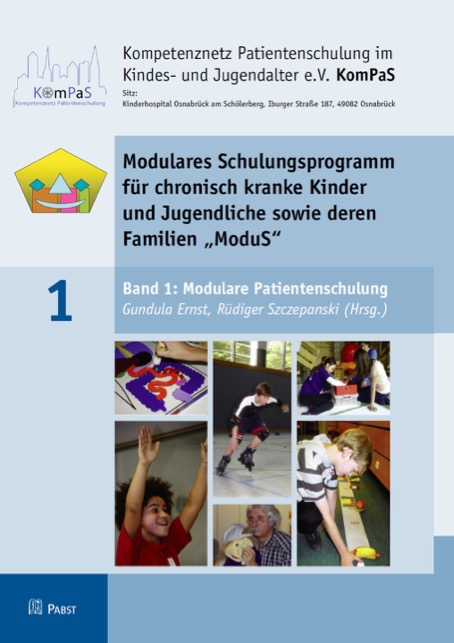
Fit for a special life: Modular training program for chronically ill children and adolescents and their families (ModuS)
Project management:
Dr. Rudiger Szczepanski (Osnabrück Children's Hospital), Dr. Gundula Ernst (Research and Teaching Unit Medical Psychology, MHH)
Cooperation partners:
various nationwide university and pediatric clinics and rehabilitation facilities
Tasks Medical Psychology MHH:
- Development and revision of curricula and training materials for various rare and less common diseases of childhood and adolescence
- Development of a modular quality management system including trainer training
Funding:
BMG, KomPaS
www.patientenschulung-kompas.de
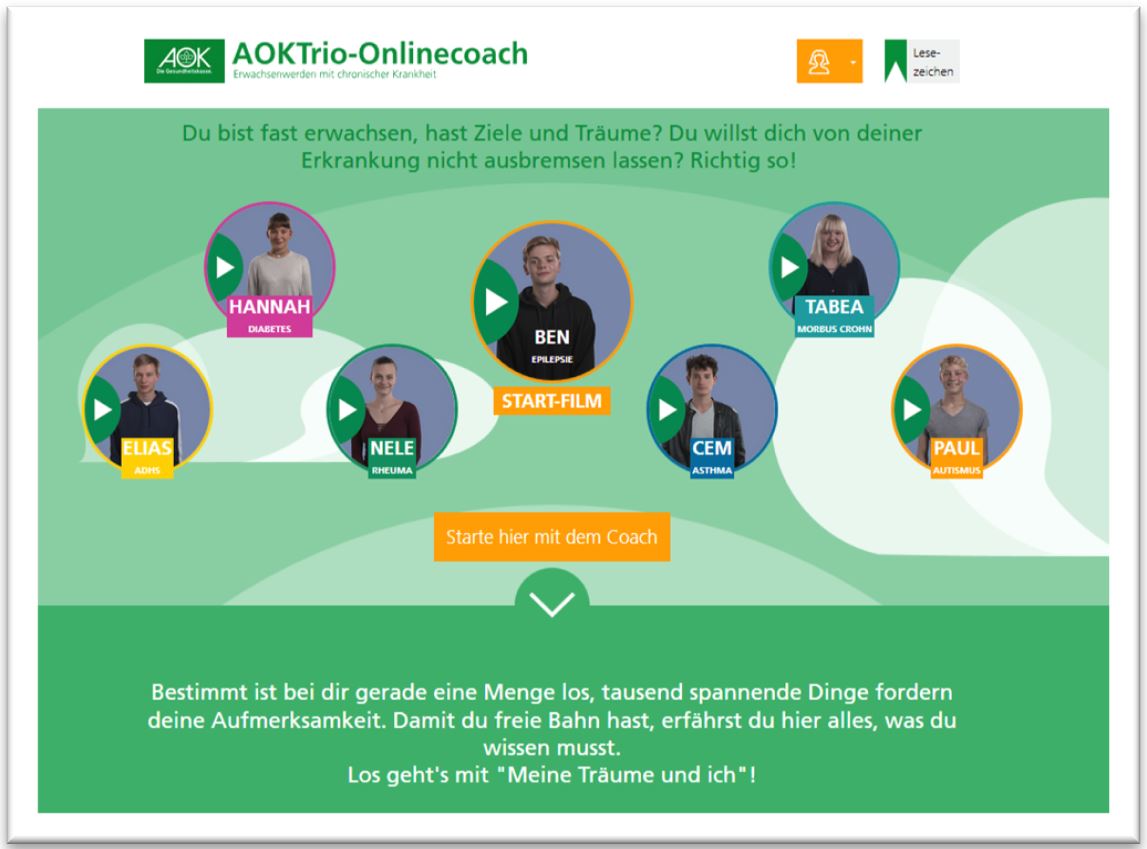
AOKTrio - The transition program for more health literacy among teenagers
The AOKTrio project supports the transition process of young people with chronic illnesses.
It offers them low-threshold access via the physicians involved in the project, is intended in particular to facilitate their transition to adult medicine and strengthen their health literacy.
Overall project management:
Alina Röttger (AOK Niedersachsen)
Project management MHH:
Dr. Gundula Ernst (Research and Teaching Unit Medical Psychology, MHH)
Cooperation partners:
Association of Statutory Health Insurance Physicians of Lower Saxony
PD Dr. Christian Krauth (Institute of Epidemiology, Social Medicine and Public Health Research, MHH)
Dr. Rüdiger Szczepanski (Competence Network Patient Education in Childhood and Adolescence).
Tasks Medical Psychology MHH:
- Development and supervision of an online coach to prepare for transition for chronically ill adolescents, which includes, among other things on changing physicians and dealing with the disease in everyday life, when traveling and when starting a career
- Development of qualification measures and quality-assured materials such as checklists, epicrises and guidelines for participating physicians
Funding:
Innovation Committee at the Federal Joint Committee
You can find more information here
Learning from experience: Development of a peer-to-peer counseling and support concept for self-help as a contribution to strengthening the health literacy of families
Development and testing of a peer counseling concept for self-help associations. The trained competence peers are to be used in self-help groups of families with children and adolescents with chronic illnesses and disabilities as well as in Clinical Departments or medical practices.
Overall project management:
Margit Golfels (Children's Network)
Project management MHH:
Dr. Gundula Ernst (Research and Teaching Unit Medical Psychology, MHH)
Tasks Medical Psychology MHH:
- Development of a structured curriculum for the training of competence peers
- Scientific monitoring, process and result evaluation
Funding:
Federal Ministry of Health, AOK Bundesverband
RARE DISEASES
"Life chances of women and men with pituitary insufficiency after craniopharyngioma surgery in childhood. Determinants of physical and psychological well-being
Project management:
Prof. Dr. Karin Lange, Dr. Mia Rodica Memmesheimer, Dr. Iris Müller Research and Teaching Unit Medical Psychology, MHH, Prof. Dr. Sabine Heger Kinder- und Jugendkrankenhaus auf der Bult Hannover
Tasks Medical Psychology MHH:
Funding:
Niedersächsische Kinderkrebsstiftung e. V.
- Development of the research question and the study protocol
- Planning and implementation of data collection on disease-specific knowledge, psychological well-being, educational attainment, professional and social integration of young adults after craniopharyngioma surgery
- Evaluation and publication
Evaluation of the psychosocial care needs of children with lysosomal storage disorders and their families and development of a structured multidisciplinary treatment concept
Project management:
Prof. Dr. Anibh Das (Pediatric Kidney and Metabolic Diseases MHH) Prof. Dr. Karin Lange, Dr. Iris Müller, Research and Teaching Unit Medical Psychology, MHH)
Tasks Medical Psychology MHH:
Funding:
Shire Pharma
- Assessment of the psychosocial care needs of children with a lysosomal storage disorder and their families
- Planning and structuring of multiprofessional care
- Evaluation of the care concept
NOSOCOMIAL INFECTIONS
Generally understandable short description
"Hygiene" evokes emotions - this is no longer surprising, especially after the coronavirus pandemic. Above all, negative feelings or questioning of hygienic protective measures are familiar from television or encounters in the supermarket. Employees of the hygiene teams in hospitals are familiar with such resistance from their day-to-day work and are often perceived as "disruptive" themselves. However, this professional group does a lot for infection prevention and thus patient protection, and also supports the success of treatments and therapies in everyday hospital life. One of the main tasks of the hygiene teams is to teach hygienic working methods that employees who work directly on and with patients should implement correctly. Hygiene staff face major challenges here, as they have generally received little preparation for this special task during their training. To enable hygiene teams to better communicate their tasks of promoting infection prevention and patient safety, this project is investigating a psychological approach to strengthening them. To this end, the employees of selected hygiene teams will be trained in detail in the areas of dealing with resistance, promoting motivation and feedback in an intervention program specially designed to meet their needs in order to improve their cooperation with clinical colleagues. After a two-day training course, they are given 12 weeks to apply the impulses in practice. The success of the measure will be assessed by comparing it with control clinics without intervention with regard to the assessment of the leadership skills of the hygiene teams both by the clinical staff and by themselves, as well as hand hygiene in the hospital.
Brief scientific description
Hygiene teams are often confronted with strong emotions in their daily work as they are involved in many change processes with clinical staff, e.g. when striving for compliance with basic hygiene measures. In addition, they are particularly often confronted with contradictions due to their role as interface communicators. Based on previous research, the study aims to strengthen hygiene teams in their leadership skills to promote clinical compliance of healthcare workers through interventions. In the IP-POWER study, a multicenter, two-arm, unblinded, cluster-randomized controlled trial with a parallel waiting control group will be conducted in Germany in autumn 2023. A multi-stage intervention program including two days of intensive psychological training will be carried out in ten participating Clinical Departments. Following the workshops, there will be a 12-week follow-up phase in which the training results can be applied and routinized in practice. Five Clinical Departments are randomly assigned to a waiting control group and initially receive no input. The data collected (self-assessed and externally assessed leadership skills, task profiles, perceived workload and goal achievement as well as motivation to take action to implement infection prevention measures by hygiene team members) will be analyzed using explorative-descriptive methods and regression models. In addition, the hospitals' hand hygiene compliance data will be examined as a further endpoint.
The HygSupport sub-project in work package 10 "Personnel management" of the NUM-PREPARED project investigates personnel management measures to support hygiene teams, i.e. which measures can promote infection prevention management by hospital hygienists, hygiene specialists and, if applicable, hygiene engineers. On the one hand, a scoping review was conducted(DOI: 10.1016/j.jhin.2024.04.004, PMID: 38679391). All publications that could be included in the review report the results of surveys and are mostly from the USA. Training and qualification were mentioned most frequently, less frequently recruitment and remuneration systems. There is a particular need for research into the implementation and effectiveness of measures relating to infection prevention and control ("trials instead of surveys"). On the other hand, an online survey of all senior university hospital hygienists in Germany was conducted in cooperation with work package 2.2 "Surveillance, infection prevention and control" (participation rate: 72%). They were asked whether relevant measures had been implemented by hospital hygiene during the COVID-19 pandemic and what implications this had for future pandemics. The data is currently being analyzed and prepared for publication.
OTHER PROJECTS
TransitADI - Transition of young people with obesity from pediatrics to adult medicine
Overall project management: Prof. Dr. Susanna Wiegand, Charité - Universitätsmedizin Berlin
Project management MHH: PD Dr. Gundula Ernst, Medical Psychology, Hannover Medical School
Project collaborator: Luise Laudenbach, Medical Psychology, Hannover Medical School
Funding: Innovation Fund (funding code: 01VSF22014)
Duration: 2023 - 2025
Background:
The transition to adulthood is characterized by far-reaching physical and psychosocial changes and demands increasing personal responsibility from young people - also in health matters. These developmental changes are a particular challenge for young people with obesity. They often experience stigmatization and discrimination as a result of their illness, so that psychological challenges and issues of social participation are added to the responsibility for managing their illness.
The S3 guideline is intended to help structure and standardize the transition to adult medicine for young people with obesity. In this way, the aim is to ensure the most continuous and multi-professional care possible for this patient group and to reduce complications and long-term consequences of the disease. This continuous care is also crucial because obesity is often associated with secondary and concomitant diseases such as high blood pressure, type 2 diabetes or psychological stress.
The development of the guidelines was based on a systematic search of existing literature on the topic. In addition, national and international guideline recommendations for the treatment of obesity in children and adults were compared. The differences found between the recommendations, which could lead to problems during the change in care, were taken into account in the guideline.
Publications:
Brauchmann, J., Laudenbach, L., Kapp, P., Grummich, K., Lischka, J., Vanersa, N., Rocha, E., Ernst, G., Meerpohl, J., Tannen, A., Weghuber, D., Weihrauch-Blüher, S., Wiegand, S. and Torbahn, G. (2025), Discrepancies Between Recommendations in Evidence-Based Guidelines for the Management of Obesity in Adolescents and Adults: An Evidence Map. Obesity Reviews e13945. doi. org/10.1111/obr.13945
Barriers to implementation: (1) of guidelines for the treatment of bronchial asthma, (2) of the short version of the guidelines for the treatment of bronchial asthma, (3) level of knowledge of GP training assistants on the treatment of bronchial asthmaWell-being
Project management:
Lingner, Heidrun (Dr., MPH) Research and Teaching Unit Medical Psychology
Funding:
Deutsche Atemwegsliga e. V
Clinical parameters, quality of life and their economic-social implications in patients with chronic obstructive pulmonary disease (ChroObL)
Project management: Lingner, Heidrun (Dr., MPH)
Funding: GdF of the MHH
The BeoNet register and the first studies on COPD, DPLD and ELD based on it (see BeoNet register homepage).
Project management: Lingner, Heidrun (Dr., MPH)
Funding: BMBF
Manual therapy for acute back pain
Project management:
Lingner, Heidrun (Dr., MPH) Cooperation partners: Schmiemann, Guido (Dr., M.P.H.), Institute for Public Health and Nursing Research, University of Bremen
Funding:
Rut and Klaus Bahlsen Foundation
ProKaR: Catamnesis study on pneumological rehabilitation for bronchial asthma
Project management: Lingner, Heidrun (Dr., MPH); Cooperation partner: K.Schultz (Dr.),Clinical Department Bad Reichenhall
Center for Rehabilitation, Pneumology and Orthopaedics
Funding:
Multicenter study on pneumological rehabilitation in patients with sarcoidosis
Project management: Lingner, Heidrun (Dr., MPH); Cooperation partner: K.Schultz (Dr.),Clinical Department Bad Reichenhall
Center for Rehabilitation, Pneumology and Orthopaedics
Funding:Deutsche Lungenstiftung e.V.
Randomized, controlled pilot study on the manual therapy treatment of carpal tunnel syndrome
Project management: Lingner, Heidrun (Dr., MPH); Cooperation partner: Schmiemann, Guido (Dr., M.P.H.), Institute for Public Health and Nursing Research, University of Bremen
Funding: Karl and Veronica Carstens Foundation
Self-care for common colds across 14 European countries (COCO study): predictors for higher use of self-care measures;
Funding: EGPRN
Teaching naturopathy in the medical curriculum
Project management: Lingner, Heidrun (Dr., MPH)
Promotion of naturopathy courses: Rut and Klaus Bahlsen Foundation
Promotion of homeopathy: Karl and Veronica Carstens Foundation
FPDM multimorbidity branch and FPDM depression branch
Project management: Lingner, Heidrun (Dr., MPH) Cooperation partners: Le Reste, Jean-Yves (Prof. Dr.) & Nabbe, Patrice (Dr.), University of Brest
Funding: EGPRN
Assessment Tool for measuring the Therapeutic Alliance: The TATA Study
German project leader: Lingner, Heidrun (Dr., MPH); Cooperation partner: Le Reste, Jean-Yves (Prof. Dr.); University of Brest
HEart Failure European STratification and OutcomeS (HEFESTOS)
German project management: Lingner, Heidrun (Dr., MPH); Cooperation partners: Miguel-Angel Muñoz Perez e.a.(Prof. Dr.); Àmbit Atenció Primària de Barcelona
Funding: EGPRN
Validation of ADO, BODEx and DOSE in Primary Care
Validation of the prognostic indices ADO, BODEx and DOSE in a primary care international cohort (cohort PROEPOC /PROCOPD)
German project leader: Lingner, Heidrun (Dr., MPH); Cooperation partner: Dr. Ana Clavería; EOXI Vigo, Galician Health Service
Funding: EGPRN
General Practice: Positive factors and motivations to choose this profession: the WoManPower-Study;
German project leader: Lingner, Heidrun (Dr., MPH); Cooperation partner: Bernard Le Floch (Dr);University of Brest
Funding: EGPRN