The more the function of the TP53 protein is impaired, the higher the risk of cancer.
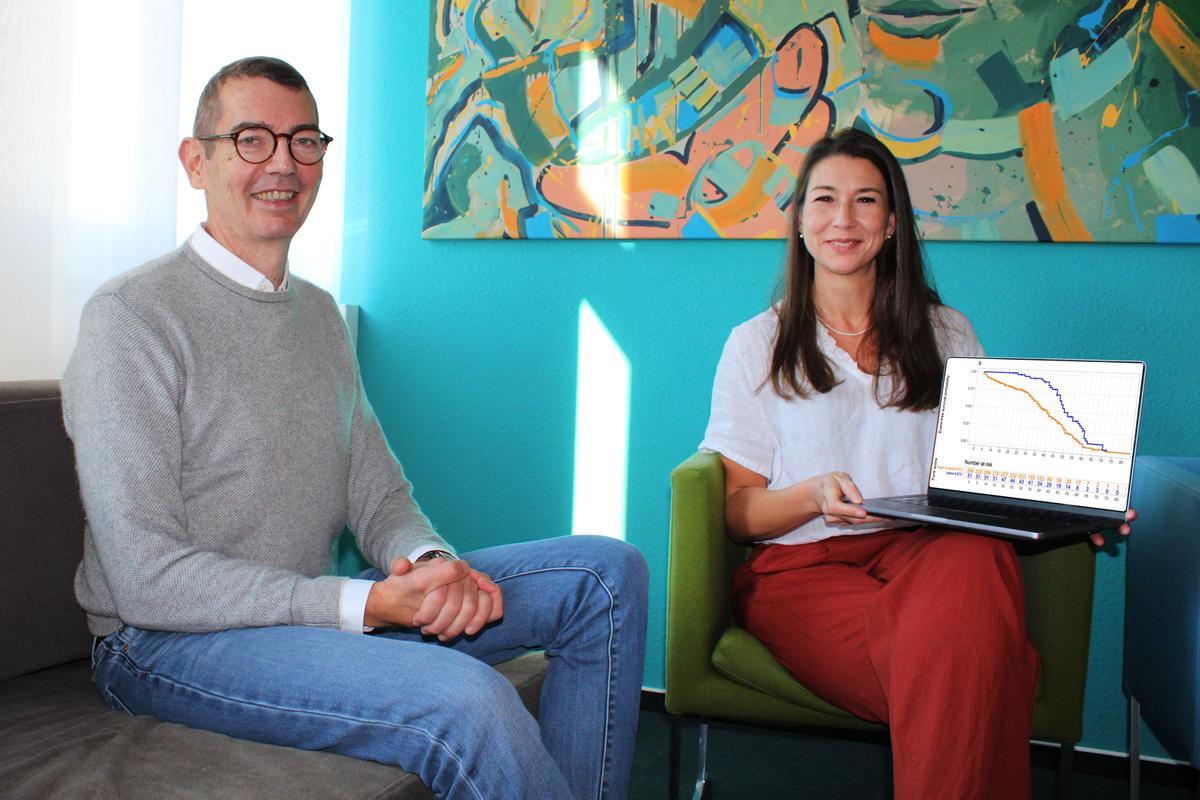
Dr. Judith Penkert and Prof. Dr. Christian Kratz in conversation: The study results show that the type of genetic mutation influences how early cancer develops. These findings could enable a more personalized assessment of cancer risk and more targeted early detection in the future. Copyright: Jana Illmer/MHH
Li-Fraumeni syndrome is a rare hereditary disorder that increases the risk of developing various types of cancer over the course of a person’s life. It is caused by disease-causing mutations in the TP53 gene. This gene contains the blueprint for a protein that normally counteracts the development of cancer. It monitors cell growth and cell division, detects DNA damage, and stops the uncontrolled proliferation of damaged cells.
The MHH team led by Prof. Dr. Christian Kratz, Director of the Clinical Department of Paediatric Haematology and Oncology at MHH, investigated how various mutations in the TP53 gene influence the course of the disease. The researchers compared data on the function of specific TP53 protein variants with the disease courses of 437 people with Li-Fraumeni syndrome from 168 families. “By linking functional data with disease progression, we were able to show that people with severely impaired TP53 function develop cancer statistically significantly earlier than people with less severe functional impairment,” explains Dr. Judith Penkert, a specialist in human genetics at the MHH. In addition, families with more severe functional impairment were more likely to meet the criteria for classic Li-Fraumeni syndrome. In contrast, those with milder functional impairment were more likely to have a milder form of the syndrome.
The goal is to better tailor preventive care to the individual
“If we can assess individual cancer risk more accurately, this will, in the long term, open up the possibility of better tailoring medical recommendations—such as cancer screening—to individual risk. People with a particularly high risk could be monitored more closely and specifically, while the intensity of screening for individuals with lower risk could be reduced,” explains Professor Kratz, the study’s initiator.
The study is based on the Cancer Predisposition Registry, which is funded by Kinderkrebsstiftung. The statistical analysis was conducted by Dr. Anika Großhennig from the Institute of Biometry at MHH.
You can findthe original publication here.
Text: Jana Illmer