Equipment, training, professional exchange: thanks to the cooperation, the Clinical Department in Lviv can carry out state-of-the-art genetic analyses and detect rare diseases in newborns at an early stage.
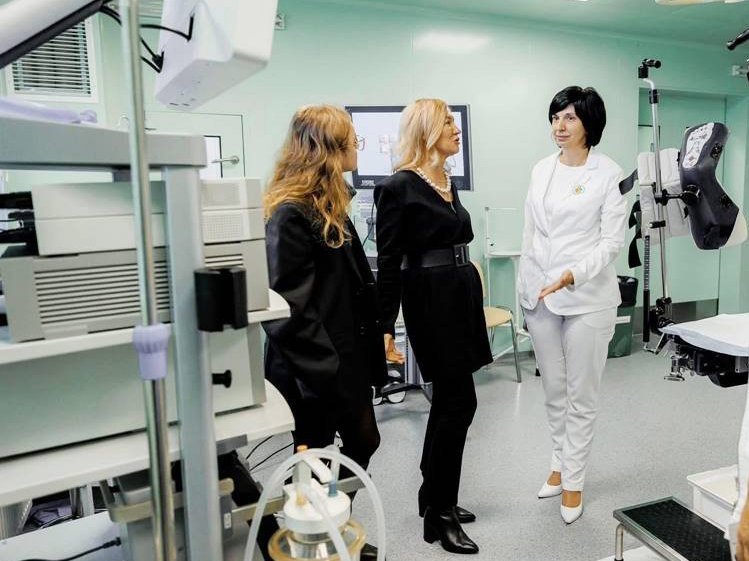
: In the operating theatre of the Lviv Perinatal Centre: Centre Director Dr. Maria Malachynska (right) shows Dr. Mariana Tsap (left) and Prof. Dr. Dr. Halyna Shcherbata (center) from the MHH the new 4D laser hysteroscopy system. Copyright Perinatal Centre Lviv
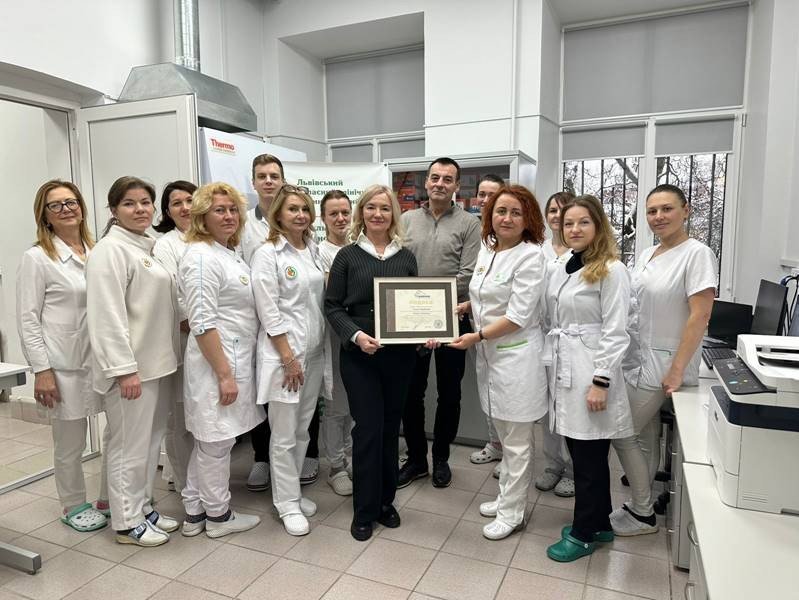
The team of the Regional Center for Newborn Screening of the Lviv Perinatal Centre presents the MHH team with a certificate of thanks for the successful implementation of the "Partnership in Healthcare" project, awarded by the Lviv Regional Council. Copyright: Perinatal Centre Lviv
Rare diseases are usually hereditary. They are often severe, chronic and life-shortening. The earliest possible diagnosis, for example through genetic analysis, can be vital. However, such examinations are not part of the diagnostic standard everywhere. These possibilities are also still relatively new at the Perinatal Centre in the western Ukrainian city of Lviv. As part of a partnership with Hannover Medical School (MHH), a laboratory for modern genetic diagnostics for newborns has been set up there. The project is part of the "Clinic Partnerships" funding program of the Deutsche Gesellschaft für Internationale Zusammenarbeit (GIZ). GIZ is investing around 1.2 million euros in the project.
Largest Perinatal Centre in Western Ukraine
The Perinatal Centre in Lviv is the largest Clinical Department of its kind in western Ukraine. A Perinatal Centre combines obstetrics and neonatology to provide optimal care for Ms with high-risk pregnancies and sick or very premature babies. All the necessary specialists and intensive care equipment are available for care before, during and after the birth. The Perinatal Centre in Lviv has been in existence for 38 years. Due to the Russian war against Ukraine, many pregnant Ms flee to the west of the country and give birth there. Around 6,000 children were born there in 2024. "If a newborn was suspected of having a rare genetic disease, the samples had to be sent to the USA for genetic diagnostics. This was cumbersome and very expensive," says Prof. Dr. Halyna Shcherbata, describing the previous situation in Lviv. Professor Shcherbata works at the MHH Institute of Cell Biochemistry and coordinates the German-Ukrainian clinical partnership. Together with colleagues from the Institute of Human Genetics, the Department of Pediatric Metabolic Medicine, the Pediatric Cystic Fibrosis Outpatient Clinic and with great support from the MHH Presidium, it was possible to put genetic diagnostics in Lviv on a new footing in close cooperation with the local experts.
Modern technology, competent team
After the project was launched in 2023, the first examinations using next-generation sequencing (NGS) were carried out in 2024. NGS is a modern method for decoding genetic information quickly, cost-effectively and in detail. In the new laboratory, the experts concentrate on exome sequencing, i.e. analyzing all protein-coding regions. This enables most known disease-causing genetic abnormalities to be detected. In this way, rare hereditary diseases can be diagnosed and treated in the Perinatal Centre from the very first days of life "If our clinical exome sequencing provides insufficient results, we send DNA samples to the MHH for more comprehensive genome analysis," explains physician Dr. Maria Malachynska, Head of the Perinatal Centre. However, the cooperation between Lviv and Hanover goes even further. The facilities or institutions not only jointly take care of the equipment and infrastructure of the laboratory, but also the training of the specialist staff. Four laboratory experts, a molecular biologist and a pediatrician have already attended comprehensive training courses at the MHH. "The Perinatal Centre has excellent technical equipment and a highly qualified team," says Professor Shcherbata.
Other centers in the country benefit
The hospital partnership has now developed into a large cooperation network. The regional newborn screening center at the Lviv Perinatal Centre also shares its new analysis capabilities with other Ukrainian screening centers that do not have an NGS laboratory, thus building a nationwide network for genetic diagnostics and expertise. The team participates in international conferences and research projects and is constantly working to further expand genetic diagnostics in Ukraine.
Second laboratory and surgical technology
In addition to genetic diagnostics, the hospital partnership at the Perinatal Centre has enabled two further measures to be implemented: Firstly, another laboratory was set up in which blood samples from newborns can be tested for non-genetic hormonal and metabolic diseases. This laboratory also works together with other laboratories in Ukraine. Secondly, a 4D laser hysteroscopy system has been installed, with which surgeons can perform complex open and minimally invasive gynecological procedures, such as the gentle removal of deeply ingrown endometriosis or benign growths in the uterus. The system can also be used to treat adhesions in the uterus and reconstruct fertility-relevant structures.
Text: Tina Götting