How much sun can my skin take? And how can I protect myself?
Skin Cancer Month May 2024
Status: May 15, 2024
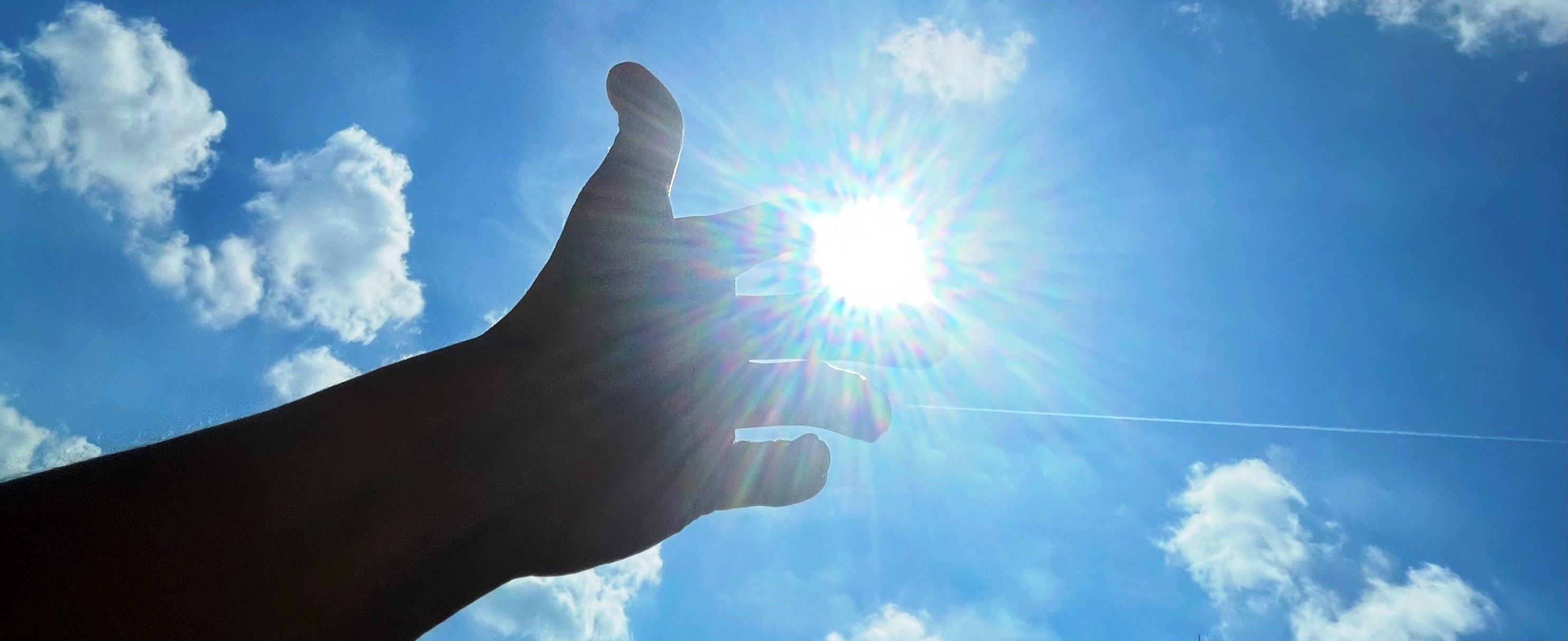
It's May and the first warm days are behind us. The sun is finally making an appearance again, yay! Feelings of happiness rise up inside us, the bad mood subsides and we are full of drive again. So let's get out and soak up the sun. But be careful: the most important risk factor for skin cancer is UV radiation from the sun. It is carcinogenic and the cause of immediate and long-term damage to the skin and eyes. The tricky thing is that UV radiation is invisible to humans. This makes it difficult for us to correctly assess UV intensity. Clouds, for example, offer no protection from UV radiation. They only partially filter it out.
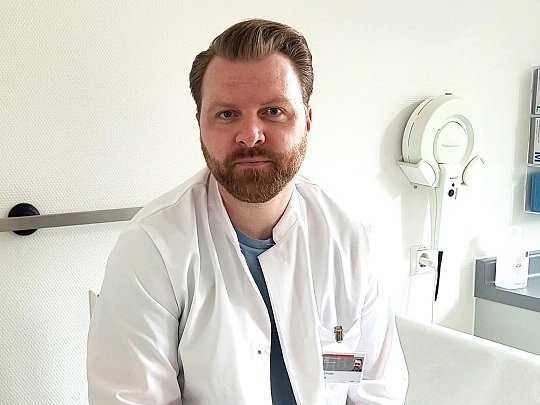
Our dermatologist and senior physician Kai-Christian Klespe from the Skin Tumor Center of the Comprehensive Cancer Center (CCC) at the MHH gives tips on how to protect yourself from the sun and what to do if you do get burned. The expert also emphasizes that there is no such thing as a healthy tan!
Sun protection: tips from the experts
See also: |
How much sun can my skin tolerate?
| Self-protection of the skin according to skin type | |
Skin type 1: |
|
| Skin type 2: |
|
| Skin type 3: |
|
| Skin type 4: |
|
| Skin type 5: |
|
| Skin type 6: |
|
What do I do if I have burned myself?
"The most important thing is to get out of the sun," emphasizes Klespe. "The skin should be Nursing and slightly cooled, for example with lotions and damp cloths. As moisture can be lost through the damaged skin, you should drink enough. Only when the sunburn has completely subsided should you expose yourself to the sun again.
"You didn't get a tan on vacation" - what could you say to that?
Klespe: "There is no such thing as a healthy tan. Any tanning of the skin shows that it wants to protect itself from too much sun and the associated risk of skin cancer. UV radiation also leads to excessive formation of wrinkles and age spots".
Skin cancer facts
More and more people are developing skin cancer. The most important risk factor is UV radiation from the sun. According to the Robert Koch Institute (Journal of Health Monitoring 2023), the number of new cases of light skin cancer in Germany has quadrupled (men) to quintupled (women) in the last 30 years. The number of new cases of black skin cancer has roughly quadrupled since the 1970s. Sunburns as a result of excessive UV radiation, for example, double the risk of developing black skin cancer. In children, the risk is said to have tripled.
Skin Cancer Month May
Skin Cancer Month in May is an initiative for the prevention of skin cancer and was once again proclaimed this year by the Professional Association of German Dermatologists (BVDD) and the German Dermatological Society (DDG). The aim is to raise public awareness of the dangers of UV radiation and to communicate protective measures through information and education. Umbrella campaign: Together against skin cancer
This might interest you:
Black skin cancer: How is it diagnosed and treated?Status: 27.05.2022 | Skin Cancer Month 2022 | Interview with Kai-Christian Klespe, Senior Physician at the Skin Tumor Center
Protect against skin cancer and detect skin cancerStatus: 03.05.2021 | Skin Cancer Month May 2021
Further information can be found here:
Together against skin cancerThe Professional Association of German Dermatologists (BVDD) e.V. informs.
The Cancer Information Service German Cancer Aid