Gynecological dysplasia unit
Dr. med. Agnieszka Denecke

Our dysplasia consultation is aimed at women with diseases of the cervix (portio), vagina and external genitalia (vulva). These can include genital warts (condylomas), chronic itching, chronic fungal infections, chronic inflammatory changes (lichen sclerosus, lichen ruber, vulvodynia) or precancerous lesions (dysplasia, CIN, VaIN, VIN).
Contents
- Dates/registration
- The dysplasia consultation
- Services
- Good to know
- Early detection of cervical cancer
- Podcasts
- Further information
- Supporting offers
The dysplasia consultation
The most common referral diagnosis is suspected dysplasia. In addition, patients with unclear inflammatory changes, condylomas, autoimmune diseases (e.g. lichen sclerosus) or vaginal vulvodynia present to our consultation for further clarification.
Dysplasia is divided into different degrees of severity. Most dysplasias are harmless and reversible, so regular check-ups are usually all that is required.
Additional examinations can differentiate between the various degrees of dysplasia and, if necessary, initiate targeted treatment.
- The examinations carried out during the dysplasia consultation complement the annual cancer screening at the gynecologist's office. As part of the examination, the vulva, vagina and cervix uteri are assessed without and with a colposcope with up to 40x magnification.
- Precancerous lesions should be detected as early as possible and treated and monitored appropriately -
Information on the early detection of cervical cancer
It is important to avoid "overtreatment".
Services
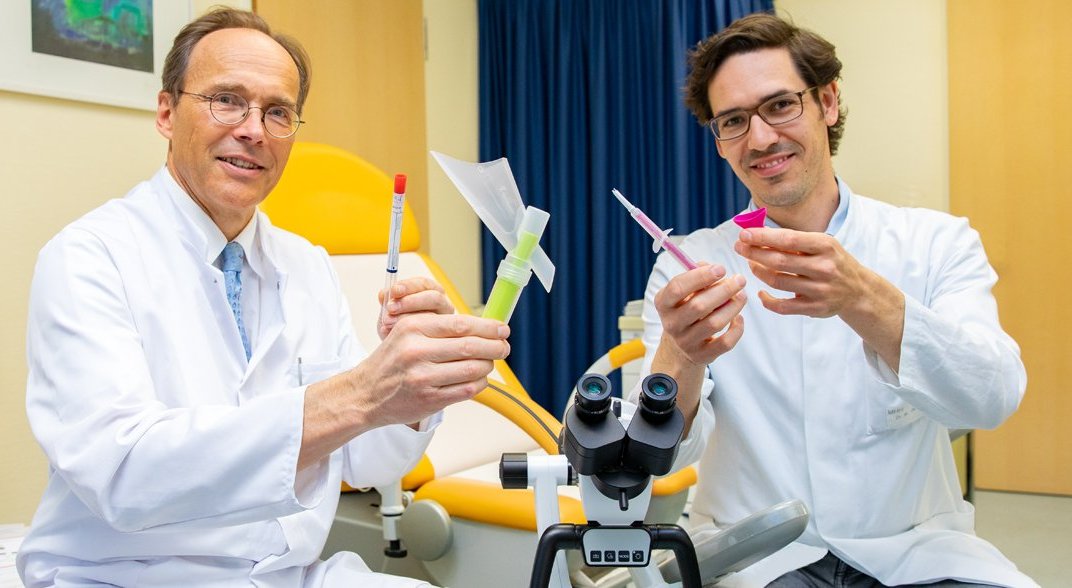
As part of the dysplasia consultation, cytological and HPV smears are taken if indicated in order to rule out an infection with human papillomaviruses or to identify the high-risk types in the event of an infection.
An HPV vaccination against currently 9 HPV types (low and high risk) can reduce the lifetime risk of condyloma acuminata and HPV-induced carcinomas in men and women, so that this vaccination is recommended by the STIKO (Standing Committee on Vaccination) for boys and girls (from the age of 9) before their first sexual contact. The costs are covered by statutory health insurance up to the age of 17.
Colposcopy (magnifying examination) is a gynecological examination procedure in which the gynecologist examines the cervix or vulva with a magnifying lens (7.5 to 30x), the colposcope. Colposcopy plays an important role in the early detection of cancer, e.g. cervical carcinoma. Colposcopy is an integral part of the assessment of dysplasia and the basis for determining further treatment.
During a colposcopy, defects in the superficial epithelium of the cervix, inflammation of the cervix (cervicitis), cervical polyps, bleeding and cervical tears or cervical anomalies can be detected. In the case of findings that are not clearly harmless, a smear cytology or a tissue sample is usually taken. Tissue samples taken from the cervix are not painful, but an anaesthetic is applied to the external genitalia beforehand.
The colposcope is also used as a surgical microscope - e.g. for laser operations. For important documentation, photos and video films can be taken via the colposcope, which is very important for follow-up examinations and discussions.
- Vinegar test diagnostics - the classic procedure
In order to diagnose a dysplastic cell change or to make a clinical assessment with regard to grading, a 3 - 5% vinegar solution and, if necessary, an iodide solution are also used. Due to altered metabolic processes in the dysplastic cells, the use of the above-mentioned solutions results in special changes that can be visualized and assessed under colposcopic view.
-
Fluorescence diagnostics with ALA derivatives, spectroscopy - a modern procedure
Fluorescence diagnostics is a modern diagnostic procedure that utilizes the emission of light signals from tissues. This fluorescence can be caused, for example, by the application of exogenous 5-aminolevulinic acid (5-ALA), which is metabolized intracellularly to the photosensitizer protoporphyrin IX, which then emits a fluorescent signal after excitation by light of a suitable wavelength. Dysplastic tissue has a higher concentration than normal tissue, so that the conspicuous areas are marked by the reddish porphyrin fluorescence.
In gynecology, fluorescence diagnostic methods are being researched and used primarily in the areas of cervical dysplasia, ovarian cancer and endometriosis.
-
Sampling - Appropriate samples can be taken for further diagnosis and histological classification of the severity.
Sampling in the cervical area is hardly or not at all painful, so that no anesthesia is necessary. The same applies to tissue samples taken from the vagina. If a sample is taken from the vulva, a local anesthetic is administered beforehand.
ALL SAMPLES ARE TAKEN IN CONSULTATION WITH AND WITH THE CONSENT OF THE PATIENT.
Depending on the histological and cytological findings, in conjunction with the patient's HPV status, we recommend follow-up checks in our dysplasia consultation hour or further care by the resident gynecologist.
If surgical treatment is necessary, patients will be informed of this by the physician in charge and the procedure will be discussed in advance. As a rule, these are outpatient procedures.
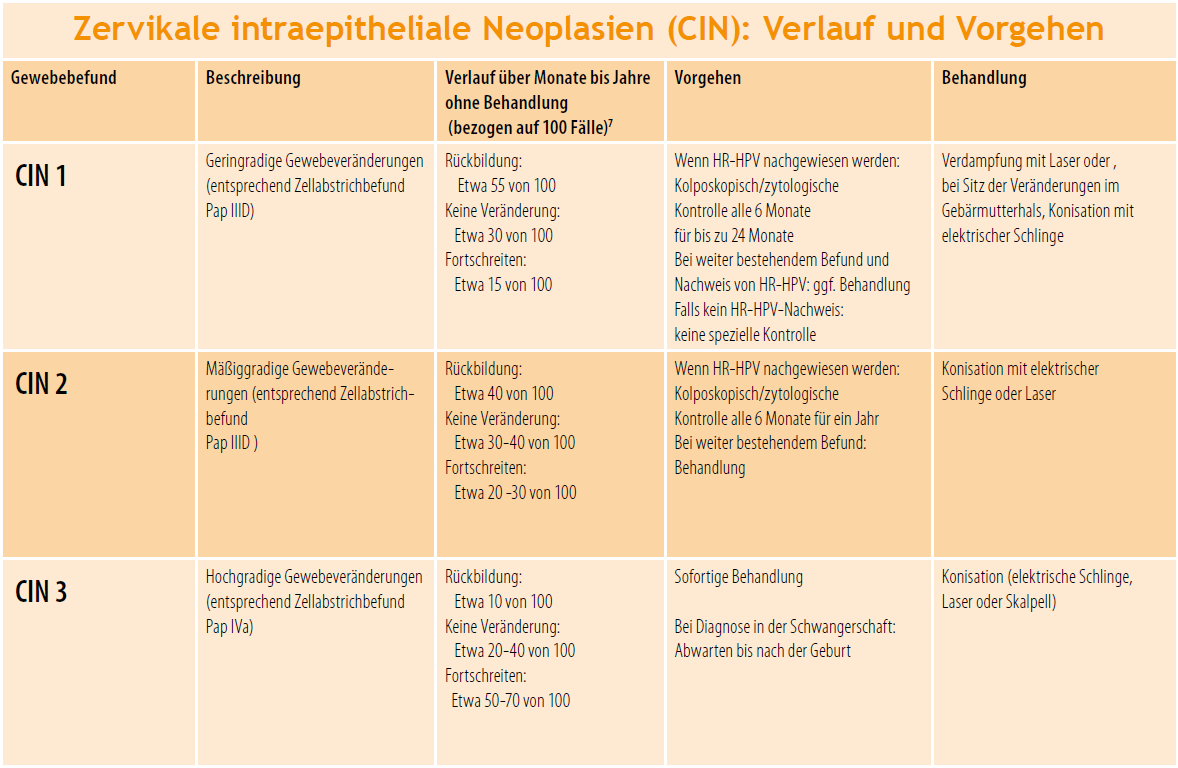
Cervical cancer develops slowly, over a period of years. In most cases, this is caused by chronic infections with papilloma viruses. Mild tissue changes (CIN 1) can develop into moderate (CIN 2) to severe tissue changes (CIN 3/CIS) in the long term. In the case of mild and moderate changes, it may be possible to wait until spontaneous healing occurs. However, this is increasingly rare with more severe changes.
Changes classified as CIN 3 in particular are more likely to develop into precancerous lesions. If malignantly altered cells have already penetrated into the deep tissue layers, this is cervical cancer.
Treatment of precancerous lesions
In our dysplasia unit, we have modern procedures at our disposal for the treatment of precancerous stages in order to treat the tissue as gently as possible, e.g. sclerosing the diseased tissue with a laser(CO2 laser) or excision with an electric snare(loop conization, so-called LEEP). Both can be performed under general or local anesthesia. These are usually outpatient procedures.
CIN
- Loop conization
- CO2 laser
VAIN / VIN
- CO2 laser
- excision
- (Skinning) vulvectomy
- Partial / total colpectomy (with reconstructive surgery, Davidoff sheath, etc.)
- Imiquimod, a drug from the group of antivirals, which is used to treat genital warts(condylomata acuminata), among other things. Imiquimod is marketed worldwide under the trade name Aldara®.
As a rule, close follow-up care is recommended initially to monitor minor changes, but also after treatment of cell changes in the genitals. We are happy to carry out this follow-up examination in consultation with your gynecologist.
THE ATTENDING GYNECOLOGIST RECEIVES A DOCTOR'S LETTER DESCRIBING THE FINDINGS, THE DIAGNOSES AND THE RESPECTIVE PROCEDURE.
If cancer is diagnosed, the close cooperation between the various departments at the MHH can be used to provide patients with further diagnostics, oncological surgery, chemotherapy or radiotherapy in a timely manner. Patients then receive further care at our certified Gynecological Cancer Center.
Both in the dysplasia consultation and in gynecological oncology, as a university hospital we are able to offer patients the opportunity to participate in various studies on new/improved diagnostic, surgical and system therapy procedures. Supporting services round off our range of treatments.

Early detection of cervical cancer
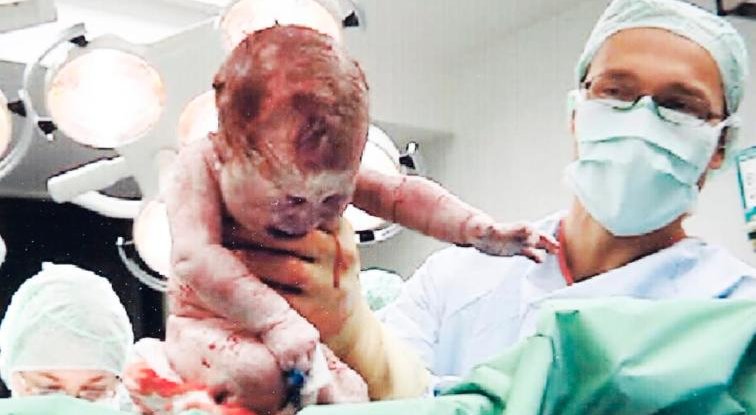
Early detection of cervical cancer (DKH)Early detection plays an important role in the fight against cervical cancer. This means that cervical cancer is detected and treated before it causes symptoms. The statutory health insurance companies pay for women over the age of 20 to undergo cervical cancer screening tests.
Podcasts
-
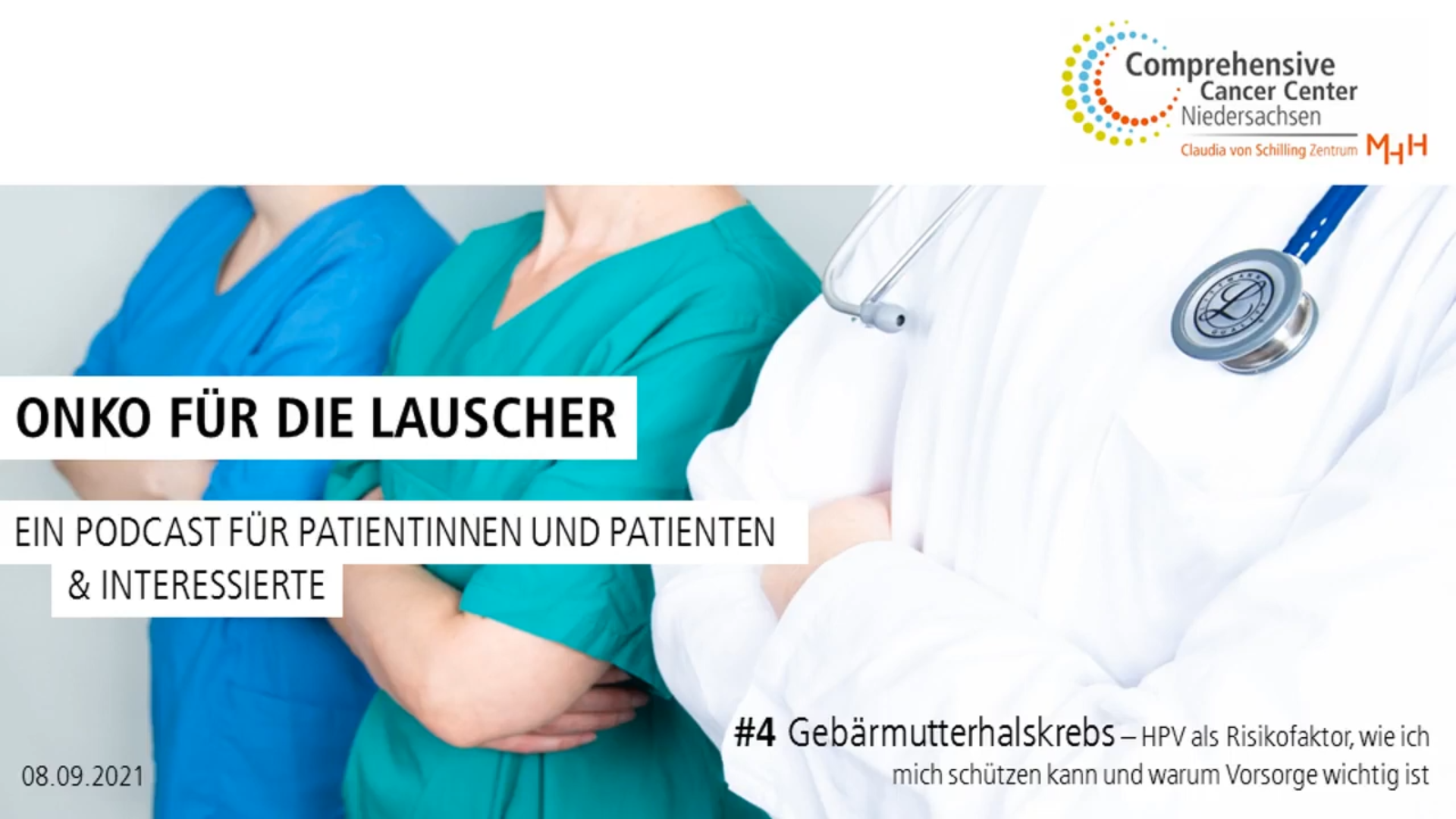
ONKO FÜR DIE LAUSCHER - A podcast for patients & interested parties
Cervical cancer - HPV as a risk factor, how I can protect myself and why prevention is important. - Cervical cancer: closing the screening gap with HPV self-tests
Around a third of all women who could go for cervical cancer screening do not do so. These women could also be reached with a self-swab test for human papillomaviruses. A study on this was presented at the German Cancer Congress, which we talk about in this episode. And we explain why the HPV test is now part of the standard repertoire of medical screening. - Cervical cancer - does vaccination also make sense for adults?
Vaccination against the human papillomavirus is said to significantly reduce the risk of cervical cancer. A great promise that has so far been aimed primarily at girls. According to recent studies, adult women may also be able to benefit from it.

Further information
Patient informationBrochures | Flyers | Guidelines
PublicationsStudies
Furthermore, new approaches in the diagnosis and treatment of genital dysplasia are being tested in studies. Please contact us if you would like to find out more.
CertificationThe Gynecological Dysplasia Unit of the MHH Women's Clinic is one of the first in Germany to be certified by the German Cancer Society (DKG)!