Prenatal medicine (MVZ)
Univ.-Prof. Dr. med. Constantin von Kaisenberg
Will our child be born healthy? This is probably the most important question for parents-to-be. Prenatal medicine can detect risks of illness and diseases in the baby and the mother early on in pregnancy.
If a special situation arises during the course of your pregnancy that requires additional advice or treatment, your gynaecologist can introduce you to our special pregnancy consultation: here, all questions and problems, including rare ones, are dealt with by the relevant physicians.
Contents
- Appointments/registration
- What does prenatal diagnostics mean?
- prenatal diagnostics
- This might interest you
- Supporting offers
What does prenatal diagnostics actually mean?

In prenatal diagnostics at the MHH, all possible prenatal diagnostic procedures are used at a high scientific level. State-of-the-art and gentle technology is guaranteed.
In consultation with your gynecologist, we are available to advise you and your partner on all questions relating to prenatal diagnostics. Our team has extensive experience and knowledge, so that possible illnesses in your child can be detected in the early stages of pregnancy, between 11+0 and 13+6 weeks. If necessary, other specialist departments are consulted here
- all under one roof.
Your health and that of your child are important to us.
Malformation diagnostics are carried out at the MVZ of the MHH by physicians who have either the DEGUM II standard (German Society for Ultrasound in Medicine) or the certificate of competence for the 18-23 weeks scan of the Fetal Medicine Foundation (London).
In which cases is a malformation ultrasound performed and when?
Every pregnant woman should be offered malformation diagnostics, as this can have consequences for the management of the pregnancy. For example, further check-up intervals can be tailored, or a comprehensive multidisciplinary consultation involving pediatricians and relevant specialist disciplines can take place after the diagnosis of malformations. The best time for this is around 22 weeks' gestation. Malformation diagnostics around 20 weeks' gestation often serve to supplement structured early malformation diagnostics @ 11-13+6 weeks' gestation.
Which malformations can be detected?
The following malformations can usually be detected in the first trimester @ 11-13+6 weeks of pregnancy: Anencephaly, alobar holoprosencephaly, omphalocele, gastroschisis, mega bladder and body stalk anomaly. Potentially recognizable are: missing hands / feet, diaphragmatic hernia, lethal skeletal dysplasia, polydactyly, severe heart defects, facial clefts and open spina bifida. Not recognizable are corpus callosum agenesis, cerebellar vermis hypoplasia, echogenic lung lesions, intestinal obstruction, renal malformations and clubfeet.
The vast majority of malformations can be detected in the second trimester @18-23 weeks' gestation. Limiting factors are unfavorable ultrasound conditions, multiple births, anterior placenta, etc. Certain malformations can also develop later in the course of the pregnancy, including certain obstructive heart diseases, skeletal dysplasia, brain malformations or hydrocephalus.
It is not possible to rule out chromosomal disorders or genetic diseases based on ultrasound alone.
It is possible to search for sonographic markers of chromosomal disorders in the second trimester. However, this is not a standard procedure and should be carried out systematically if, for example, a single marker has been found or malformations are present.
In such cases, chromosomal and/or genetic clarification, a CGH array examination or trio exome sequencing should also be considered.
First trimester screening for chromosomal disorders, pre-eclampsia, glucose metabolism disorders and premature birth is carried out at the MHH as a one-stop clinicfor assessmentof risks(OSCAR).
This means that blood is taken from the pregnant women on admission. While they are being informed in detail about the examination, free beta hCG, PAPP-A and PLGF are measured. Various parameters are then measured by ultrasound: Nuchal translucency (NT), crown-rump length (SSL), bi-parietal diameter (BPD), femur length (FL) as well as the nasal bone (NB), tricuspid valve blood flow (TR) and ductus venosus blood flow (DV). In addition, the Doppler of the uterine arteries is determined. A structured early diagnosis of malformation is carried out. A comprehensive medical history and the pregnant woman's blood pressure are then taken.
From this, the risks of a fetal chromosomal disorder and pre-eclampsia can becalculated. If there is an increased risk of a chromosomal disorder, a chorionic villus sampling (of the placenta) can be performed to confirm the diagnosis. If there is an intermediate risk, an examination of the cell-free fetal DNA from the mother's blood can be carried out to narrow down the risk. If there is an increased risk of pre-eclampsia, aspirin 150mg daily can be started immediately up to 36 weeks' gestation, which can reduce the risk of developing early severe pre-eclampsia to 20% and that of developing growth retardation to 50%. In the case of risk constellations, a glucose metabolism disorder can be tested for and the risk of premature birth can be calculated, which enables the initiation of specially tailored therapies.
The examination results from the laboratory are available at the end of the ultrasound examination, so that the results of the calculations and the resulting potential consequences can be discussed with the patient.
Quality-assured first trimester screening should be offered to every pregnant woman; participation is voluntary.
At the MVZ of the MHH, ETS is only offered by physicians who are certified by the Fetal Medicine Foundation (London) (certificate of competence of the 11-13 weeks scan).
Fetal Doppler sonography is performed at the MVZ of the MHH by physicians who have either the DEGUM II standard (German Society for Ultrasound in Medicine) or the certificate of competence for fetal Doppler sonography from the Fetal Medicine Foundation (London). They also have the KV admission for Doppler sonography.
In which cases is fetal Doppler sonography performed?
Fetal Doppler sonography @11-13+6 weeks' gestation of the ductus venosus and the tricuspid valve is used to calculate the risk of chromosomal abnormalities, but is also a screening method for fetal heart defects together with nuchal translucency and the four-chamber view.
Fetal Doppler sonography of the umbilical artery, the fetal aorta, the middle cerebral artery, the ductus venosus and the umbilical vein is used for the management of fetuses from 20 weeks' gestation with intrauterine growth retardation and indicates when the fetuses should be delivered. Doppler sonography of the uterine arteries around 20 weeks' gestation indicates the risk of developing a growth retarded unborn child, premature placental abruption or pre-eclampsia (high blood pressure and protein excretion).
Fetal echocardiography is performed at the MVZ of the MHH by physicians who have either the DEGUM II standard (German Society for Ultrasound in Medicine) or the certificate of competence for fetal echocardiography from the Fetal Medicine Foundation (London). In addition, they have the KV admission for fetal echocardiography.
In which cases is a fetal echocardiography performed?
Fetal echocardiography is indicated in the following constellations, among others: family history of heart defects, previous pregnancy with heart defects, use of certain medications, e.g. anti-epileptic drugs, previous heart defects, inability to visualize the four-chamber view, increased nuchal translucency in the first trimester (possibly combined with pathological blood flow over the tricuspid valve and in the ductus venosus).
How is fetal echocardiography performed?
It is performed according to the standards of DEGUM (German Society for Ultrasound in Medicine) and usually follows a segmental course. Further guidelines can be found at ISUOG (International Society for Ultrasound in Obstetrics and Gynecology).
What happens if a heart defect is diagnosed?
A pediatric cardiologist is consulted. The cardiac examination is repeated in full. A search is made for associated malformations. Chromosomal abnormalities and microdeletions are investigated. The parents are given comprehensive information about the nature, natural course, treatment options and prognosis of the heart defect with the help of drawings and comprehensive explanations. Further examination intervals are determined. The birth can often take place spontaneously. It is determined beforehand whether the newborn needs a prostaglandin infusion at birth and how quickly it needs to be transferred to a pediatric cardiology ward. After a further examination, an individual treatment plan is drawn up and discussed with the parents.
Often the child will have a normal life but will need medicine at intervals.
Invasive procedures are performed at the MHH / MVZ after obtaining the certificate of competence for invasive procedures from the Fetal Medicine Foundation (London), after obtaining the Diploma in Fetal Medicine from the Fetal Medicine Foundation (London) or under the supervision of a physician who has this qualification.
Chorionic villus sampling @ 11-13+6 weeks gestation
A chorionic villus sampling is usually a puncture of the placenta after application of a local anesthetic through the abdominal wall of the pregnant woman and should not be performed before 11+0 weeks of pregnancy. Indications are an increased risk after a first trimester screening for chromosomal disorders or a familial genetic burden or previous pregnancy with a fetus with a gene mutation / genetic syndrome.
A chorionic villus sampling means that a direct preparation (or PCR) and a long-term culture are always performed. Single gene sequencing or whole exome sequencing can also be arranged.
Amniocentesis @ 16+0 (15+0) weeks gestation
Routine amniocentesis after 16 weeks of pregnancy is rarely carried out nowadays, as invasive diagnostics are generally no longer carried out in the first trimester without a risk assessment and a chorionic villus sampling has usually already been carried out if there is an increased risk.
Amniocentesis is often part of an intrauterine blood transfusion, puncture of the fetus or amniotic fluid drainage to rule out a chromosomal disorder. Occasionally, they are also performed to rule out the transmission of an infection from the mother to the fetus.
Amniotic fluid can be examined using colored DNA probes in a rapid test, but a long-term culture is always performed in addition. The alpha-fetoprotein and acetylcholinesterase from the amniotic fluid can also be determined from the cerebrospinal fluid.
Cordocentesis @ 20+0 weeks of pregnancy
Cordocentesis was performed in the 1990s to determine the fetal chromosomes. This indication is now obsolete. Today, umbilical cord punctures are performed to determine the fetal hemoglobin (exclusion of anemia) or for therapeutic reasons in the context of transfusions for Rh alloimmunization, rubella or, for example, the administration of adenosine for fetal arrhythmia.
Intraperitoneal transfusion @ 16+0 weeks of pregnancy
A transfusion of blood into the abdominal cavity of the fetus is indicated, for example, if the fetus is demonstrably Rh positive and the mother has already formed excessively high antibody titers against fetal erythrocytes very early in the pregnancy in order to avoid fetal anemia. From around 20 weeks' gestation, the transfusion can then usually be continued via the umbilical cord.
Intravascular transfusion @ 20+0 weeks of pregnancy
An intravascular transfusion can correct fetal anemia, e.g. in the case of Rh alloimmunization, parvovirus B19 infection or aplastic anemia. Hydrops fetalis and extremely low anemia can often be avoided in this way, which usually results in a good prognosis.
The earlier practice of transfusing platelets into the umbilical cord in cases of allo-immune thrombocytopenia has now been largely abandoned in favor of administering high-dose immunoglobulins to the mother.
Punctures of body cavities (pleura, pericardium, abdomen)
These may be necessary, for example, if a chylothorax is present (lymphatic fluid is present around the lungs), or in the case of bilateral pleural effusions. They can also be performed in the case of pronounced pericardial effusion. Rarely, they are also performed for ascites.
Shunting (pleuro-amniotic, vesico-amniotic)
Pleuro-amniotic shunting is the intrauterine insertion of a drainage tube between the pleural cavity and the amniotic cavity. The increased pressure in the chest ensures that the pleural effusion drains away.
In the case of fetal bladder drainage disorders, attempts have also been made to create a shunt drain from the urinary bladder into the amniotic fluid cavity. However, the results are not convincing and renal replacement therapy usually has to be carried out after birth anyway, as the kidneys are usually already damaged at the start of treatment.
This might interest you:
Will our child be born healthy? This is probably the most important question for parents-to-be. Prenatal medicine can identify disease risks and illnesses of the baby and the mother early on in pregnancy.
The MHH is based on the Fetal Medicine Foundation (FMF) in London and is a training and examination center of the British foundation. The FMF is regarded as a pioneer in the field of prenatal medicine. The founder of the FMF, Professor Kypros Nicolaides, recently presented his new concept for prenatal care at a congress at the MHH.
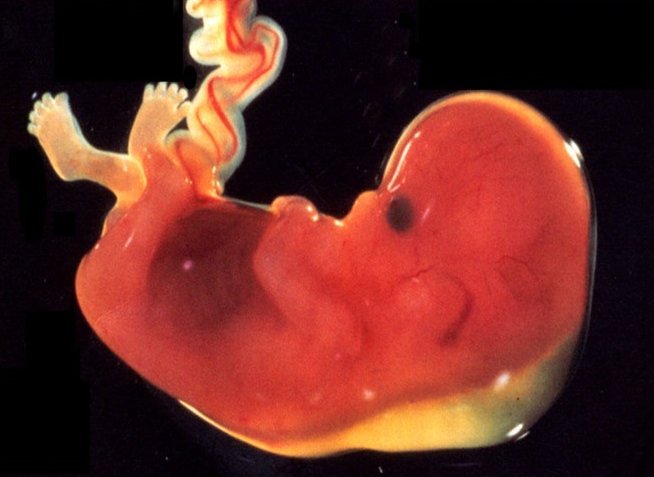
What is new about the Fetal Medicine Foundation concept?
Previously, the four main potential problems during pregnancy - chromosomal abnormalities, malformations, placental abnormalities and prematurity - were often only conclusively investigated towards the end of pregnancy. The modern concept is to be able to examine these problems between 11-13+6 weeks of pregnancy - with very reliable results. The advantage of early detection is that treatment can be started at an early stage. It is also possible to recognize at a very early stage which pregnancies require more intensive care and which do not.
What methods can gynaecologists use to obtain reliable results and prognoses at such an early stage?
The methods are based on detailed surveys of the mother's medical history, highly specialized ultrasound, biochemistry in the mother's blood and biophysical examinations such as blood pressure measurements. All this information is entered into a software program to calculate the risks of certain complications. The results allow for individualized prenatal care. Even more important than the technology, however, is the qualification of the physicians, as the examinations require a great deal of expertise, theoretical and practical training as well as certification and constant quality control.
Measured against the standards of the Fetal Medicine Foundation - how far has the MHH come today?
My colleague Dr. Ismini Staboulidou and I are in possession of all the licenses issued by the FMF London. The first trimester screening for chromosomal disorders (OSCAR) and the risk calculation for premature birth have already been established at our Clinical Department. Screening for pre-eclampsia, i.e. maternal high blood pressure with increased protein excretion, is currently being set up in addition to ultrasound with the help of first trimester serum biochemistry. This puts the MHH on a par with the FMF London.
Which women would you advise to undergo prenatal diagnostics between 11-13+6 weeks of pregnancy?
An examination for non-invasive prenatal diagnostics between 11 - 13+6 weeks of pregnancy should be offered to every patient at the highest level. The detailed examinations described here have become very complex. They require highly specialized expertise.
Examples of specific problems that can be detected between 11 - 13+6 weeks of pregnancy according to the FMF concept:
Forchromosomal disordersdetection rates of over 90% are now possible with only 2.5% invasive interventions.Malformationscan already be detected with up to 89% detection rate, forheart defectsheart defects this is as high as 85% in the hands of specialists.
Theplacental abnormalitiescan lead to illness of the mother, such aspre-eclampsiawhich can be detected in 93.1% of cases in the severe early form, with false abnormal findings in 5% of cases. An unfavorable pregnancy outcome is also counted among the diseases of the fetus. Based on a high nuchal translucency and a negative A-wave in the ductus venosus blood flow, an unfavorable pregnancy outcome can be diagnosed in 70.9% of cases.unfavorable pregnancy outcomecan be expected. Disorders of placentation also lead totoo small children.
Children that are too largeare observed with maternal glucose utilization disorders. If there is a high nuchal blood sugar, the risk of macrosomia increases from 7.9% to 19.4% and the primary sectio rate from 12.7 to 20%.
Apremature birthmust be feared @ 22 weeks of pregnancy with a cervical length <15mm in 1.7%, a birth <34 weeks of pregnancy can be reduced by progesterone vaginal 200mg/die from 34.4% to 19.2% and neonatal morbidity can be reduced from 13.8% to 8.1%.
Alate birthor transfer can reduce peripartum death by a factor of 3 by induction @ 41-42 weeks gestation. This corresponds to about 500 inductions for 1 prevented death with a sectio rate of 20-25%. Correct dating of pregnancy @ 11+0-13+6 weeks gestation can reduce this induction rate by 35%.
Gestational diabetes: number of people affected is rising
New guideline provides for earlier testing for gestational diabetes mellitus.
Publications