Breast Cancer Awareness Month October
How does breast self-examination work?
13.10.2022
Breast cancer is the most common cancer in women in Germany. It affects around one in eight women in the course of their lives. The risk increases with age and, in rare cases, men also develop the disease.
The statutory early cancer detection program offers women the opportunity to be regularly screened for breast cancer. In addition, experts recommend regular self-examination and deliberate palpation of the breast. Possible changes can thus be detected and clarified at an early stage. Dr. Marlene Röttger, assistant physician at the Clinical Department of Gynecology and Obstetrics at the MHH, explains what to look out for.
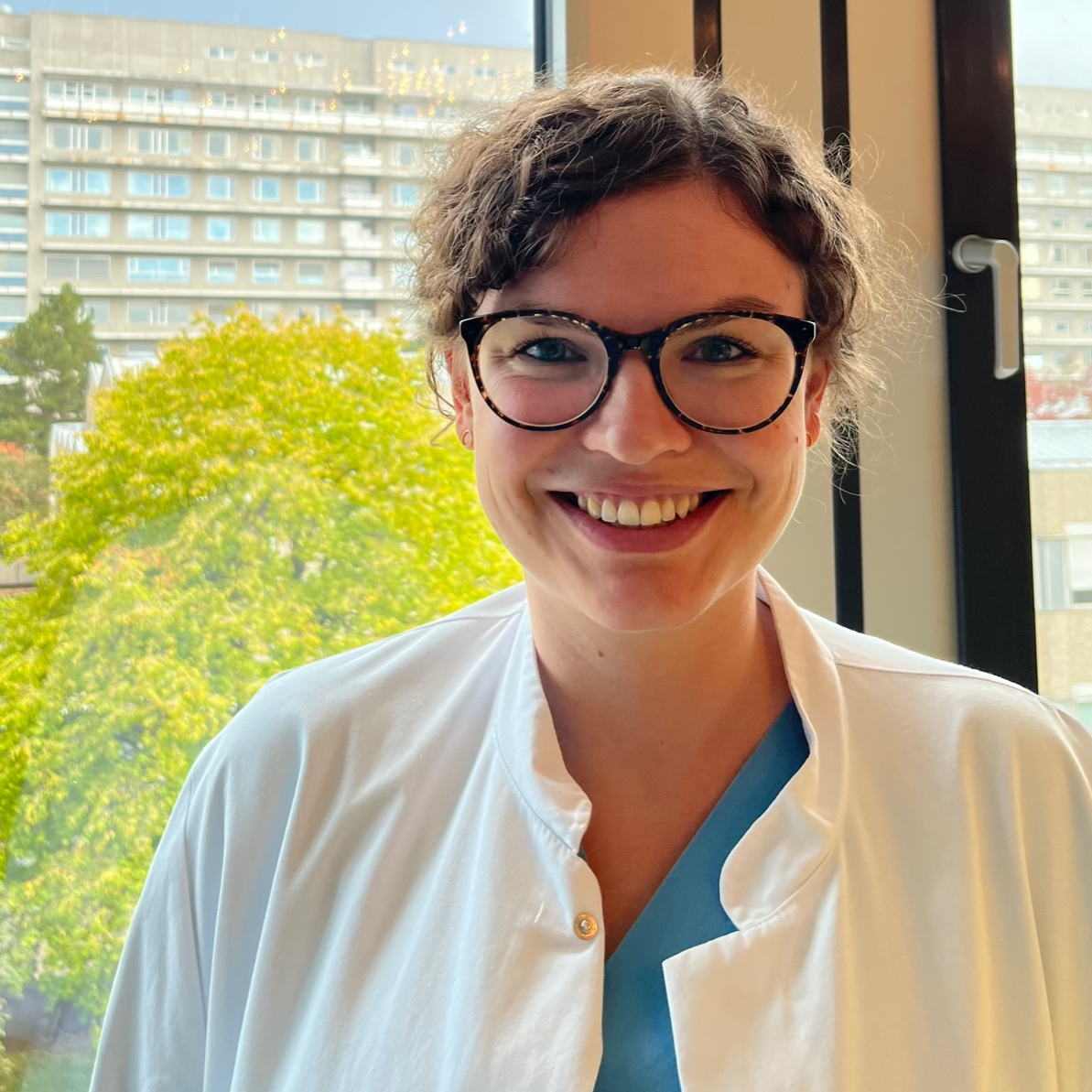
When should I palpate my breasts?
"In principle, every woman, no matter how old she is, should have her breasts examined once a month. If you are younger and still have a menstrual cycle, you should make sure that you carry out the self-examination about a week after your period, as this is when your breasts are particularly soft and easy to examine. When you reach the menopause, you should definitely maintain the monthly rhythm.
How does the self-examination work?
"The first step is to stand in front of a mirror and simply look at your breasts. The aim is to look for changes such as protrusions, dents or skin changes. You look at the breasts in a side-by-side comparison and see if anything has changed. You do this with your arms relaxed, i.e. hanging down, and then with your arms raised. This is important because some changes can only be seen when you raise your arms. Once you have done this, the next step is to palpate your chest. The best way to do this is to use the three middle fingers of your hand. The left hand for the right breast and the right hand for the left breast - always crosswise. Place your fingers on the breast and make small circular movements. First superficially and carefully and then again with more pressure, as some lumps can also lie deeper in the breast. You can make the movements from the outside to the inside of the nipple and scan the breast all the way around like the hand of a clock or in individual paths from top to bottom. It is important to examine every part of the breast. Afterwards, you should also palpate the nipple more intensively, as something can sometimes be hidden behind it. Once the breast has been examined, you should go back to the armpits and the collarbone area and feel for enlarged lymph nodes."
What should I look out for when palpating the breast?
"It's about feeling for changes, such as small lumps that have recently appeared. You have to feel around a bit first, because the glandular tissue itself sometimes feels hardened and lumpy. It's mainly about discovering changes or new things that have appeared in the course of regular self-examination."
How do I react if I feel something?
"If you feel something, it's important not to panic immediately. There are also many benign changes in the breast. Not everything you feel is immediately breast cancer. You should make a note of the spot and make an appointment with your gynecologist to have it examined. It's important to stay calm at first."
The questions were asked by Mareike Heger, MHH web editorial team.
Note: Self-examination does not replace participation in medical screening examinations such as mammography. Information on the early detection program can be found on the Cancer Information Service website.
The Breast Center in the Comprehensice Cancer Center (CCC) of the MHH
The Breast Center is the central Facilities or Institutions of the MHH for questions relating to the diagnosis and treatment of breast diseases.
Breast cancer is of particular importance here. We offer women and men with breast cancer a holistic care concept whose high level of professional competence has been tested and certified by independent experts in accordance with the requirements of the German Cancer Society, the German Society for Senology (breast diseases) and DIN EN ISO 9001.
Further information on the range of services and consultation hours can be found here.
Further information:
Breast Cancer Awareness Month German Cancer Aid Cancer Information ServiceBreast cancer: diagnosis, treatment and aftercare