Sustainable nutrition at the MHH
Hannover Medical School (MHH) is striving to strengthen its position in the field of climate-resilient nutrition. The consultant for sustainable nutrition develops an integrative nutrition concept based on a comprehensive inventory and in coordination with relevant internal and external departments, which contributes to health promotion and a sustainable nutrition culture at MHH in the long term. It works at the level of hospital-wide structures and processes and is therefore part of the Hospital Management Devision, complementing the clinical-scientific nutritional medicine at MHH.
As a large and important healthcare institution, Hannover Medical School would like to contribute to raising awareness of sustainable nutrition. Sustainability means "development that meets the needs of the present without compromising the ability of future generations to meet their own needs" (United Nations, 1987, p. 37). Due to its mission as a healthcare institution, the MHH would like to focus on the aspects of health and ecologically sustainable nutrition. The Planetary Health Diet movement is also based on this focus.
General information on sustainable nutrition
Sustainable healthy diets are dietary patterns that promote all aspects of health and well-being. They are characterized by a low environmental impact, are accessible, affordable, safe, equitable and culturally accepted. The goal is to promote the growth and development of all people while enhancing their physical, mental and social well-being at every stage of life, both for today's generation and for generations to come. This includes the prevention of all forms of malnutrition and the reduction of diet-related, non-communicable chronic diseases. A sustainable diet has the ecological goal of preserving biodiversity and strengthening the health of our planet (Food and Agriculture Organization of the United Nations & World Health Organization, 2019, p. 9).

A report by the Lancet Countdown shows that climate change is causing major problems for our health worldwide. If we do not act quickly to protect the climate, the costs will be high, not only in terms of health, but also economically, socially and ecologically. For example, the flooding in the Ahr valley in 2021, which the editors of the "Lancet Countdown" assessed as a climate change-related extreme weather situation for Germany in the policy brief, cost 135 people their lives and caused damage of around 40.5 billion euros. We must therefore take urgent action to stop climate change and make our healthcare system and society more resilient (von der Haar et al., 2024, p. 2).
A major risk factor for the health of our planet and people is the production and consumption of unhealthy and unsustainable food. Around 800 million people do not have access to sufficient food and many more eat an unhealthy diet. This has serious consequences, contributing to premature morbidity and death, particularly from cardiovascular disease, stroke and diabetes. Malnutrition carries a greater risk of morbidity and mortality than alcohol, drug and tobacco consumption combined (Willett et al., 2019, p. 448). In Germany, for example, inadequate consumption of less processed plant-based foods leads to 84,000 deaths, while excessive consumption of red and processed meat results in 79,700 deaths (von der Haar et al., 2024, p. 5).
The current nutrition trend and the projected population growth to around 10 billion people by 2050 will pose a major challenge to life on this planet. For this reason, a broadly implemented nutritional transformation towards a healthy and sustainable diet is essential. It is also a prerequisite for making a significant contribution to achieving the UN Sustainable Development Goals or the Paris Agreement. Our current diet is responsible for up to 30 % of global greenhouse gas emissions (Willett et al., 2019, p. 448).
A diet consisting of a variety of plant-based foods and small amounts of components of animal origin forms the basic framework for an ecologically sustainable and health-promoting diet. In addition, small amounts of refined cereal products, saturated fatty acids, highly processed foods and sugar should be consumed. A transformation to a healthy and sustainable diet by 2050 would be accompanied by a more than 50% reduction in unhealthy foods such as red meat and sugar. At the same time, the consumption of healthy foods, such as fruit, vegetables and pulses, must rise sharply. This could prevent around 11 million premature deaths per year (Willett et al., 2019, p. 448).

Food production causes major environmental pollution worldwide. Sustainable food production for around 10 billion people in the future should not require any additional land, preserve existing biodiversity and reduce water consumption. A decisive advantage of the food transformation would be the reduction of greenhouse gas emissions (Willett et al., 2019, p. 448). Livestock farming has a significant impact on global warming by releasing considerable amounts of greenhouse gases. In addition, losses of nitrogen and phosphorus into the environment lead to an impairment of biodiversity, deteriorate air quality and reduce the quality of ground and surface waters. Around 70% of food-related greenhouse gas emissions are caused by animal-based foods. In addition, veterinary medicines and biocides that are released into the environment can endanger wild animals, plants and microorganisms in soil and water (German Environment Agency, 2024).
Livestock farming also has an indirect negative impact on the environment: the high demand for animal feed leads to intensive arable farming with tight crop rotations, heavy use of fertilizers and pesticides as well as large land requirements. This results in additional greenhouse gas emissions, polluted soil and water and negative effects on biodiversity. Animal food production is less resource-efficient, as over 75% of the nutrients from animal feed are consumed or excreted by the animals themselves. Only a small proportion is converted into milk, eggs or meat, which leads to higher land requirements compared to direct use for plant-based foods. In addition, the land required for fodder cultivation leads to the conversion of ecologically valuable areas such as forests and moors into agricultural land (Federal Environment Agency, 2024).
Switching to a plant-based diet can drastically reduce greenhouse gas emissions as well as land and water consumption. For example, avoiding animal-based foods is associated with a reduction in diet-related greenhouse gas emissions of up to 49% (Poore & Nemecek, 2018, p. 5). Using the approaches described above, the EAT-Lancet Commission developed the "Planetary Health Diet", which aims to protect the health of people and the planet in equal measure.
The EAT-Lancet Commission is made up of 37 renowned scientists from 16 different countries, representing various disciplines. Their aim is to achieve a scientific consensus on healthy nutrition and sustainable food production for up to 10 billion people by 2050. The initial scientific targets show how important it is to act within the defined limits for health and the environment in order to ensure a safe future. Beyond a certain point, health and the environment can be irreversibly damaged. (EAT-Lancet Commission, n.d).
The EAT-Lancet Commission (n.d) describes the Planetary Health Diet as a global reference diet for adults, with the basic foundation consisting of plant-based foods such as fruit, vegetables, pulses, whole grains and nuts. A smaller supplementary proportion is made up of animal foods. These include moderate amounts of meat as well as milk and dairy products.
Within the range of foods listed, a focus can be set according to individual preferences and cultural traditions. It therefore forms a flexibly adaptable nutritional framework. A vegetarian or even vegan diet, as part of the Planetary Health Diet, offers two healthy options. From a global perspective, the nutritional guidelines indicate a calorie requirement of around 2500 kcal per day for an average adult. This is a guideline that can be adjusted by age, activity level or health profile, for example. Knowledge of this target and its influencing factors enables individuals to adjust the composition and total amount of their meals (EAT-Lancet Commission, n.d).
Overeating can still lead to food waste, which has both health and environmental costs. In particular, the current excessive consumption of meat in the Western diet increases the risk of health consequences. In addition, forecasts show that high meat consumption, together with the simultaneous growth of the world's population, is putting a strain on food systems far beyond their ecological limits. Even if the implementation of a more sustainable diet is by no means the only way to achieve the current climate targets, it still plays a major role and makes an important contribution. In addition to the transformation of our diet, a reduction in fossil fuels is necessary and extremely pioneering (EAT-Lancet Commission, n.d).
Table 1: Overview of a planetary & healthy reference diet with a possible range for a person with a calorie intake of 2500 kcal/d
The energy intake necessary to maintain a healthy weight depends on individual factors such as body size and activity level. Processed foods such as hydrogenated fats, refined grains, salt and preservatives can affect health but are not included in this table. Whole grain products such as rice or pasta and pulses are considered in their dry and raw form. Poultry meat can be replaced by eggs, fish or plant-based protein sources. Legumes, nuts and seeds are flexibly interchangeable (Willett et al., 2019, p. 451).
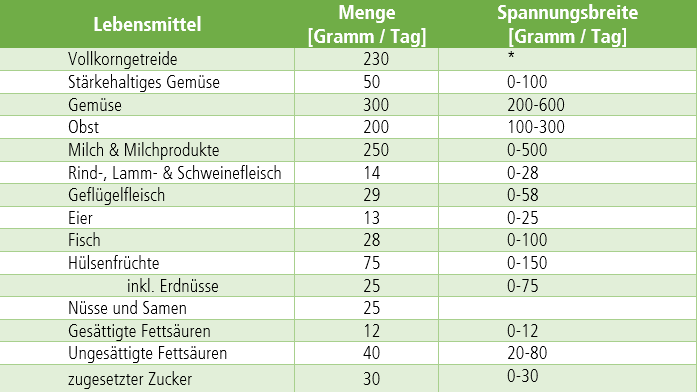
*max. up to 60 % of the energy requirement
Source: Own representation (modified) based on Willett et al., 2019, p.451
A healthy and sustainable diet requires forward-looking meal planning. If you structure your weekly menu in advance, you can create balanced and varied meals, make targeted purchases and thus save both time and money. At the same time, well thought-out planning makes a significant contribution to avoiding food waste. Implementing the Planetary Health Diet (PHD) begins with a gradual and conscious adjustment in everyday life. The aim is to permanently change our eating habits and move towards a predominantly plant-based diet. The focus here is on increasing our consumption of vegetables, fruit, pulses, nuts and wholegrain products (EAT-Lancet Commission, 2019, p. 2).
A proven guideline is the "5 a day" recommendation. At least five portions of fruit and vegetables should be on the menu every day, as varied as possible in all colors. When deciding on cereal products, such as bread, pasta, rice or flour, the wholemeal variety is the better choice. Pay particular attention to plant-based protein sources. Many plant-based protein sources are both healthy and sustainable sources of dietary protein. Try to eat nuts or legumes daily. Meat can be part of a balanced diet, but should be consumed in moderate amounts. The PHD recommends a maximum of 100 grams of red meat (beef, pork, lamb) and up to 200 grams of poultry per week. Fish from sustainable sources can be added to the diet once or twice a week. Milk and dairy products are an important source of calcium and can be consumed once a day. Prefer dairy products without added sugar or other sweeteners. Plant-based sources of calcium are green vegetables, nuts and mineral water with a calcium content of over 150 mg per liter. As part of a balanced diet, one additional egg per week, for example as a breakfast egg, is sufficient. The intake of animal fats should be reduced and replaced with high-quality vegetable fats such as rapeseed or olive oil. In general, fat intake should be moderate (EAT-Lancet Commission, 2019, p. 2).
Adequate fluid intake is also important to keep the body hydrated. Give preference to mineral water or other calorie-free drinks such as unsweetened tea. Sugar-sweetened and alcoholic drinks are not recommended. In addition, the conscious selection of food with regard to its ecological, social and ethical production conditions is of central importance. Through their purchasing behavior, consumers have a significant influence on the direction of agricultural production and actively contribute to the promotion of sustainable food systems (EAT-Lancet Commission, 2019, p. 2).
Table 2: Overview with sample options for a balanced and sustainable diet based on the recommendation of the Planetary Health Diet and the German Nutrition Society (DGE)
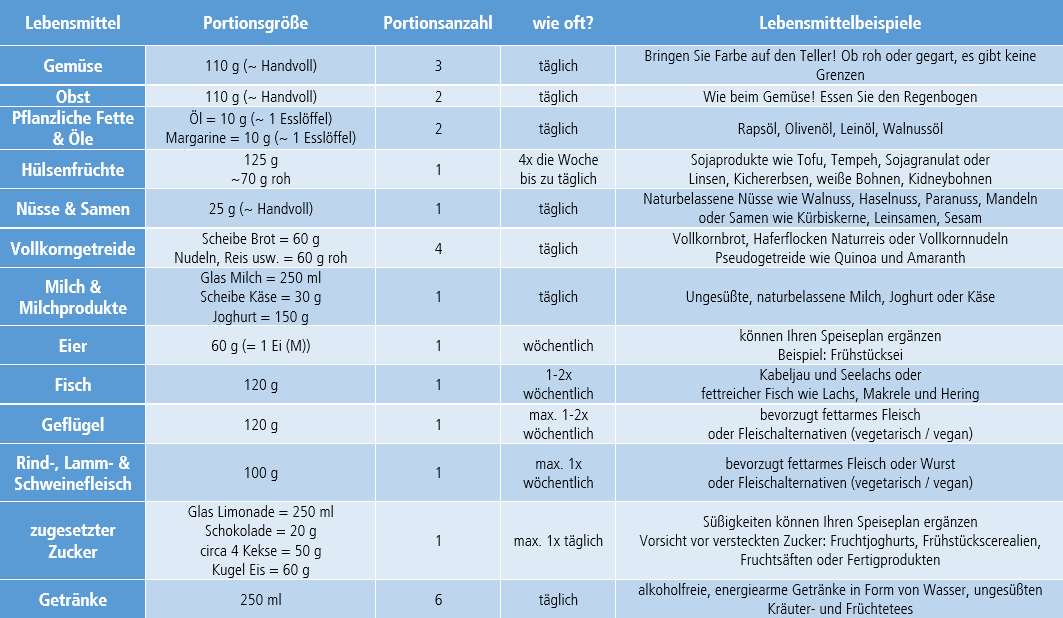
*The table serves as an orientation for a balanced diet according to the principles of the Planetary Health Diet.
According to the Nutrition 2025 trend report, a plant-based and flexitarian diet is very much in vogue, according to experts. This diet is ranked number 1 in the report! A diet based predominantly on plant-based foods that remains flexible means focusing on vegetables, pulses and plant-based alternatives to meat and milk. At the same time, an open attitude towards animal products is maintained so that these can occasionally be integrated into the diet. A plant-based diet that leaves room for animal products in moderation is a flexible approach to a concept that is suitable for everyday life (Frey et al., 2025, p. 8). Already in third place in the trend report is a sustainable and climate-friendly diet, which is close to the concept in first place. A diet that is geared towards sustainability and climate protection strives to minimize environmental impact. The focus here is on the use of regional, seasonal and organically produced food as well as alternative substitute products. By supporting regenerative agriculture and reducing food waste, environmental pollution is reduced and resources are conserved. It is not only the personal motivation to improve one's own environmental footprint, but also the new awareness to focus more on oneself and one's health (Frey et al., 2025, p. 15).

Around 1.55 million people die every year due to malnutrition. This is the result of a study conducted by the Friedrich Schiller University in Jena. The aim of the study by Pörschmann et al. (2024) was to establish a link between diet-related risk factors and cardiovascular disease. In 2019, around 1.55 million people in Europe died as a result of malnutrition. This includes too few whole grain products or legumes and increased salt consumption. Around a third of cardiovascular diseases are explained by an unbalanced diet (Pörschmann et al., 2024, p. 1). Alongside other behavioral factors, a healthy diet plays a key role in preventing premature death. Promoting better eating habits is therefore considered one of the most effective measures for prevention and health promotion (Pörschmann et al., 2024, p. 10).

What our diet costs us

A short study by Richter et al. (2025) commissioned by Greenpeace shows the hidden health and environmental costs of the German agricultural and food system. Our food has an invisible bill: a system that exploits natural resources, exacerbates the climate crisis and puts a strain on health (Richter et al., 2025, p.1).
The environmental costs of meat production alone amount to around 21 billion euros a year in Germany. In addition, the excessive consumption of red meat, which increases the risk of cardiovascular disease, cancer and diabetes, costs around 16 billion euros in health costs. High sugar consumption causes an additional annual burden of around 12 billion euros for the healthcare system. In total, this results in social follow-up costs of around 50 billion euros per year (Richter et al., 2025, p.1).
According to projections, the external environmental costs of agriculture in Germany amounted to around 90 billion euros in 2018. Greenhouse gas emissions accounted for around 40 billion euros of this, particulate matter and air pollutants for 17.5 billion euros and the loss of biodiversity and ecosystem services for 47 billion euros (Richter et al., 2025, p. 14). Animal products cause the highest environmental costs (Richter et al., 2025, p.4). Meat consumption in particular is cost-intensive: greenhouse gas emissions alone result in environmental costs of around 4.5 billion euros, which corresponds to around 2.41 euros per kilogram of meat. In comparison, plant-based foods cause external costs of only EUR 0.79 per kilogram on average (Richter et al., 2025, p.15).
In the EU, economic healthcare costs amounted to around 1.75 trillion euros in 2023. Of this, 84% was due to productivity losses caused by non-communicable diseases and diet-related health problems. This shows that the majority of costs are not caused by medical care, but by indirect consequences such as lost working hours and premature deaths. A key factor is an unhealthy diet: excessive consumption of meat and highly processed foods as well as a lack of fruit, vegetables and wholegrain products characterize the diet in Germany (Richter et al., 2025, p.18). In Germany alone, the direct and indirect health costs caused by risk factors such as high meat and salt consumption and an unbalanced diet are estimated at around 50 billion euros per year. (Richter et al., 2025, p.18) These external costs, caused by damage to health and environmental pollution, are predominantly borne by the general public and are not reflected in the price of food (Richter et al., 2025, p.5).
Sustainability in the central kitchen
The MHH is actively committed to combating food waste. By continuously analyzing our processes, we are making a sustainable contribution to reducing food waste. In 2023 alone, we were already able to save 16% of waste compared to the previous year. The overproduction of patient food is increasingly being reduced through continuous awareness-raising and employee training as well as improved coordination.
With our Veggie Day on Saturday, we are setting an example for sustainability and health. On this day, we offer our patients a varied selection of delicious vegetarian dishes. Our hospital kitchen works every day to make a valuable contribution to the environment and the well-being of our patients. Veggie Day is an important step towards a more conscious, sustainable and enjoyable diet. In addition to meat-based dishes, our Canteen also offers a large selection of vegetarian dishes and a vegan option almost every day. Around 60% of our canteen meals consist of plant-based dishes.
The central kitchen at MHH is actively committed to avoiding waste and does not use disposable packaging. Disposable plates with lids and smaller containers for salads and desserts have been replaced in the Canteen. By using a deposit-free reusable food system, we offer a flexible and environmentally friendly alternative. The high-quality and sustainable reusable products are produced in Minden, close to our location, and are designed to be reused up to 1000 times. At the end of their service life, they are 100% recycled, actively contributing to the reduction of single-use waste.
Incidentally, our commitment to reducing single-use materials is not limited to the Canteen. The only remaining disposable packaging is the bread roll bags in the cafeterias. In our central kitchen in particular, we attach great importance to constantly reducing the use of disposable materials. In this way, we want to actively contribute to protecting the environment and promote sustainable practices.
By carefully selecting our suppliers and consciously choosing local sources, we actively contribute to environmental protection. It is important to us that our food products are not only of high quality, but are also produced under ethical and sustainable conditions:
Fresh meat from the region
Our fresh pork and poultry comes from family farms in the Hanover region. Our main supplier sources the meat from a regional area around Hanover. The farmers focus on species-appropriate husbandry and short transport routes in order to minimize stress for the animals. The focus is on quality and responsibility, which always go hand in hand with a conscious decision. The secondary supplier also sources its animals from the region.
Seasonal fruit & vegetables from the region
We source our fresh fruit and vegetables from a family-run company here in Hanover. The vegetables come primarily from regional producers in the greater Hanover area who practice sustainable and controlled agriculture. In this way, we avoid long transportation routes, unnecessary CO2 emissions and excessive packaging waste. When it comes to local fruit varieties, we attach particular importance to regional producers. Short distances also mean more freshness and quality for the products. In addition, eating regional fruit and vegetables supports sustainable agriculture and contributes to a smaller ecological footprint.